Energy efficiency improved at Waste and Recycling hub
Energy efficiency has been further improved at the Council’s Waste and Recycling station
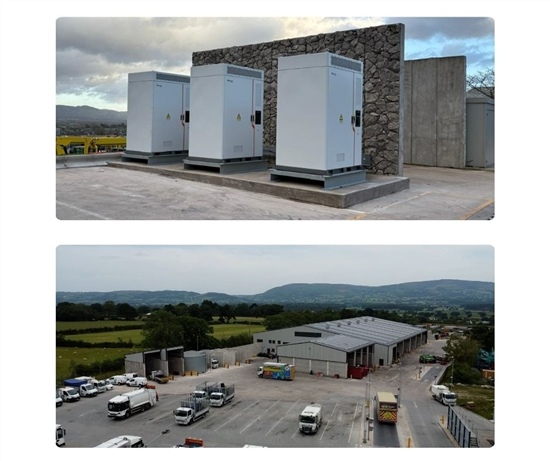
Energy efficiency has been further improved at the Council’s Waste and Recycling station.
Denbighshire County Council’s Energy and Fleet teams have completed a project to install a battery energy storage system (BESS), at the Denbigh based site to improve the harnessing of energy generated by the building’s large array of solar PV panels.
The Council’s Energy team has managed projects across council buildings to improve building energy efficiency and reduce emissions as part of the council’s drive to reduce its carbon footprint after declaring a Climate and Nature Emergency during 2019.
Waste and Recycling vehicles are all based at the Denbigh site and start and end their operational routes from the station. Recycling and non-recyclable waste is collected by the vehicles and taken back to the Denbigh site for sorting and processing.
Fifteen percent of the fleet is electric powered (EVs) and these vehicles are charged on site after each daily use.
There are currently 11 electric vehicles operating from the Denbigh site which are: five Electra Refuse Recycling vehicles, two Dennis Eagle Refuse Collection Vehicles, two Toyota Electric Forklifts, one JCB Electric Tele-truck and one Peugeot Car which supports the supervisory Team.
There are 12 chargers installed at the site that will simultaneous charge up to 16 vehicles.
During the last financial year, a total of 74,335kWh of electricity was used by the electric vehicles operating on and from the site which equates to around 75,000 miles of zero emission travel.
The five refuse recycling Electra e-Cargo lorries provide a range of up to 155miles, offering greener lower cost miles and cheaper maintenance. They can also be spotted out on the road as each are named on the front of the cabs, Bindarella, Bindiana Jones and Binnie Mouse are just some that you can spot out on the roads.
The installation of the 600kWh (3x200 kWh) batteries has received funding support from the Welsh Government’s Energy Service as part of the EVCI & ZEV Grant 25-26 (which funded 90 percent of costs).
The batteries will store surplus electricity generated by the PV panels during the day so it can be used when the panels aren’t generating to support waste and recycling fleet charging. The stored energy be used at night or during very cloudy days when the solar panels do not generate enough electricity to run the building, helping maintain lower long term energy usage costs and reducing carbon emissions. This project is expected to save an additional 76,731kWh per year and increasing the onsite utilisation of the solar generation to around 73 percent, which will save £16,113 and 22 tonnes of CO2 per annum and reduce the amount of low value export of surplus energy to the grid.
Paul Jackson, Head of Highways & Environmental Services, said: “The installation of the battery at the waste and recycling station will not only help us reduce carbon emissions and improve energy efficiency further at the site, it will also add an extra layer of support for efficiently charging the EV part of the service fleet whilst reducing electricity costs and carbon emissions.
“Waste and Recycling is committed to reducing carbon emissions for Denbighshire as a whole and we are grateful to our Energy and Fleet sections for helping them lead the way from the hub of this important service.”