NEWS
Smart and Sustainable ways to dispose of your Christmas Tree
Did you know that there are sustainable ways to wrap up your Christmas Tree use following the festive celebrations?

Did you know that there are sustainable ways to wrap up your Christmas Tree use following the festive celebrations?
Denbighshire County Council is encouraging residents to properly dispose of their Christmas tree, be it real or an artificial one.
If you have an artificial tree, it is recommended that it is reused year after year as much as possible to help reduce waste. When you do decide to dispose of your artificial tree, it can be taken to your local Recycling and Waste Park.
Real trees can be recycled by using the green wheelie bin (if you have a garden waste subscription). Make sure the tree is cut up first to ensure it fits properly in your bin. If you cannot fit it into your bin, real trees can also be taken to the local Recycling and Waste Park for disposal.
Councillor Barry Mellor, Lead Member for Environment and Transport said:
“Celebrating the festive season with Christmas Trees and decorating them is often the highlight of many families’ Christmas period. When it does come time to dispose of your tree, it is important to remember the correct channels that will really help cut down on waste over the festive period.”
For more information, please go to.
Merry Christmas and a Happy New Year!
Best wishes for the festive season - a message from the Leader, Chief Executive and Chairman.


Community hub to open in time for Christmas
Works have been completed to convert an old unused school into a much-needed community hub.
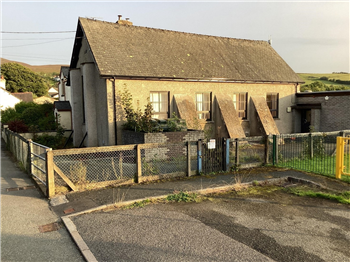
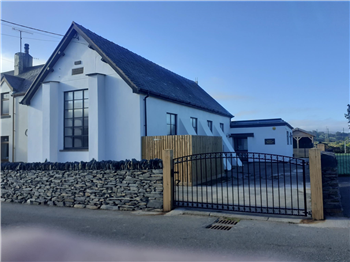
Works have been completed to convert an old unused school into a much-needed community hub.
Following the closure of Ysgol Bryneglwys in 2014, a group of volunteers from the village came together to ensure that a once valuable community asset could become integral to the community again.
The group of residents formed Cymdeithas Canolfan Ial Association (CCIA) and obtained a charity status in April 2020, with the aim to convert the old school to a much-needed community hub.
On the 19th of January 2023, Denbighshire Council received confirmation that they had secured £10.95m from the UK Government for the former Clwyd West constituency to support the development of 10 projects aimed at protecting Ruthin’s unique heritage, wellbeing and rural communities.
This project was one of the 10 included within the Council’s application to UK Government, and as a result Cymdeithas Canolfan Ial Association (CCIA) received £327,000 of this UK Government funding to renovate the former village school and secured a further £65,000 from the Clocaenog Windfarm Fund towards the project.
Having secured funding for the project, the CCIA appointed Adever Construction to undertake the improvement works.
The works included removing existing asbestos within the building, conducting clean air tests and rendering the exterior of the building, with the idea of converting the old school into a community hub with a café that also has space to host future community events for the residents of Bryneglwys.
Pat Downes, Chair of Cymdeithas Canolfan Ial Association (CCIA) said:
“Cymdeithas Canolfan Ial Association (CCIA) was formed as a one issue charity to turn the old school into a much-needed community hub. It has been a lot of hard work and so many people have helped us over the years. There has been a real team effort around this project.
“It’s an exciting time, not just for CCIA, but for the whole village who have been looking forward to having this amenity. The opening of the community hub here in Bryneglwys will offer an opportunity for residents to get together on a regular basis in the new café, and we will now be able to provide a space to host events such as concerts. The community hub will also be available to hire for private functions”.
Councillor Jason McLellan, Lead Member for Economic Growth and Tackling Deprivation said:
“It is exciting that Denbighshire County Council has been able to support this community to achieve their aspirations. Hubs such as these play a vital role in bringing the residents together and we are delighted that works have been completed just in time for Christmas!
“I would like to thank the CCIA and the local member, Councillor Hugh Evans, who have worked tirelessly throughout this process to ensure that the residents of Bryneglwys have a dedicated space to gather as a community”.
Save the date for garden waste sign up
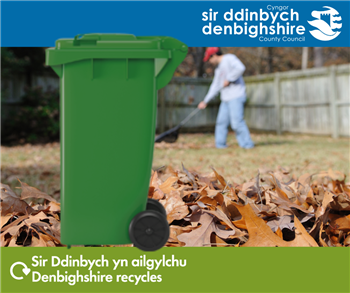
Denbighshire gardeners who use the garden waste subscription service will be able to renew their collection this coming January.
The current 2025/2026 subscription period for this service will close on December 19. Renewal for 2026 to 2027 will open from January 12 to make sure there is time for everyone to sign up before the new service period starts from April 1.
Residents will not be able to sign up to the new 12-month service before this date.
The Council is encouraging residents who are subscribing for the first time also take advantage of this sign-up period to take full advantage of the 12-month service.
Denbighshire offers the two-weekly service as an optional and cost-effective way of recycling garden waste. The subscription charge is necessary in order for the Council to deliver this non-statutory service.
Councillor Barry Mellor, Lead Member for Environment and Transport said: “We want to make sure our residents who wish to use this service have plenty of notice to sign up for the new 12-month period or carry out a renewal.
“If you want to use this service, save the date and please sign up the earliest you can from January 12 onwards to make sure everything is processed in good time.”
Please visit the Garden waste collection service web page here for more information.
Bodelwyddan countryside park celebrates re-opening to the public
Works began on the site back in 2022.
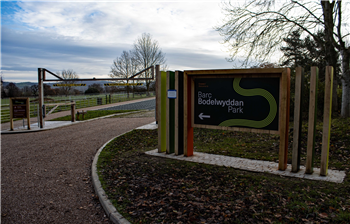
A ceremony was recently held to mark the official opening of the site since works began in 2022.
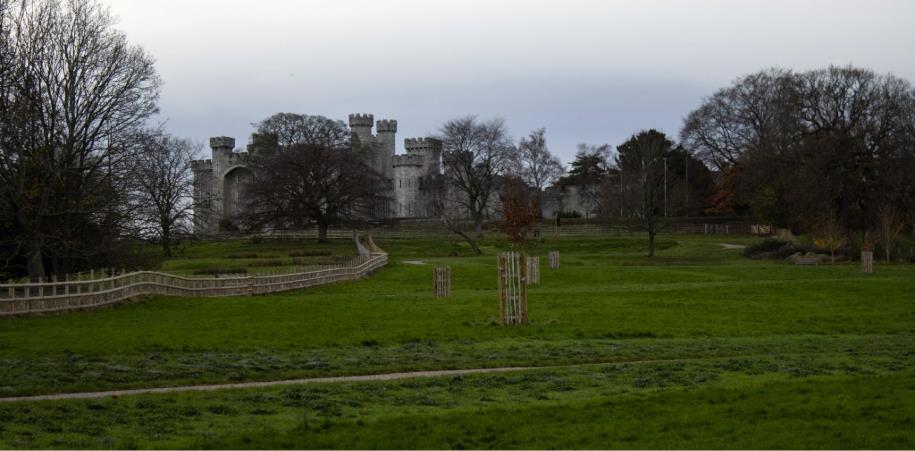
Situated at the foot of the historic Bodelwyddan Castle, the site celebrated its official opening following the completion of the first phase of works.
Denbighshire County Council’s Chairman Arwel Roberts officially opened the country park at the ceremony.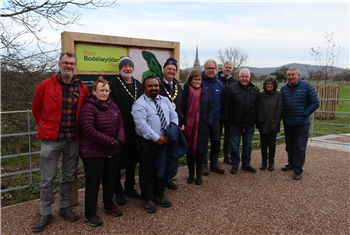
The project received £900,000 from the UK Government through the UK Shared Prosperity Fund, with the work looking to address the condition of the parkland beginning in 2022.
As a part of the works to reopen the parklands, woods and orchards to the public, nearly one and a half miles of new disabled friendly limestone topped pathways meander from the bottom of the parkland right up to the woodland at the top of the site.
To accommodate for the returning visitors, a new 73 space car park near the bottom entrance off the A55 was created, whilst a countryside ranger with a designated budget for management and maintenance at the park was appointed on a full-time basis.
Hedgerows were planted along new boundary fencing to also support local nature on the parkland, with access to resident deer provided at certain parts of the boundary fence. Special protective fence enclosures were also built in the woodland to protect tree and plant areas including the old Victorian Orchard from deer to allow certain species to flourish stronger going forward.
Further work was undertaken to preserve the historic First World War trenches at the top of the parkland with a new fencing enclosure protecting the site.
The project also delivered over 19,000 m² of green space, 2 km of footpaths, planted 7,150 trees and installed several interpretation boards along the paths to explain the surrounding land.
Councillor Jason McLellan, Leader and Lead Member for Economic Growth & Tackling Deprivation said:
“The opening of this park signifies a fantastic milestone for the project. I’d like to acknowledge the hard work of our countryside team who have worked tirelessly to address the condition of the park in order for us to be in the position to open the site to the public.
“The regeneration of the parkland will provide vital support that our local wildlife needs to survive going forward and will also give Denbighshire residents and visitors a great place to visit to experience the nature our county has to offer.”
Denbighshire Trading Standards holds successful free electric blanket testing events
Residents were offered free electric blanket testing and free replacement blankets this past winter.

Denbighshire trading standards service offered residents free electric blanket testing and free replacement blankets this past winter.
The testing events took place during December to February in three different areas of the county.
During the 3 sessions held, a total of 77% of the electric blankets tested failed. One of the main reasons for the failures was due to the age of the blankets, with several blankets brought for testing over 20 years old, and one blanket being 50 years old.
Another reason for failures was the heating elements within the blankets coming loose and collecting in one area of the blanket which presents a risk of fire.
The funding granted to Trading Standards allowed residents whose electric blanket failed the safety testing to receive a brand-new replacement blanket of a same size.
Around 43 fires a year are caused by faulty electric blankets in the home. They should be stored flat, rolled up or loosely folded to prevent damaging the internal wiring and should be replaced at least every 10 years.
Councillor Alan James, Lead Member for Local Development and Planning, said:
“Consumer Protection is a priority area for the Public Protection. Wear and tear on these products is inevitable and faulty electric blankets pose a significant fire risk. It is good to see that residents have made good use of the opportunity to have these items tested. We look forward to building on the success of this work in the future.”
Foster Wales Denbighshire carers receive parking permits as part of fostering package
Foster carers who decide to foster through the local authority are now issued a parking permit as standard as part of Denbighshire’s fostering package.

To assist foster carers with parking for vital appointments, foster meetings, and any associated activities, Foster Wales Denbighshire carers are now issued with parking permits for all long-stay car parks within the county once they are accepted through the Foster Wales scheme.
This initiative is part of the council’s transformation programme which has the ambition to increase the number of Foster Wales Denbighshire carers, allowing children to be cared for closer to their communities and achieve better outcomes.
Rhiain Morrlle, Head of Children’s Services said:
“I am pleased to see that has been implemented. This is just one of the assistive policies that we will be rolling out for those who decide to foster through the local authority, with more to be announced within the coming months.
I feel that this policy emphasises our commitment to those who make the rewarding decision to foster within Denbighshire.
I would also like to note my thanks to colleagues in Planning, Public Protection and Countryside Services for their support in implementing this scheme, and to demonstrating their support to Denbighshire’s foster carers as part of our One Council ethos.”
Councillor Diane King, Lead Member for Education, Children and Families said:
“Denbighshire County Council’s fostering team help make a real difference to the lives of children and young people within the county.
The friendly staff help guide new foster carers through each step of the process and are always on hand to provide expert knowledge.
We hope that by issuing these permits, we can help our foster carers to attend the vital appointments and meetings that can come with fostering and make their lives a little easier.”
Waste and Recycling crews spread festive kindness with Christmas Food Bank
Waste and recycling crews across Denbighshire are spreading festive cheer by setting up a Christmas food bank to help support local families.
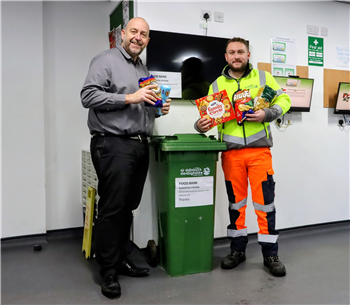
Waste and recycling crews across Denbighshire are spreading festive cheer by setting up a Christmas food bank to help support local families.
In the run-up to Christmas, crews based at Denbigh’s Waste and Recycling Station have been collecting donations of essential food items, toiletries and everyday household goods to provide a little extra support to families.
A foodbank collection point has been set up at the site’s canteen allowing all staff working from the site to give their support. The donated items will be shared with Rhyl Food bank.
Graeme White, Waste and Recycling Manager, said: “With Christmas coming we thought it would be good for the Waste service to collect food items, which we could then donate to a local food bank. Communities across Denbighshire are very supportive to our crews whilst they are out working, and we wanted to do something ourselves to give that support back this festive season to those who may need it the most.
“The collection has been going really well, and we’ve had wide support from across the Council, including other service staff, our Chief Executive, Corporate Director and Cabinet members who have dropped in at the site to donate items.”
Cllr Barry Mellor, Lead Member for Environment and Transport, added: “I know our waste crews really value the support they get from the residents while out working across the county and I’m proud of them for stepping up to give something back to the community they serve this Christmas.”
Rhuddlan pupils help install Bat and Bird boxes as part of wider project at Ysgol y Castell
Pupils at Ysgol Y Castell had the chance to get a close up look at a real bird’s nest and learn about the importance of bird and bat boxes.

Andrew Cutts, Denbighshire’s Ecological Compliance and Support Officer led a session in the forest school area of the site, where the pupils learned about how to identify a good position for bird and bat boxes.
Pupils then helped to pick suitable trees in their forest school area for the boxes to be installed by BrynBuild, the contractor on the project.
Five bird boxes and three bat boxes were built and installed as part of the Community Benefits associated with the four classroom extension currently underway on the site.
The extension of four classrooms and initial energy improvement works are being undertaken in the first phase of the project, with further energy reduction works planned for a second phase.
The first phase of the project is 65% match funded by the Welsh Government, through its Sustainable Communities for Learning Programme. The remaining 35% of funding has primarily come from a developer’s contribution provided by the Tirionfa housing development in Rhuddlan.
The external wall for the first 2 classrooms to be extended has now been removed and the footings and ground beam are almost complete. The LED lighting upgrades throughout the site are progressing well and the install of the steel frame and substructure are due to commence shortly.
Councillor Diane King, Lead Member for Education, Children and Families said:
“As part of the wider scope of this project, the pupils at Ysgol y Castell got to learn about the importance of nature within the grounds of the school.
The project will see a number of Bat and Bird boxes installed, alongside the extension, which is progressing well at this stage.”
Denbighshire based bird colony continues heling hand for Little Terns
A Famous Denbighshire bird colony has celebrated its 21st anniversary of supporting a rare summer visitor.
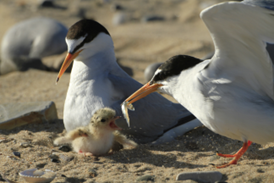 Image by David Woodfall
A Famous Denbighshire bird colony has celebrated its 21st anniversary of supporting a rare summer visitor.
This year marks the 21st year Denbighshire Countryside Service has managed the Little Tern colony at Gronant Dunes.
The area is the largest breeding colony found in Wales. It is known internationally as it contributes to over 10 percent of the entire UK breeding population as well as supporting other colonies.
Little Terns spend the winter in Africa; they arrived at the dunes in May to breed on the shingled beach in a protected site prepared in April by Countryside staff and volunteers. They start flying back south at the end of August.
The bird’s nests consist of just a scrape in the sand, where pairs will take turns in incubating one to three eggs. Little terns feed exclusively on a diet of sand eels, which they fish for out at sea.
Twelve electric fenced pens and a section of strap fencing along the landward side of the colony were constructed to protect the breeding Little Terns.
Also, a boundary fence was implemented to prevent the public from accessing and disturbing the colony. However, the public could drop into a temporary observation centre and bird hide to find about and view the birds from afar.
A team of wardens on site helped look-out for aerial predators – mainly kestrels and peregrine falcons, as well as engaging with the many visitors who come to Gronant each year
This season saw 95 breeding pairs recorded and a total of 103 fledglings, a decrease on the number of young seen during the 2024 season due to factors including predation, the harsh dry weather, and a smaller number outside the pens were lost to spring tides and other predation.
However, the colony an average of 1.08 fledglings per breeding pair, brought a slight increase on figures from last year
Wardens also worked with the British Trust for Ornithology to ring several of the birds to keep track of them in the future. They helped ring 59 chicks with British Trust for Ornithology (metal rings, and a further nine were also ringed with colour rings.
The Little Terns visitor centre hosted a total of 883 visitors to the designated viewing points and 175people engaged in the project via trips and visits to the site. Volunteers from the North Wales Little Tern Group, Denbighshire Countryside Services and Merseyside Ringing Group logged 1085.5 volunteering hours throughout the season.
Countryside staff operate a ‘no-trace’ policy at the colony site, and all equipment is taken off and stored until next spring arrives.
Garry Davies, Countryside Officer and County Allotments Manager, said: “We are proud to be involved for over 20 years with this project which is so much more than the protection of a very rare seabird. The volunteer participation at the colony continues to be higher than any other activity offered by Countryside Services and it’s been great once again to see local schools and a resident group visiting the colony. It also contributes to the Council’s tourism offer with visits from birdwatchers from across the UK.
“It has been a difficult season for the birds as we saw less adults coming into the colony, coupled with no increase in adults at any of the Irish colonies and none at Point of Ayr. However, despite the difficulties faced, it’s great to see the average of fledglings per breeding pair increase to continue supporting this important species.
Cllr Barry Mellor, Lead Member for Environment and Transport and Biodiversity Champion said:. All credit must go to the hard work of our countryside teams, partner groups and the fantastic volunteers who do so much to protect and support this important colony based in Denbighshire.”
Award success for Denbighshire team
A key Denbighshire County Council frontline team has been recognised at a national awards ceremony this month.
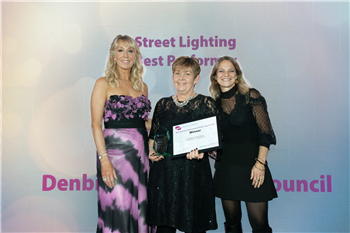
A key Denbighshire County Council frontline team has been recognised at a national awards ceremony this month.
At the recent Association for Public Service Excellence (APSE) Performance Networks Awards, the Councils Street Lighting Team were nominated within the Best Performer and Most Improved Performer categories in Street Lighting. APSE is one of the UK’s top benchmarking agencies who work with over 200 councils across the UK. The body is committed to highlighting excellence in the delivery of frontline services to local communities.
The Council’s Street Lighting team maintains 11,763 streetlights and 1,547 illuminated signs and bollards to provide safety and support the wellbeing of Denbighshire residents.
Service data is provided annually to APSE which is then measured against other similar data entries from across the UK which includes staff training, development and attendance, service performance, financial standing and service value for money and general service delivery and management of the service.
At the annual awards ceremony held at Blackpool the Street Lighting team picked up the Best Performer in Street Lighting award.
Cllr Barry Mellor, Lead member for Environment and Transport, said: “A huge congratulations to the team as this is a massive achievement. Since 2008 they have been shortlisted in these awards each year and the 2025 ceremony marks the 10th time they have been successful. “This success is testament to the hard work and commitment shown throughout the team in the delivering the best possible service to the residents of Denbighshire.”
The Council’s Catering Service was also shortlisted in the awards for Best Performer and Most Improved Education Catering service following their work to run 54 school kitchens daily to produce 13,500 freshly prepared meals for Denbighshire pupils.
Cllr Mellor added: “I would also like to pay tribute to the hard work of our Catering staff, what they do day in and day out supports our pupils and helps them thrive through their education and they should all be proud of the nomination.”
“I know they go the extra mile to make sure that the lights stay on every day through their dedication, and they should all be proud themselves of this recognition.”
Across Denbighshire, the Catering Service runs 54 school kitchens daily to produce 13,500 freshly prepared meals for pupils. That’s 67,500 meals served during the school week to help children learn, grow, and thrive.
Charity concerts raise funds for local causes
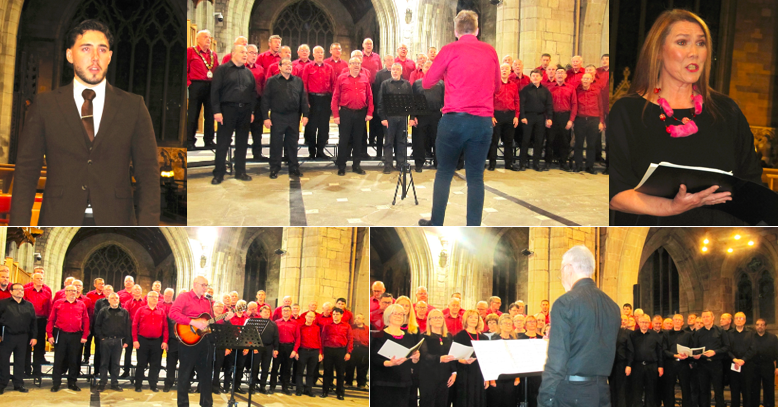
Two charity concerts have been held recently, organised by the Chairman’s Office, raising vital funds for the Chair’s chosen charities.
The first concert took place at St Asaph Cathedral on Friday 21 November. The evening featured performances by Matthew Budd, Kate Griffiths, Meibion Marchan and Côr Rhuthun, with Geraint Owen on guitar, presenting a varied programme of popular songs. The concert was well attended, with £3,252 raised through ticket sales and donations on the night.
The annual carol concert was held on Wednesday 3 December at St Thomas’ Church in Rhyl. Alongside a selection of much-loved carols, the audience enjoyed performances from talented pupils of Ysgol Brynhyfryd, with the Four Counties Fusion Band and Côr NantClwyd also taking part. The evening included several readings delivered by Council staff and councillors, as well as contributions from the Prestatyn Cadets Unit. A total of £386.43 was collected during the concert.
The Council would like to thank Heather Powell and the Denbighshire Music Co-operative team, who once again played a key role in overseeing the musical arrangements and direction for the evening.
Councillor Arwel Roberts, Chair of the Council, said:
“I am extremely grateful to everyone who supported both concerts, from the performers and organisers to those who attended on both nights.
"A total of £3,638.43 was raised, and the generosity shown will help support my chosen charities for this year — St Kentigern Hospice and Urdd Gobaith Cymru — making a positive difference to people in our local communities.”
St Kentigern Hospice is located in the picturesque city of St Asaph and provides specialist palliative care services to patients with life-limiting illnesses. If you would like to find out more about this charity, or how to support the work that they do, you can visit their website.
Urdd Gobaith Cymru is a National Voluntary Youth Organisation with over 55,000 members between the ages of 8 – 25 yrs old and provide opportunities through the medium of Welsh for children and young people in Wales to enable them to make positive contributions to their communities. If you would like to find out more information about Urdd Gobaith Cymru, you can visit their website.
Working Denbighshire reflects on a year of supporting local people
As 2025 comes to a close, Working Denbighshire is highlighting the difference made for individuals and families across the county. Through collaborative efforts with partners and communities, hundreds of residents have accessed training, employment support, and opportunities to improve their skills and confidence.
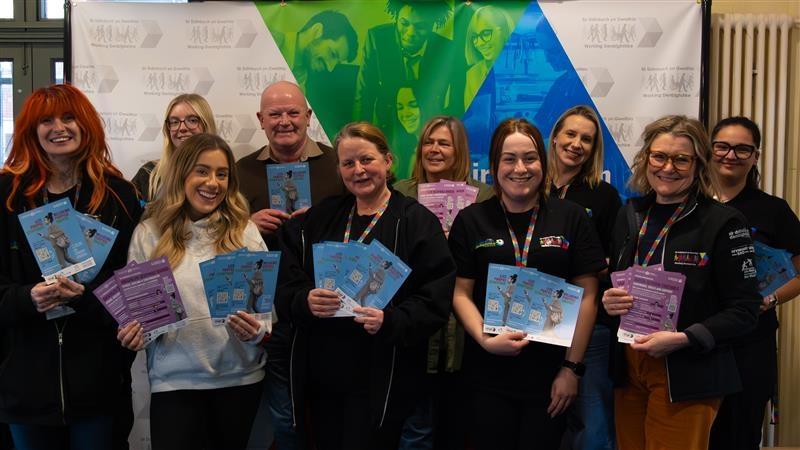 This year also marked an exciting milestone as Working Denbighshire was selected as part of a UK Trailblazer Pilot. This allows Working Denbighshire to ‘turbo-boost’ its provision focusing on its core mission and new and innovative approaches to employment and skills support, to help local people overcome barriers and achieve their goals.
A few highlights from 2025 include:
- Community Engagement: More local events and activities supported than ever before, creating spaces for people to connect and learn.
- Household Support: Hundreds of households received tailored assistance, helping families overcome barriers and access vital services.
- Skills and Education: Significant growth in retraining and education opportunities, opening doors to new careers and qualifications.
- Employment and Confidence: Many residents have gained employment, gained qualifications, and reported improved confidence and employability.
Councillor Jason McLellan, Leader of Denbighshire County Council and Lead Member for Economic Growth and Tackling Deprivation, said:
“These achievements reflect Working Denbighshire’s commitment to tackling barriers to employment and creating opportunities for all.
“By focusing on skills development, confidence building, and community engagement, the programme continues to make a tangible difference in people’s lives.”
Melanie Evans, Principal Manager, Strategic Employment, said:
“This year has been a real milestone for Working Denbighshire. Alongside supporting individuals and families, we’ve taken on new opportunities to innovate as part of a UK Trailblazer Pilot.’
We’re proud of what we’ve achieved and excited to build on this success in the year ahead.”
Working Denbighshire aims to build on this momentum in the year ahead, with plans to expand volunteering opportunities, strengthen in-work support, and continue tackling barriers to employment.
To stay informed about future events and opportunities, visit working.denbighshire.gov.uk or follow Working Denbighshire on social media.
Working Denbighshire is part funded through the Welsh Government Communities for Work Plus Programme which supports those most disadvantaged in the labour market to overcome the barriers preventing them from gaining employment.
Working Denbighshire is part funded by UK Government.
Refurbishment plans for two Denbigh schools see next steps approved at Cabinet
At a cabinet meeting held today (December 16th) Denbighshire County Council’s Cabinet approved recommendations which set out the next steps for the Denbigh High refurbishment programme and the refurbishment project at Ysgol Pendref.
The approved recommendations included the commitment of capital match funding towards both projects, and the submission of both Strategic Outline Cases for consideration by the Welsh Government’s Sustainable Communities for Learning investment panels in the first few months of 2026.
Both projects form part of the Council’s outline plan for the Sustainable Communities for Learning Programme.
During the meeting, Cabinet also approved the commencement of the procurement process to appoint a contractor to lead on the detailed design and build for the refurbishment of the Denbigh High project.
 Denbigh High
In September 2025 feasibility works were undertaken to ascertain a concept design and inform an outline scope of works for addressing the major site issues at Denbigh High. The proposed scheme of works that has been developed as a result of the feasibility work was developed in consultation with the school’s Senior Leadership Team.
The total agreed project allocation at this stage for the Denbigh High project is currently £19.8million.
Ysgol Pendref was established in 2012 following the amalgamation of two neighbouring schools. The school has operated since 2012 from two separate buildings on one site, with this new project aiming to consolidate all teaching and learning into a single building.
 Ysgol Pendref
The proposal will also seek provision for dedicated childcare provision, subject to approval, for a separate Child Care Capital Grant scheme to Welsh Government, and the development of community facilities to support the Upper Denbigh area.
In the summer of 2025, a Design and Construction Agent was appointed to support the development of the Ysgol Pendref project, and manage the procurement of a contractor to lead on the design and build for the extension and refurbishment of the current site. Approval to progress the procurement was provided by Cabinet in September 2025.
The total agreed project cost is presently £13.2 million for the Ysgol Pendref project.
Councillor Diane King, Lead Member for Education, Children and Families said:
“I am glad to see that both of these projects are taking the next steps, with both Strategic Outline Cases going forward for consideration by the Welsh Government’s Sustainable Communities for Learning investment panel next month. We have also agreed today to approve the necessary match funding for both projects.
Projects of this scale go through a number of key stages before there are spades in the ground and work can begin on the respective sites.
If approved at all key stages of development and approvals, these refurbishment projects will modernise and improve the facilities and capabilities of both schools and will bring a positive lasting impact for the generations of pupils in Denbigh and surrounding areas who will attend these schools in the future.”
Cabinet approves next step for salt barns project
Denbighshire County Council’s Cabinet has agreed the next steps to bring an important winter resilience project online

Denbighshire County Council’s Cabinet has agreed the next steps to bring an important winter resilience project online.
Cabinet members discussed this week the Salt Barns North project. They approved the tendering and procurement of the project in order to develop a new building to facilitate the safe and correct storage of salt for the purpose of winter maintenance operations which service the north of the county.
Previously the Cabinet in September had approved costs of £2,806,968.84 to bring this project to life at Bodelwyddan.
The site at Bodelwyddan operates the winter maintenance service for the north of the county and is strategically located to cover coastal towns of Rhyl and Prestatyn as well as the more rural areas of the north of the county,
More importantly the position of the depot to the A55 is vital in terms of winter maintenance provision to comply with Welsh Government and the North and Mid Wales Trunk Road Agency guidelines.
Due to its importance, the site’s salt storage facilities are needed to be updated and modernised to address both environmental concerns and any possible future risks to the resilience of the winter operations of the service.
Cllr Barry Mellor, Lead Member for Environment and Transport said: “This project will have a significant positive impact on Highways and Environmental Services through providing appropriate and fit for purpose salt storage facilities.
“The proposed development will provide a more efficient, safer working environment for the staff, whilst ensuring full compliance with environmental standards and providing further resilience for winter maintenance and adverse weather service delivery from this important site.”
Cabinet agrees new Placemaking Plans for Corwen and Denbigh
The council’s cabinet have agreed to adopt the final ‘Placemaking Plans’ for Corwen and Denbigh.

(County Hall)
Denbighshire County Council’s cabinet have agreed to adopt the final ‘Placemaking Plans’ for Corwen and Denbigh.
At today’s meeting (16th December), members considered and approved the plans, which set out a clear vision for revitalising the town centres, improving public spaces, and creating vibrant, sustainable places for residents, businesses, and visitors.
‘Placemaking Plans’ aim for the improvement of a place and ensure that all aspects that make a place great for living, working and visiting are considered. In line with the Design Commission for Wales’ Placemaking Charter, the plans embrace all six principles: movement, mix of uses, public realm, identity, collaboration, and health and wellbeing.
With the support of funding from the Welsh Government Transforming Towns Programme, the Urbanists were commissioned by Denbighshire County Council back in January 2024, to help with producing the ‘Placemaking Plans’ for Corwen and Denbigh, which involved reviewing and understanding town-specific data through commercial analysis, stakeholder engagement and the implementation of key activities.
Extensive community engagement shaped the proposals, with public drop-in sessions held in Denbigh and Corwen libraries earlier this year to gather local views and feedback on draft strategies.
Councillor Jason McLellan, Leader and Lead Member for Economic Growth & Tackling Deprivation said:
“Our towns are shaped by the people who live, work and visit them, and their opinions help define the future vision of these plans in their respective towns.
“‘Placemaking Plans’ are seen as an integral tool in Wales, to ensure best practices are used in the future development of places and are strongly linked to key policies and practice in Wales. The decision made by cabinet today exemplifies the council’s commitment to these policies and to the future developments of our towns.
“I would also like to thank both town councils who have been integral in the development of these plans”.
Remember to recycle this Christmas
As Christmas is fast approaching with decorations all up and presents wrapped, the Council is encouraging residents to remember to recycle over the holidays.

As Christmas is fast approaching with decorations all up and presents wrapped, the Council is encouraging residents to remember to recycle over the holidays.
From festive food to the perfect gifts, it’s a good time to make a list for recycling.
Below is a key list of popular festive items and what residents are able to do with them:
- Bubble wrap can't be recycled, it should be put it in the general waste bin or reused to wrap up valuables which are going into storage or being posted.
- Duct tape, electrical tape, cellotape, masking tape and parcel tape all need to go in the general waste bin.
- Christmas decorations can be reused year after year or donated to local charity shops or schools for craft sessions. Any decorations that are not fit for reuse should be put in the general waste bin.
- If gift wrapping paper doesn’t have glitter or foil, it can usually be recycled in your top box. Take off any sticky tape, ribbons and bows first. You can use the wrapping paper ‘scrunch test’ as well to make sure. If you scrunch the paper in your hand and it stays in a ball, it can be put into the recycling, if it doesn’t then it will need to go in your black/blue wheelie non-recyclable waste bin”
- For Christmas cards tear off ribbons or sections of glitter and then put the cards in with the paper recycling. Batteries from musical cards can go in your battery box.
- Hard Plastic Packaging can be recycled using the middle box of the Trolibocs or the red recycling bag for plastic.
- Soft plastics such as food container lids or plastic bags can be taken to recycling points at your local supermarket.
- Recycle empty aluminium cans in the middle box of the Trolibocs or the red recycling bag or at the nearest Recycling and Waste Park.
- Any unwanted glass bottles and jars can be recycled in the bottom box of the Trolibocs or the green bag for glass. Please remove any plastic or metal lids from glass bottles and place them in the middle box or the red bag.
- Plastic bottles can be recycled using the middle box of the Trolibocs or the red bag for plastic.
- All food waste must be placed in the orange food caddy and not in the general waste containers.
- Remember to recycle household batteries using the appropriate container for your recycling and waste collections service or at a Recycling and Waste Park. Please don’t put these in general waste containers, as they can cause fires.
Cllr Barry Mellor, Lead Member for Environment and Transport said: “The festive period is a very busy time for our waste and recycling teams but we know our residents really do support them by choosing the right options to recycle their Christmas items.
“All through the year residents are fantastic for recycling in Denbighshire and I would once again like to thank them for their support during the Christmas and New Year period.
If you’re not sure what goes where, you can check the A-Z recycling guide on the website.
Funding brings further Play Ranger sessions to Llangollen and Corwen
Both Llangollen and Cowen now have further after-school provision available through the Council’s Play Ranger service.
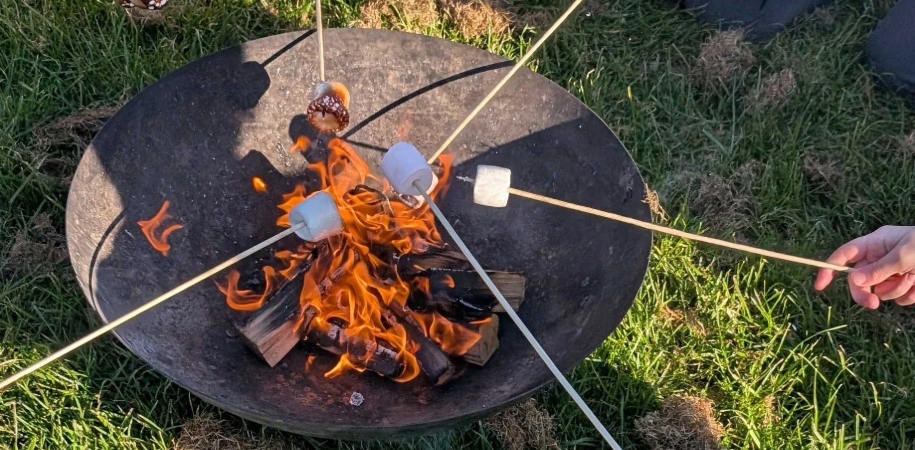
One of the team's winter activities
These sessions are funded through the Welsh Government’s Community Focused Schools funding, which will help to deliver safe play sessions for young people in both South-Denbighshire towns. The sessions are currently funded up until October of 2026.
Parents, carers or guardians are encouraged to fill in the application form for each child to register a place in these sessions. Parents can also register at the session if needed.
The Play Rangers sessions currently run on Wednesdays at Clawdd Poncen playing field from 3:15pm until 4:45pm and in Llangollen’s Pengwern Park on Mondays from 3:15pm until 4:45pm.
These play sessions are held for children aged 6-13 years old whilst children under 6 are welcomed, but must be accompanied by an adult.
Rhiain Morrlle, Head of Children's Service said:
“We have this funding up until October of next year, and we are really excited to have these sessions available in both Corwen and Llangollen.
I’d like to urge and parents or guardians who may have interest in these sessions to register through the form.”
Councillor Diane King, Lead Member for Lead Member for Education, Children and Families said:
“Play is an integral part of childhood, helping with imagination, development and socialisation from a young age.
These sessions are run by our excellent Play Ranger service, who run fun and exciting sessions for young people in Denbighshire.
The team have listened to the community and recognised the need for these sessions in both towns.”
To attend, parents/carers can fill out a registration form per child: https://www.denbighshire.gov.uk/en/leisure-and-tourism/forms/play-ranger-service/play-ranger-service-registration-form.aspx
Appointment to National Youth Work Delivery Board
Denbighshire County Council is delighted to congratulate Catherine Taylor, Principal Manager Youth and Community Resilience, on her appointment to the Welsh Government’s newly established National Youth Work Delivery Board.
 Catherine Taylor
The announcement was made as part of a wider update from Lynne Neagle MS, Cabinet Secretary for Education on progress towards creating a sustainable national model for youth work in Wales. The first meeting of the Delivery Board marks a significant milestone in this work, with members providing leadership, advice and challenge as the national body is developed. The Board will oversee key areas including remit, funding, governance, stakeholder engagement, and alignment with partner organisations across Wales.
Catherine joins a group of respected leaders from the youth work, voluntary and education sectors who will help shape the future of youth work provision nationally. Her appointment recognises both her experience and her commitment to supporting young people across Denbighshire and Wales.
Councillor Diane King, Lead Member for Education, Children and Families said:
“Catherine’s appointment is a fantastic achievement and well deserved. She brings a wealth of knowledge, passion and practical experience to the Delivery Board, and we are proud to see her representing Denbighshire at a national level. Her insight will play an important role in helping to shape the future of youth work for young people across Wales.”
Catherine Taylor on her appointment to the Board, said:
“It is a privilege to have been invited to represent the sector on the National Body for Youth Work in Wales. It’s such an exciting and crucial time for youth work in Wales and the future development of policy and practice. Young people deserve the very best and we look forward to working to strengthen our links with our many partners across the statutory, third and community sectors to develop our youth work offer across Denbighshire in the coming months. Denbighshire’s three key strategic goals are ‘partnership and collaboration’, ‘community focused support’ and ‘taking a strengths-based approach’ to developing services. We look forward to drawing upon our collective energies to maximise opportunities for young people.”
The Council looks forward to supporting this important work as the Welsh Government moves ahead with finalising a new statutory framework for youth work, which will introduce a strengthened planning and reporting structure and place a new duty on local authorities to ensure youth work provision.

If you would like more information on the Youth Service, please visit our website.
Council welcomes new chapter for Rhyl cinema
Denbighshire County Council has welcomed an exciting new show reel for cinema in Rhyl.
Denbighshire County Council has welcomed an exciting new show reel for cinema in Rhyl.
Screenings are set to commence at the new Rhyl Strand Cinema from Friday December 19 following the official lease handover of the cinema building last month from the Council to Merlin Cinemas.
A successful recent recruitment campaign will see local staff from Rhyl, Prestatyn, St Asaph and Dyserth ready to meet and greet film lovers.
Strand Cinema Rhyl will operate alongside its sister cinema in Prestatyn, Scala Cinema, which is already part of the Merlin Cinemas group of independent cinemas.
Leader of Denbighshire County Council, Councillor Jason McLellan said: “It’s fantastic to finally see cinema come alive once again in Rhyl thanks to the hard work of Merlin Cinemas with the support of our own officers to finally raise the curtain once again on the building’s screens.
“This is such an important venue for Rhyl with the town’s rich and lengthy cinema history and tradition and coming hot on the heels of the successful opening of Queen’s Market, will be another attraction for residents and visitors alike and an important part of continuing regeneration in our seaside town.
“We are really pleased as well that Merlin has the confidence and vision to invest in Rhyl which has given such a boost to local employment. I wish those working at the cinema the very best in their roles. I would urge local residents and visitors to Rhyl to come and enjoy the big screen from Friday at the Strand as well as backing other great business ventures in the town to ensure their continued success.”

Merlin Cinemas began its journey 35 years ago with a single screen in Penzance in Cornwall and now operates over 20 cinemas across the UK. Known for saving and restoring historic and modern venues alike, Merlin is committed to keeping cinema-going affordable, accessible, and magical for local communities.
Keep an eye on Merlin’s website and social media for updates about the Strand opening www.merlincinemas.co.uk
Step Back in Time at Nantclwyd y Dre’s Christmas Through the Ages Festive Event
The historic house and garden continues to host its much-loved ‘Christmas Through the Ages’
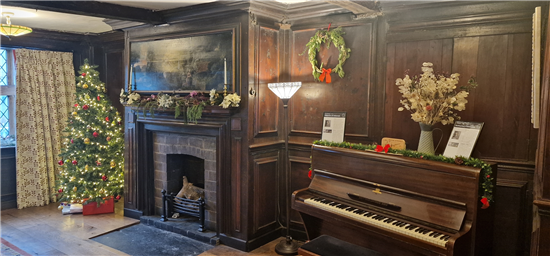
Beloved heritage attraction Nantclwyd y Dre will once again come alive with festive spirit this December, as the historic house and garden continues to host its much-loved ‘Christmas Through the Ages’ event on Saturday 13th and Sunday 14th December.
Visitors are invited to discover the history of Christmas as they journey through over 500 years of history, exploring how festive traditions have evolved from the Middle Ages to World War II, all under one beautifully decorated roof.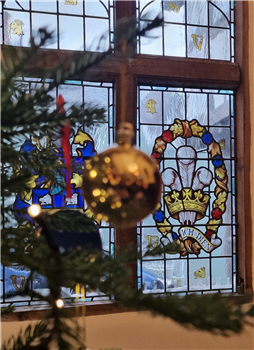
Each room of this remarkable historic house will be transformed to represent a different era, from the greenery and mummers’ plays of a Medieval Christmas, to the lavish Jacobean feasts, the elegance of Georgian celebrations, and the charm of Victorian traditions that shaped the Christmas we know today. Visitors will also be able to discover the sparkle of the Edwardian Christmas, with electric lights and early Advent calendars, and the resilient “make do and mend” spirit of Wartime festivities.
Dating back to 1435, Nantclwyd y Dre is a one of Wales’ oldest dated timber-framed townhouses, offering a unique glimpse at family life down the centuries through captivating and interactive trails and activities designed to bring history to life for visitors of all ages.
‘Christmas Through the Ages’ gives visitors the chance to experience the building at its most atmospheric, with authentic decorations, music, and stories that bring five centuries of Yuletide to life.
Kate Thomson, Site Manager at Nantclwyd y Dre said:
“Christmas Through the Ages is one of our most popular annual events and is a wonderful way for visitors to discover how many festive traditions began, as well as enjoying the house at such a lovely time of year.
“Nantclwyd y Dre has always been a place of family, and we hope that this season will be no different with visitors spending some memorable time with friends and family, exploring the history of Christmas together.
“This year we have been incredibly lucky to receive sponsorship for a new Christmas tree thanks to local company B&W Builders and Decorators, which will for the centrepiece of the decorations this year, and for years to come”.
Councillor Emrys Wynne, Lead Member for Welsh Language, Culture and Heritage said:
“Nantclwyd y Dre is a unique piece of Welsh history, offering visitors the opportunity to explore over 500 years of history under one roof. The ‘Christmas Through the Ages’ events will offer a different way for families to experience the historic house”.
For more information, please contact the Denbighshire Heritage Service at heritage@denbighshire.gov.uk
Working Denbighshire helps people start careers in social care
Careers in social care are important as they directly benefit individuals by providing essential support and improving quality of life, while also contributing to the overall well-being of society. These roles are crucial for supporting vulnerable populations, such as the elderly, the disabled, children, and help people maintain their independence, dignity, and social connections.
Working Denbighshire is making these careers accessible for those considering a pathway into the industry.
Social care is the backbone of our communities, providing essential support to those who need it most. For many people considering a career in social care, the first steps can sometimes appear daunting. That’s where Working Denbighshire steps in, working in collaboration with the Council’s in-house care and support services.
The team understands the challenges people face, whether it’s being out of work, balancing caring responsibilities, or living with a long-term health condition or disability. Working Denbighshire offers practical, tailored support to help individuals take their first steps into social care. From training and workshops to hands-on placements, they make it possible for people to build confidence, gain skills, and start a rewarding career that truly makes a difference.
Sister Anna Lydia’s journey shows exactly how this works. A missionary nun from Uganda, she came to the UK on sponsorship and wanted to give back locally. With a strong passion for community support, social care, and charity work, she was determined to make a difference. With support from mentors at Working Denbighshire, Sister Anna Lydia attended a social care workshop and completed the three-day ‘Introduction to Care’ session, building the confidence and skills she needed.
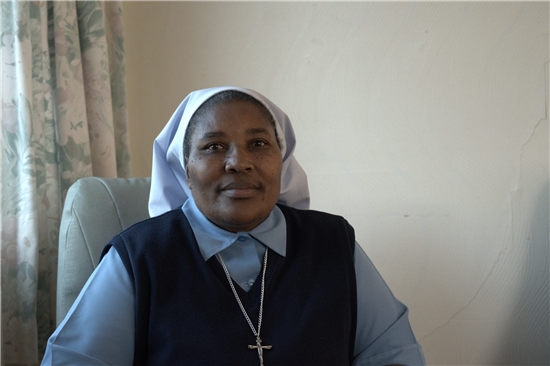
Sister Anna Lydia
She began her journey with a paid WorkStart placement at Dolwen Care Home, part of the Council’s residential care facility, while also volunteering with the Edge of Care Service - a project helping to reduce isolation and improve social connections through face-to-face visits, telephone support, and attending social groups.
Sister Anna Lydia's commitment has been recognised, and she’s now been offered a supply role to continue making a difference once her placement ends. She said:
“My job gives meaning to my mission and purpose. The training I have received through Working Denbighshire has been a great help. Back home, we don’t have an established care system, so I’ve learned so much. I have just finished a course which was a great help and soon as I completed it, I put it into practice with my work.”
Fiona Thomas, Placement Officer for the WorkStart Scheme says:
“Stories like Sister Anna Lydia’s show why Working Denbighshire’s approach works. By offering training, mentoring, and real work experience, they help people turn ambition into opportunity, while strengthening the care sector with committed individuals who want to make a difference.”
Councillor Jason McLellan, Leader of the Council and Lead Member for Economic Growth and Tackling Deprivation said:
“Working Denbighshire continues to change lives by opening doors to meaningful careers in social care. Stories like Sister Anna’s remind us how powerful the right support can be when someone is ready to take their first step. The programme not only empowers individuals but also strengthens our communities by helping dedicated people into roles where they can make a real difference.”
Through shared resources and a commitment to inclusion, Working Denbighshire and Denbighshire County Council are supporting individuals to achieve sustainable careers while strengthening local services.
Working Denbighshire is part funded through the Welsh Government Communities for Work Plus Programme which supports those most disadvantaged in the labour market to overcome the barriers preventing them from gaining employment.
Working Denbighshire is part funded by UK Government.
Seasonal competition serves up traditional countryside craft views
Traditional countryside management skills were on show once again at an annual competition.
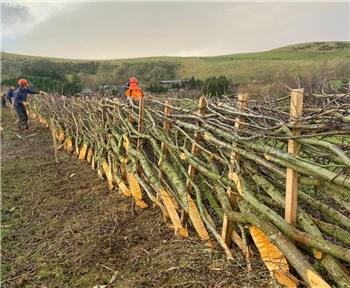
Traditional countryside management skills were on show once again at an annual competition.
Denbighshire Countryside Service’s hedgelaying competition returned this year to take place on the Clwydian range above Clicain.
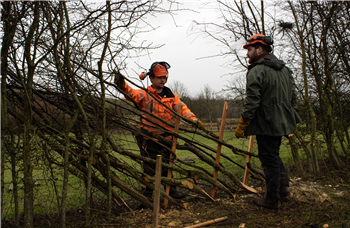
Forty participants including volunteers, took on the challenge of hedgelaying on land with permission of the landowner, just below the hill line.
As well as volunteers taking part there was also a staff category that included entries from Keep Wales Tidy, Flintshire Countryside Service, North Wales Wildlife Trust, Wirral Countryside Volunteers, Smithy Farm and Bodfari Environmental and teams from Denbighshire’s various countryside areas, together laying a total of 140 metres of hedgerow.
Denbighshire’s Countryside Service regularly lays hedges with the support of volunteers and to help them learn the skills, right throughout the county to support local nature.
They carry out the traditional skill to rejuvenate the hedgerows by partially cutting and laying the stems at an angle to encourage regrowth and fill gaps in the hedge.
This countryside management skill was widely used by farmers and landowners as part of their winter boundary managing efforts. Mechanical hedgerow maintenance then took over, but studies have shown how much more effective this older method is for the much-needed regeneration of hedgerows.
As the hedges become fresher and younger in appearance, this technique also allows the hedgerow base to thicken providing a denser habitat for biodiversity to thrive.
The results are included below and Cllr Barry Mellor, Cllr Barry Mellor, Lead Member for Environment and Transport, and Biodiversity Champion presented the prizes.
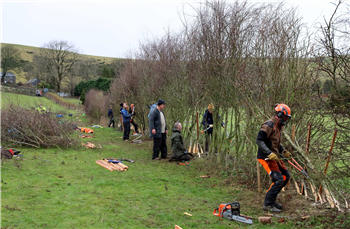
Results Below:
Volunteers category
1st Peter Martin & Ann Shaw
2nd Mal Edwards & Matt Jones
3rd Ed Howath & Huw
4th Fiona & Mary , joint with Terry Parry & Roger Jones
Staff category
1st Rich Masson
2nd Phil Lewis
3rd Sasha Taylor & Vitor Evora
4th Imogen Hammond & Saul Burton, joint with Geraint Hughes and Richard
Senior Ranger Jim Kilpatrick said: “This was a fantastic location, and I want to thank everyone who helped make this day a great success. The event relay shows the strength of the service when we get together from each area with everyone contributing and making it such a positive experience for the volunteers as well.
“The end result thanks to everyone’s efforts looks amazing and will really help biodiversity in this part of the Clwydian Range.”
Cllr Barry Mellor added: “The skills on show at this annual event are fantastic and really help keep this traditional land management skill alive for present and future generations.
“Hedgerows are essential habitats for our local wildlife and well done to all for getting stuck in at the competition to craft this fabulous example of skills from yesteryear that brings massive benefits to the land and biodiversity.”
Council funded staff development scheme for aspiring social workers brings value to workforce
Chris, who is 35, currently works in the council’s Homelessness Prevention Team and is being funded by the council on a part-time course through the Open University to become a fully qualified social worker.
 Chris
Chris
Chris is part of the council’s ‘Grow Your Own’ scheme, and studies alongside his full-time role. He is now going into his final year.
The ‘Grow Your Own’ scheme gives existing council staff the opportunity to train alongside their current role to become fully qualified social workers.
Speaking on the opportunity, Chris said:
“I have been working in the Homelessness Prevention Team for the past 5 years, and I’ve been working underneath a social worker. I have really seen the world in a different light working in this team, it has given me the skills to work with people and understand where they’re coming from.
Working under a social worker, and seeing the work they do, it made me want to progress and do more for people, and help them empower themselves.”
Back in 2022, Chris discussed the opportunity with his manager, and after being successful in a round of interviews, his journey towards becoming a Social Worker began. His first year consisted of two modules and lasted two calendar years.
Chris said:
“I always thought that university was beyond me, and I have struggled with self-confidence in the past. But when the opportunity came up, my manager showed belief in me, and encouraged me to do the course. The team have been brilliant.
Taking my first year over two years really helped break me in, and it meant I never had two assignments side by side.
It gave me time to breathe and get used to the style of academic writing.
With the family dynamic I have at the moment, the flexibility has really helped.”
Alongside Chris are four other local authority employees who work in different sectors. All applicants must pass the interview process before being able to begin their first year.
Chris added:
“My first placement was actually within the team that I currently work in, which was really helpful.
My second placement was fantastic, it was for around 90 days, and I can’t say enough about it. I was with a wonderful team. To go from my first placement, where I was with a team that I was really comfortable with, to another team, I was quite nervous.
But Denbighshire’s South Locality Team, which is where my second placement was based, were fantastic and so supportive. My practice educator was brilliant and so hands on, that I was never worried about my portfolio, they were a massive help.
The council gave me one study day per week during my placement, which to be fair to them, they didn’t have to actually give me, and that was a massive help.
It was so handy, as there was so much work to get through. I was so thankful for that study day, as I honestly think it would’ve been so hard to get through the last year without it.”
By doing his course whilst still working full-time, it has allowed Chris to continue to work through his normal role and study at the same time, without having to worry about his finances.
Chris said:
“At my age, and with the family I now have, there is no way I would’ve been able sacrifice my job to go and study in uni, and Denbighshire have done all they can to make sure I don’t have to.”
Chris will soon start the last year of his course, with graduation set for Autumn of next year.
Ann Lloyd, Head of Adult Social Care and Homelessness said:
“Our Grow Your Own scheme help those within our workforce who have an interest in becoming a social worker with a realistic, supportive and successful pathway to do so.
Working across Adult and Children’s social care this pathway has seen success now for a number of years, and helps our ambitious and hard-working staff, like Chris, upskill in a more flexible way than is traditionally offered.
I would like to wish Chris all the best in his third year, and thank him and his colleagues for the work they have done so far.”
Pilot solar project launched for Council EV minibuses
A pilot project has been launched to trial a greener method of protecting the running of Denbighshire County Council transport fleet vehicles.


A pilot project has been launched to trial a greener method of protecting the running of Denbighshire County Council transport fleet vehicles.
Denbighshire County Council is trialling solar kits on three of its electric powered minibuses to help conserve battery life.
The vehicles taking part in the pilot are Toyota Proace Verso electric vehicle (EV) people carrier which have replaced end of life fossil fuel powered similar vehicles with funding support from the Welsh Government Energy Service.
They have ranges up to 214 miles and are supporting the reduction of maintenance and mileage costs moving forward for fleet. The minibuses are used for local school transport and social care transport.
Currently the Council has one of the highest figures in Wales for the proportion of zero emission vehicles (ZEVs) as a percentage of their fleet, at over 20 percent.
Maintenance staff have now fitted the three solar kits to each of the vehicles and officers will be monitoring the impact of the project about the efficiency of the auxiliary batteries in each. Welsh Government’s Energy Service has supported this project with funding.
Fleet Mobility Lead Officer, Martin Griffiths, explained: “We’ve carried out this pilot using these vehicles as they are the ones most at risk from having lack of charge in the auxiliary batteries due to frequency of use. For example, out of the school term, they are less likely to be used and more likely to see the battery power drop.
“This trial of the technology is to see if it will potentially be of benefit to the auxiliary batteries of these vehicles by harnessing the power of the sun to provide a continuous top up for each battery to extend their life and have them fully charged when needed.
“Utilising solar also fits in with our continuing aspiration to reduce the carbon footprint of our fleet service.
Cllr Barry Mellor, Lead Member for Environment and Transport said: “We are working very hard to reduce our fleet’s carbon footprint by replacing end of life fossil fuel vehicles when the opportunity arises with greener alternatives where it is appropriate for the service need.
“Our fleet service is also committed to looking at innovative ways such as this pilot to strive towards reducing our carbon emissions further.”
Young nature photographers presented with prizes
Young photographers received a special school-based presentation after winning Denbighshire County Council’s 2025 Wildflower Meadow Photography Competition.
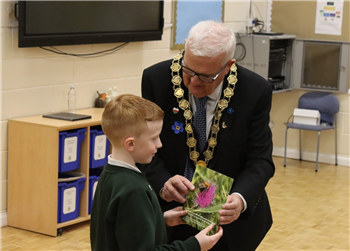

Young photographers received a special school-based presentation after winning Denbighshire County Council’s 2025 Wildflower Meadow Photography Competition.
Denbighshire pupils were asked to take a photograph on one of the county wildflower meadows, a school meadow, or community nature reserve site. Photos could be of the whole site, a tiny part such as an insect or flower, or whatever they felt made the best photograph.
The winners were Elis from Ysgol Esgob Morgan who took a photo of a Common Carder Bee on some thistle at Cysgodfa Denbigh and Wynter in Year 5 at Ysgol Bryn Hedydd who took a photo showing a White Tailed Bumble Bee on yellow flowers.
Both were presented with their prizes of environmental books for their schools along with a small canvas image of their photograph to hang at home or at school by Council Chairman Cllr Arwel Roberts and Cllrs Barry Mellor and Peter Scott who visited each school to meet the winners.


A book and card were also presented to Charlotte in Year 5 at Ysgol Bryn Hedydd for her photograph that she sent into the competition and Osian at Ysgol Esgob Morgan.
Denbighshire County Council’s first actions after declaring a climate and ecological emergency in 2019 was to start managing grassland for wildflower meadow creation. The aim of the project is to restore and increase the amount of habitat available throughout the county for pollinators and wildlife. The project also brings many benefits or ‘ecosystem services’ to residents in the county, such as reduced flooding, improved air quality, and air cooling.
Councillor Barry Mellor, Lead member for Environment and Transport, said: “It was a privilege to meet the winners, and I know my colleagues felt the same. Their passion for helping local nature and learning about it is extremely inspiring We would like to again congratulate Elis and Wynter on their lovely images and thank all the pupils who took time to enter the competition.”
Denbighshire County Council will run the competition again over Spring/Summer 2026.
Reminder to remember festive waste collection changes
Denbighshire residents are reminded to be aware of temporary collection day change to Waste and Recycling during the Christmas and New Year period.

Denbighshire residents are reminded to be aware of temporary collection day change to Waste and Recycling during the Christmas and New Year period.
Over the holidays the following temporary changes have been made to household waste collections, these are:
- Monday 22 December 2025 will be collected on Saturday 20 December 2025.
- Tuesday 23 December 2025 will be collected on Monday 22 December 2025.
- Wednesday 24 December 2025 will be collected on Tuesday 23 December 2025.
- Thursday 25 December 2025 will be collected on Wednesday 24 December 2025.
- Friday 26 December 2025 no change (normal collection day).
- Monday 29 December 2025 no change (normal collection day).
- Tuesday 30 December 2025 no change (normal collection day).
- Wednesday 31 December 2025 no change (normal collection day).
- Thursday 1 January 2026 will be collected on Saturday 3 January 2026.
- Friday 2 January 2026 no change (normal collection day).
The following temporary changes will be made to commercial waste collections over the Christmas and New Year period:
- Monday 22 December 2025 will be collected on Saturday 20 December 2025.
- Tuesday 23 December 2025 will be collected on Monday 22 December 2025.
- Wednesday 24 December 2025 will be collected on Tuesday 23 December 2025.
- Thursday 25 December 2025 will be collected on Wednesday 24 December 2025.
- Friday 26 December 2025 no change (normal collection day).
- Monday 29 December 2025 no change (normal collection day).
- Tuesday 30 December 2025 no change (normal collection day).
- Wednesday 31 December 2025 no change (normal collection day).
- Thursday 1 January 2026 will be collected on Saturday 3 January 2026.
- Friday 2 January 2026 no change (normal collection day).
During the Christmas and New Year period, the following temporary changes will be made to garden waste collections:
- Monday 22 December 2025 will be collected on Saturday 20 December 2025.
- Tuesday 23 December 2025 will be collected on Monday 22 December 2025.
- Wednesday 24 December 2025 will be collected on Tuesday 23 December 2025.
- Thursday 25 December 2025 will be collected on Wednesday 24 December 2025.
- Friday 26 December 2025 no change (normal collection day).
- Monday 29 December 2025 no change (normal collection day).
- Tuesday 30 December 2025 no change (normal collection day).
- Wednesday 31 December 2025 no change (normal collection day).
- Thursday 1 January 2026 will be collected on Saturday 3 January 2026.
- Friday 2 January 2026 no change (normal collection day).
During this time, residents can book to visit our waste and recycling parks. Details of what is accepted in our waste and recycling parks are available on the Council’s website.
Normal collections for residents will resume from Monday, 5 January 2026.
Councillor Barry Mellor, Lead Member for Environment and Transport said: “The festive period is a time where a lot of waste and recycling will be produced, and our fantastic waste teams will be on hand to pick up all be it on different days whilst the holidays are ongoing.
“Please share the information about the temporary changes and visit the Council’s Facebook page where there is lots of information about this collection period. We also want to thank all our residents for understanding these changes and also thank them for their cooperation during the festive period.”
Full details about Christmas and New Year information is also on the Council’s website.
Residents can check how to recycle items on the Council’s A-Z recycling guide online.
Volunteers celebrated for nurturing nature at tree nursery
A green hearted band of Denbighshire volunteers have been recognised for their enthusiasm and passion for supporting a project to breathe life back into nature.
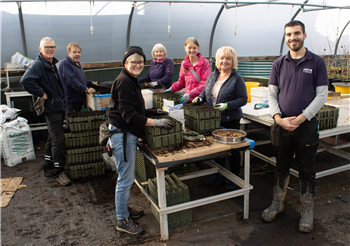
A green hearted band of Denbighshire volunteers have been recognised for their enthusiasm and passion for supporting a project to breathe life back into nature.
Today marks International Volunteers Day, a day to celebrate and thank people all around the world who dedicate their precious time and efforts to voluntary service.
Over at the Council’s local provenance tree nursery at St Asaph, volunteers have created a community that has stepped forward to support with their own hands several tree and wildflower growing projects.
The Council’s Tree Nursery is funded by the Welsh Government, through the Local Nature Partnerships Cymru ENRaW project and Local Places for Nature grant.
Through their interest and passion for helping nature and learning skills from the team at the tree nursery, the volunteers have helped bring new life to the Wild Service Tree. Fruit from this tree was also traditionally made into a fermented beer like alcoholic drink and it is believed that this beverage influenced the naming of many ‘Chequers’ pubs and inns across the UK
This year they have also helped the tree nursery team produce over 1,000 elder trees from an actual elder growing on the site through cuttings and nurtured over 1,800 wych elm trees which have been grown from seed collected at Loggerheads Country Park last year to help the tree resurge in Denbighshire.
Sam Brown, Tree Nursery Assistant said: “I really look forward to when the volunteers come over to the site. Its great to work with them, help them learn new skills as their passion for helping nature is amazing.
“They’ve created a lovely little community here at the tree nursery and have really helped us make a positive difference for our local nature through their enthusiasm whilst on site with us.”
Cllr Barry Mellor, Lead Member for Environment and Transport, added: “I’m always humbled to see the passion and dedication our tree nursery volunteers have and the way they just give their own time with a lot of smiles that has created a lovely community at the site
“All of our officers working on this project really value the dedication they give and the support they provide and ultimately enjoy the company the volunteers give while they are on. I hope they have enjoyed learning new skills with our team and continue to enjoy being a part of this very important project for local nature in Denbighshire.”
If you are interested in volunteering or need further information, please email biodiversity@denbighshire.gov.uk
Electric powered flexible services drive thousands of miles for resident transport
A greener mode of flexible transport has bussed Denbighshire residents on a number of around the world trips.
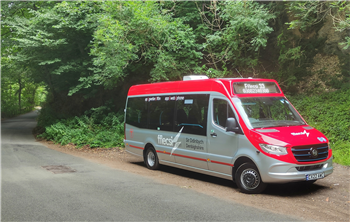
A greener mode of flexible transport has bussed Denbighshire residents on a number of around the world trips.
Fflecsi Electric powered transport vehicles operating around Ruthin and Denbigh have surpassed a major milestone this month.
Ruthin’s Fflecsi service was launched by Transport for Wales and the Council in 2022 and at the time started operations with the country’s first-ever zero emission 100 per cent battery-operated 16-seat minibus through support from the Welsh Government Energy Service.
The demand responsive transport service allows passengers to book their journey up to one hour ahead by either downloading and using the Fflecsi app, on the fflecsi.wales website or by phoning a dedicated call centre. The app can then keep the customer informed of any changes in pick-up times.
In 2023 Denbigh’s fflecsi service was expanded, through work by Transport for Wales (TfW) and Denbighshire County Council. The vehicle allocated to this expansion was a fully accessible, electric four passenger seat vehicle.
Since operating the Ruthin EV minibus has clocked up nearly 74,000 greener miles supporting local residents with their daily lives. That’s around 88 trips from Land’s End to John O’Groats.
The Denbigh electric vehicle has also amassed around 52,000 miles of greener transport provision, the equivalent of about 610 road trips from Holyhead over the border to Chester.
Together these two electric vehicles operating in rural areas surrounding neighbouring towns have racked up enough greener miles for almost five round the world trips.
Cllr Barry Mellor, Lead Member for Environment and Transport, said: “Our fleet has worked hard to reduce reliance on fossil fuel powered vehicles to help lower our carbon emissions across the county.
“These two elective transport vehicles are not only providing less emissions whilst on the road, but they have really given Ruthin and Denbigh residents of all ages a helping flexible hand when it comes to getting on with their daily lives around each of the towns and surrounding area.
“Its great to see people embracing these two services and taking advantage of the electric powered transport and I would encourage anyone who maybe struggling to get out and about to give Flecsi a go.”
You can find information on the Ruthin Service here
https://tfw.wales/fflecsi/locations/ruthin
You can find information on the Denbigh Service here
https://tfw.wales/fflecsi/locations/denbigh
Ysgol Emmanuel awarded Gold Active Travel School Award
Ysgol Emmanuel in Rhyl has recently been awarded with the Gold Active Travel School Award, one of only a few schools in the whole country to achieve this.
A special event was held recently at the school to celebrate this achievement.
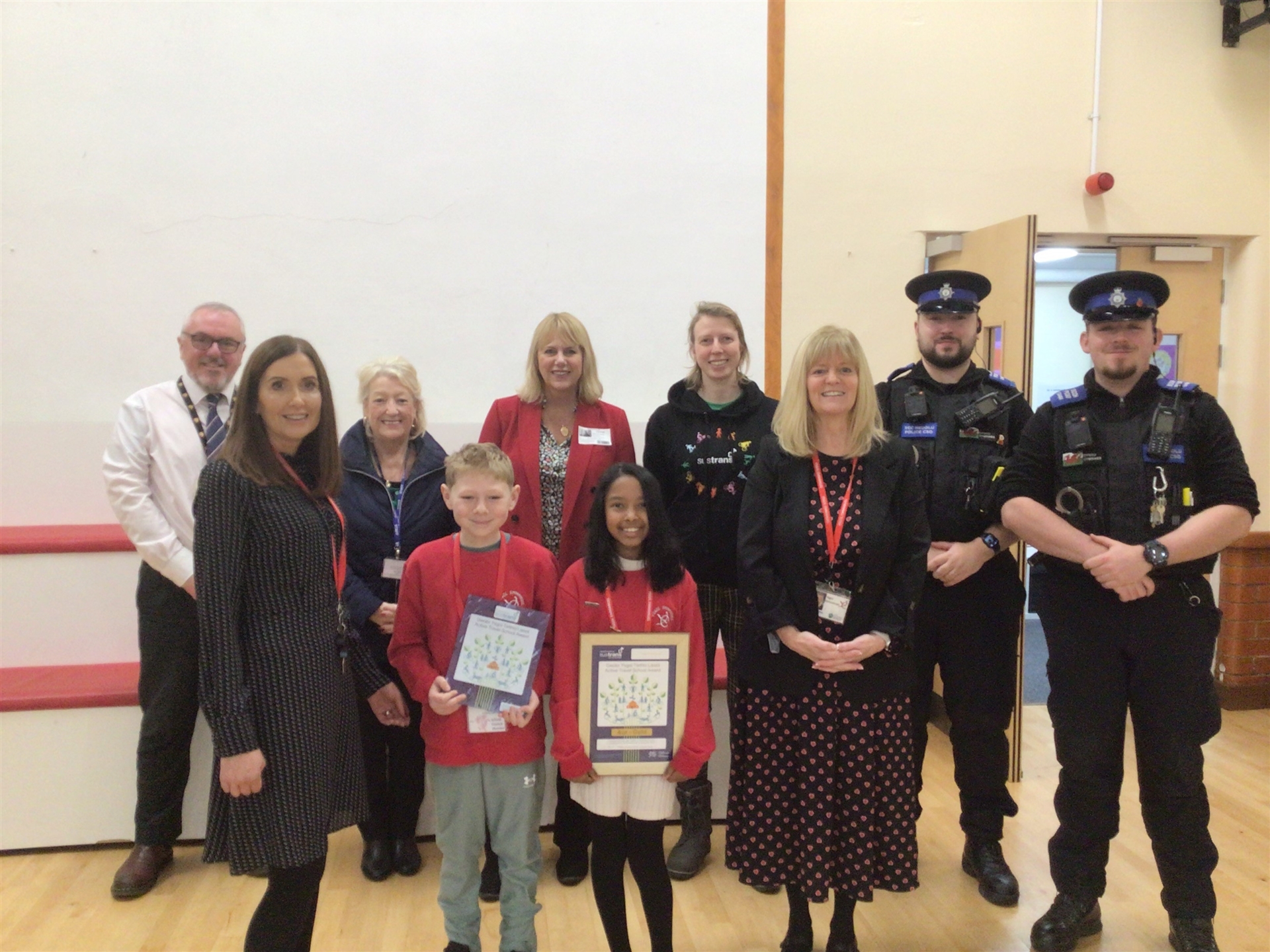
The school’s promotion of active travel within its school community, as well as its work with Walk Wheel Cycle Trust’s Active Journeys Programme to encourage healthier, greener travel habit has earned them the Gold Award.
The Gold Active Travel School Award is awarded to schools who demonstrate an ongoing commitment to promoting active and sustainable travel over many years, which has led to significant and lasting organisational, cultural and behavioural changes.
A plaque was awarded to the school to recognise their achievement, and bikes were also gifted as part of the award.
Councillor Diane King, Lead Member for Education, Children and Families said:
“Ysgol Emmanuel has worked hard within the community to promote active travel, and I am so pleased to see that it has been bestowed with this award.
To be one of only a few schools within the whole country to receive this Gold award is a massive achievement, and they should be really proud of the work they have done.”
Rona Archer, Headteacher at Ysgol Emmanuel said:
“We are delighted to receive this award which reflects all the hard work and different activities that our pupils, led by our School Council lead teacher Mrs Edwards, have completed.
This work has also contributed towards our curriculum offer and in particular encouraging children to become healthy, confident individuals. We are grateful to Active Journeys for their support and for gifting the bikes which will allow our older pupils to take part in cycling proficiency in the future if they do not own a bike themselves.”
Promoting inclusion on International Day of Disabled People
Working Denbighshire is proud to support International Day of Disabled People by championing inclusion and accessibility.
The service provides tailored support for disabled residents, helping them build confidence, gain skills, and access opportunities suited to their needs. Through mentoring, volunteering and practical training, the service is empowering people to achieve their career goals.
One example is Dru, a participant who shared her experiences of living with autism and a visual impairment. Through Working Denbighshire, they secured their dream role in welding at Kwikweld. This opportunity boosted their confidence and allowed them to work in a way that fits their needs.

“I was labelled as a risk to the workplace,” Dru said. “When I contacted Working Denbighshire, they helped me get around that. [My job] is part of my routine now… it means everything.”
Working Denbighshire is committed to making inclusion central to everything it offers. Through the Council’s Disability Confident Guaranteed Interview Scheme, disabled candidates and those who have long term heath conditions, who meet the essential criteria are guaranteed an interview. The service is also collaborating with the Welsh Government’s Disabled People’s Employment Champions to strengthen their strategy.
Councillor Jason McLellan, Leader of the Council and Lead Member for Economic Growth and Tackling Deprivation said:
“Inclusion is at the heart of our approach. By partnering with the Welsh Government’s Disabled People’s Employment Champions and using the Disability Confident Guaranteed Interview Scheme, we’re ensuring that recruitment is not only compliant but genuinely inclusive. Our goal is to create opportunities where everyone can contribute their skills and talent.”
Gareth Foulkes, Welsh Government Disability Champion said:
“Employers often face challenges in finding skilled staff, and disabled people have a wealth of talent to offer. Many aspire to work and contribute to society just like anyone else, and inclusion is something we all share responsibility for. I’m delighted to be collaborating with Working Denbighshire on this important issue and helping create more opportunities for disabled people. Let’s get to work!”
The international day reinforces that inclusion is an ongoing commitment. The service aims to build a community where everyone can access the support they need and contribute to the workforce at a pace that suits them. This work also forms part of the Trailblazer initiative, which focuses on innovative approaches to remove barriers to employment and promote inclusion for all.
For more information about inclusive services or employment opportunities, residents can call 01745 331438 / 07342 070635 or visit the Working Denbighshire website.

Working Denbighshire is part funded through the Welsh Government Communities for Work Plus Programme which supports those most disadvantaged in the labour market to overcome the barriers preventing them from gaining employment.
Working Denbighshire is part funded by UK Government.
Rare UK tree species receives new lifeline in Denbighshire
A rare UK tree has received a new lifeline in Denbighshire
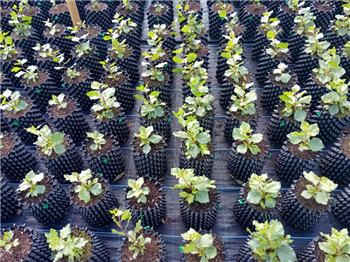
A rare UK tree has received a new lifeline in Denbighshire following the results of a four year long project to help protect the species.
The Councils Biodiversity Team have confirmed through genetic testing that they have managed to grow native Black Poplar trees from seed.
Work took place at the Council’s Tree Nursery based near St Asaph which has been funded by the Welsh Government, through the Local Nature Partnerships Cymru ENRaW project and Local Places for Nature grant.
A local provenance approach is used to source seeds for growing at St Asaph until the trees are ready to be planted on local land. Work carried out includes a mix of preserving and boosting core tree species such as oaks and whilst also lending a supporting hand for conserving rarer trees such as the wild service tree and now, with exciting results - the black poplar.
Black Poplars, although very rare in Denbighshire are native to the ecology of the county’s riverbanks and floodplains. They can be found scattered along the Vale of Clwyd, and can be recognised from their dark fissured bark, leaning trunks, and downward curved branches.
Mature trees grow to 30 metres and can live for 200 years. They are dioecious, meaning there are separate male and female trees.
Black Poplars are thought to have decreased in numbers due to habitat loss from drainage and canalisation of riverbanks, the removal of female trees and their “unsightly” fluffy seeds, and a decrease in demand for their timber as faster growing hybrid poplars were introduced. Centuries ago, Black Poplar wood was used in buildings and various products (poplar wood is heat resistant and used for wagon brake blocks) until the construction industry turned to non-native trees and interest in native black poplar dwindled.
The Biodiversity Team worked to pollinate from surviving males at one Denbighshire location with a female in another part of the county and another male also cross the border in Conwy.
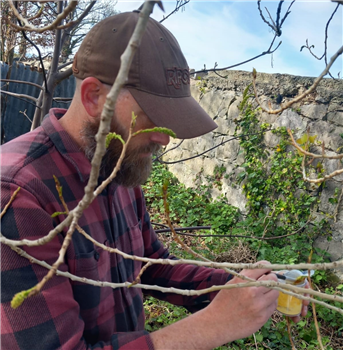
Senior Biodiversity Officer Liam Blazey explained: “The project has been over four years in the making from researching the location of suitable Black Poplar trees to the process the team put in place at the tree nursery to grow more of the rare trees.”
“We are really excited to have grown true native black poplar trees from seed and most importantly the methodology we used to do this has worked as hoped
“The methodology worked by carrying out controlled pollination between selected males and selected females. This has produced viable native Black Poplars and that’s really good news for us and for the species.”
Liam explained the results were sent to Forest Research, Forest Genetics Lab who carried out a DNA fingerprinting test to determine if the work was a success. The results came back positive for all of the randomly selected trees, with the results showing the respective genetic contribution from the expected mother and father.
He said: “The majority of black poplar propagation in recent history has been via taking vegetative cuttings, meaning the same individual and hence genetics is copied many times.
“The fact is we have grown Black Poplars from seed is really nice because it introduces new genetic combinations and hence more resilience to the next generation of black poplars.”
The Council’s Biodiversity Team’s next step in the ongoing work to protect the black poplar will be to collaborate with other groups interested in this rare and iconic tree.
Liam added: “We can’t keep going back to the same female as we may end up with genetic issues down the line, as all the seedlings will be brothers or sisters with the same mother. Going forward we hope to start conversations with other local groups that know of other female Black Poplars, share our methodology and go forward from there and spread out the genes we have here in the natives we have grown. “
Cllr Barry Mellor, Lead Member for Environment and Transport, said: “We are very proud of our Biodiversity team for breathing life into this project to boost Black Poplar species in the county. It is scarce right across the UK and the team’s fantastic efforts will give the tree a chance to thrive once more in Denbighshire.”
Council’s ‘free after three’ returns for the festive period
The initiative will be returning once again this year.

Denbighshire County Council’s ‘free after three’ initiative will be returning once again this year.
Between 24 November and 31 December, council-run town centre car parks will be free to use across Denbighshire every day from 3pm to encourage more people to use their local high street for shopping in the run up to Christmas and New Year.
The ‘free after three’ scheme will be available in the following car parks:
Corwen: Green Lane.
Denbigh: Barkers Well Lane, Crown Lane, Factory Ward, Post Office Lane, Vale Street.
Llangollen: East Street, Hall Street, Market Street, Mill Street.
Prestatyn: Fern Avenue, Kings Avenue, Lower High Street, Nant Hall Road, Railway Station.
Rhuddlan: Parliament Street.
Rhyl: Library (disabled bays only), Morley Road, Queen Street, Railway Station, Town Hall, Sky Tower, West Kinmel Street.
Ruthin: Crispin Yard, Dog Lane, Market Street, Park Road, Rhos Street, St Peter’s Square, Troed Y Rhiw.
St Asaph: Bowling Green.
Denbighshire County Council have also allocated five free parking days a year to town and city councils. Details of the remaining dates for each town and city councils are below:
Corwen: 03/11, 12/12, 13/12, 20/12.
Denbigh: 30/11.
Llangollen: 29/11, 20/12, 21/12.
Prestatyn: 21/11, 22/11, 24/12.
Rhuddlan: 08/11, 09/11, 07/12, 13/12.
Rhyl: 20/12, 21/12, 22/12, 23/12, 24/12.
St Asaph: 09/11, 28/11, 25/12, 26/12, 31/12.
Ruthin: Dates to be confirmed.
The car parks listed under the ‘free after three’ initiative will also be included within the free parking days.
Councillor Barry Mellor, Lead Member for Environment and Transport said:
“The ‘free after three’ initiative has proved popular in previous years because it is a great scheme that enables residents to support their local communities.
“We hope that everyone supports our local high streets and back our businesses, especially in the run-up to Christmas and take full advantage of the benefits of the scheme by using the county’s town centre car parks free of charge.”
Christmas Waste Collection Dates
Over the Christmas and New Year period, the following changes will be made to household waste collections,
Denbighshire County Council are advising residents to be aware of temporary collection days changes to Waste and recycling over the festive holidays.
Over the Christmas and New Year period, the following changes will be made to household waste collections, some collection days have changed, these are:
- Monday 22 December 2025 will be collected on Saturday 20 December 2025.
- Tuesday 23 December 2025 will be collected on Monday 22 December 2025.
- Wednesday 24 December 2025 will be collected on Tuesday 23 December 2025.
- Thursday 25 December 2025 will be collected on Wednesday 24 December 2025.
- Friday 26 December 2025 no change (normal collection day).
- Monday 29 December 2025 no change (normal collection day).
- Tuesday 30 December 2025 no change (normal collection day).
- Wednesday 31 December 2025 no change (normal collection day).
- Thursday 1 January 2026 will be collected on Saturday 3 January 2026.
- Friday 2 January 2026 no change (normal collection day).
Commercial waste and recycling collections
The following changes will be made to commercial waste collections over the Christmas and New Year period:
- Monday 22 December 2025 will be collected on Saturday 20 December 2025.
- Tuesday 23 December 2025 will be collected on Monday 22 December 2025.
- Wednesday 24 December 2025 will be collected on Tuesday 23 December 2025.
- Thursday 25 December 2025 will be collected on Wednesday 24 December 2025.
- Friday 26 December 2025 no change (normal collection day).
- Monday 29 December 2025 no change (normal collection day).
- Tuesday 30 December 2025 no change (normal collection day).
- Wednesday 31 December 2025 no change (normal collection day).
- Thursday 1 January 2026 will be collected on Saturday 3 January 2026.
- Friday 2 January 2026 no change (normal collection day).
Garden Waste Collection
Over the Christmas and New Year period, the following changes will be made to garden waste collections:
- Monday 22 December 2025 will be collected on Saturday 20 December 2025.
- Tuesday 23 December 2025 will be collected on Monday 22 December 2025.
- Wednesday 24 December 2025 will be collected on Tuesday 23 December 2025.
- Thursday 25 December 2025 will be collected on Wednesday 24 December 2025.
- Friday 26 December 2025 no change (normal collection day).
- Monday 29 December 2025 no change (normal collection day).
- Tuesday 30 December 2025 no change (normal collection day).
- Wednesday 31 December 2025 no change (normal collection day).
- Thursday 1 January 2026 will be collected on Saturday 3 January 2026.
- Friday 2 January 2026 no change (normal collection day).
During this time, residents can book to visit our waste and recycling parks. Details of what is accepted in our waste and recycling parks are available on the website.
Normal collections will resume from Monday, 5 January, 2026.
Councillor Barry Mellor, Lead Member for Environment and Transport said: “The Christmas and New Year period can produce a lot of recycling and waste as it is a celebratory time for all. From wrapping paper to bottles, there are lots of extra items that our brilliant waste teams work to collect over the holiday period. We want to thank all our residents for understanding these changes and also thank them for their cooperation during the festive period.”
Full details about Christmas and New Year information is on the Council’s website.
Residents can check how to recycle items on the Council’s A-Z recycling guide online.
FEATURES
Advice for residents – what to do before, during and after flooding
Denbighshire County Council is reminding residents to stay alert and take practical steps to protect themselves, their homes, and their communities in the event of flooding during the winter season.
County Voice has prepared a rundown of advice to help residents be on the front foot against the impact of any flooding across Denbighshire.
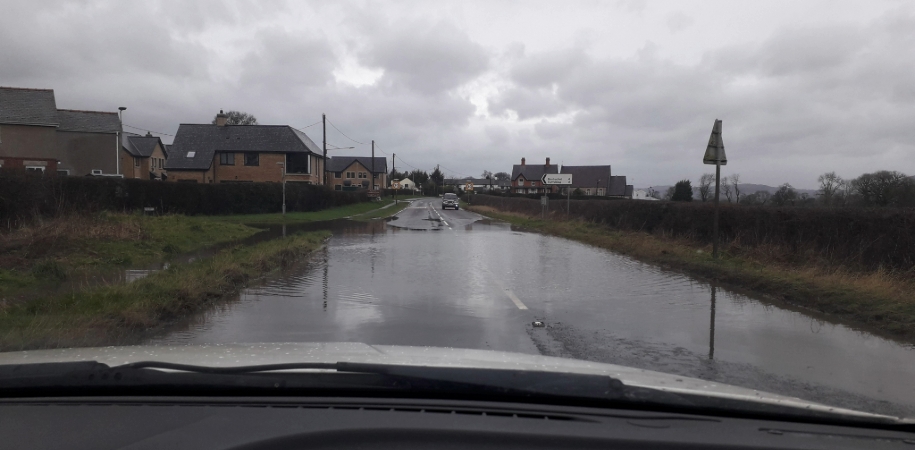
As we see more storms hit the county, flooding can happen quickly and with little warning. Being prepared before, during and after a flood can make a significant difference to safety and recovery after the event.
To prepare for potential flooding you can:
- Check your flood risk: Visit the Natural Resources Wales long-term flood risk maps to see if your property is in a flood risk area.
- Sign up for warnings: If you are at risk, sign up for automated flood warnings to get alerts as soon as possible.
- Review your insurance: Ensure your home and contents insurance includes flood cover. The Government and insurers’ initiative Flood Re can help make flood insurance more affordable.
- Make a personal flood plan: Include key contact details, insurance information, and a checklist of emergency actions. Store it safely in a waterproof folder.
- Prepare a flood kit: Include warm, waterproof clothing, medication, a torch, important documents, and essential supplies in case you need to evacuate.
- Consider protection products: Purchase sandbags or flood boards to block doorways and airbricks.
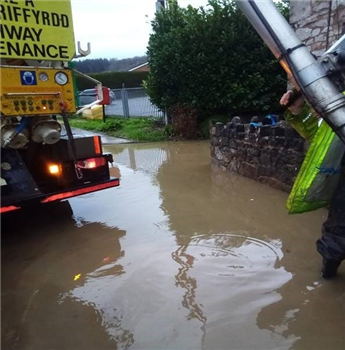 If flooding does happen following adverse weather and there is a flooded road or a blocked ditch in your area, let the Council know and we will take action to bring the problem under control.
Natural Resources Wales are responsible for issues involving coasts and major rivers. Welsh Water are responsible for sewers. Denbighshire County Council are responsible for surface water and small water courses.
For issues involving major rivers, please contact Natural Resources Wales on 0300 065 3000.
Please see this link below for details of major rivers
For flooding affecting sewers, including combined foul and surface water sewers , please contact Welsh Water on 0800 085 3968 or
For flooding to property or highways, contact Denbighshire County Council on 01824 706000.
Concerns over flooding in your area can also be made to Floodline on 0345 988 1188
If you live in a flood risk area and feel you would like to have a few sandbags at home to keep as a precaution to use in the event of a flood, you can buy sandbags from hardware or DIY stores. There are also other bespoke systems available to protect doorways and air bricks.
The Council does not provide sandbags to individual properties when there is a flood. Instead, we use sandbags mainly to protect groups of residents, for example by diverting the path of flowing water, and directing it towards gullies and manholes. This enables us to protect whole streets, whereas giving out sandbags to individual householders in a street would be a far less effective use of resources.
Communities can also work together to help local residents become more resilient to flooding.
Dyserth Flood Support Community Group was set up after historic flooding on Waterfall Road. The Council provided flood barriers through help from a Welsh Government grant, the funding criteria of which being they could only provide to a community group. Denbighshire County Council provided additional barriers in 2025.
Advice in setting up a local community flood action group is available from The National Flood Forum or contact Paul Owen on 01824 706872 / paul.owen@denbighshire.gov.uk
When a flood happens don't try to walk or drive through flood water. Six inches of fast flowing water can knock you off your feet, and two feet of water will float your car. There are a number of practical things you can do to help prevent damage to your home, including:
- Turn off your gas, electricity and water supplies
- Put plugs in sinks and weigh them down with heavy objects; plug water inlet pipes with towels or cloths, and disconnect any equipment that uses water, such as your washing machine. These steps will help to stop water from coming into the property
- Try to avoid contact with flood water if possible, because it may be contaminated
- Do not leave your home or enter flood water unless you are directly instructed to do so by the emergency services
Councillor Barry Mellor, Cabinet Lead Member for Highways and the Environment, said: “We will always work very closely with our partner agencies to do all we can to minimise the impact of any flooding events that occur across the county. We want our residents to stay safe and I would ask them to follow this important advice to prepare for potential flooding and if it does flood in your area please follow any information issued by us, Natural Resources Wales or the emergency services and also ask people to keep an eye on the weather forecasts, the media and social media for the latest advice and information”.
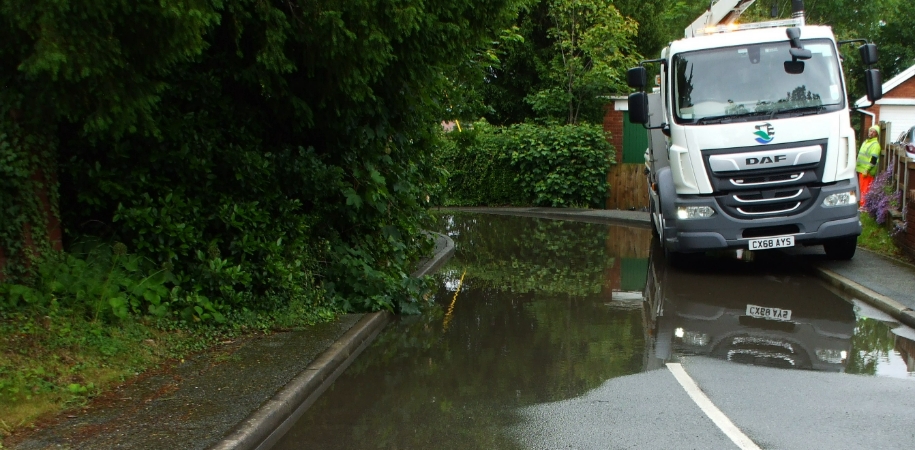
You can follow us on Facebook to get updates during a flood event
For further information visit our flood advice web page.
Career changing accident energises career pathway
A life changing accident has mapped out a journey for one Ruthin man

Matt Jones
A life changing accident has mapped out a journey for one Ruthin man for helping to learn how to improve energy consumption, lower costs and give back to support to the environment.
Carbon Reduction Project Officer Matt Jones’ career pathway was destined to develop in the world of joinery until one fateful day pushed him onto a different road which is ultimately benefiting Denbighshire residents.
County Voice sat down with Matt to find out how he reached the step to his current role
Matt, a keen mountain biker, went from Ysgol Brynyhyfryd to Coleg Llandrillo in Rhyl and then onto Rhos-on-Sea to do a Building Craft Foundation course, incorporating several hands-on skills.
He explained: “So we did a little bit of plumbing, electrical, joinery, plastering. Then I went on to do joinery, started doing wood occupations…then I broke my ankle. That’s when everything started changing.
I was out biking, I was going over a jump and my foot came off the pedal, I landed foot first before the bike and thanks when my ankle broke…
“I went back and finished the course, got an apprenticeship, and got a job with the same company. But because of the troubles I got with my ankle, I got osteoarthritis, I had a few operations and had to leave joinery and site work in 2015. I suppose it was life-changing,”
“Because I broke my ankle halfway through the year, I went back and finished the year and received an outstanding achievement award from the college.”
Matt had worked on heritage joinery projects including at Conwy Castle, Beaumaris Castle and Denbigh Castle.
“I did quite a lot of interesting stuff, I enjoyed it. But because of the roofing work involving scaffolding and ladders with my ankle I couldn’t keep doing it.”
Following this I then received further operations with ankle arthrodesis (ankle fusion) being the last one almost 10 years ago.
After this a part time job at Cysgod y Gaer residential home run by Denbighshire County Council came up and Matt decided to apply.
“It was a handyman/gardener’ job, that was part time which was perfect for getting back into work as I didn’t know how my ankle would perform. After a few years there I took on a second cleaning role at County Hall.”
From there another Matt took on another post with the Facilities team at County Hall and then a job came up for an Energy Officer and he embarked on a HNC supported by the Council at Coleg Cambria in Wrexham.
Denbighshire’s Energy Team has managed projects across all Council buildings, to improve building energy efficiency and reduce emissions and usage costs over the longer term.
This ongoing work is part of the Council’s drive to address the climate and nature emergency declared in 2019 and reduce its own carbon footprint.
Matt added: “Then my current role came up, Carbon Reduction Project Officer and the low carbon energy degree apprenticeship and that’s where I am now. So, there’s been quite a lot of steps in my career. People have always supported me here in Denbighshire with career progression, they funded the HNC to help me progress and the degree apprenticeship in Wrexham university is funded by the Welsh Government.
His role is termed as a career grade role, enabling people to jump on to a career that was otherwise exclusively for those already qualified. Career wise, Matt’s role is designed to break the barriers to entry and enable career progression. In the Energy team the Energy Officer role is now also career grade.
“The degree I am doing now, which I have just started my second year, is a Low Carbon Energy Efficiency and Sustainability degree, so it wraps around perfectly what I’m doing here in this role with the projects we are working on.”
Working on projects including installing solar panels to improve energy efficiency at Rhyl High School, Dolwen care home and even working at Cysgod Y Gaer where it all started, sustainability had always been in the back of his mind.
“I’ve always loved been outside and loving nature and having been cycling and mountain biking around Ruthin and the Vale of Clwyd. I suppose I’ve always had that awareness of sustainability.”
“When you start to see the data coming through and monitoring that… its good. I think that’s why am so passionate about it now because I enjoy it. This is now the career I am focused on improving in, whilst one I enjoy at the same time. Every job I’ve had, especially for the Council, I’ve always enjoyed doing it. I’ve only taken that step as a career progression.”
And Matt’s advice to anyone facing a life changing career moment as he did?
“Don’t give up I suppose, just keep going and keep working hard, I think that’s the one thing I’ve always done. I knew I couldn’t be running around sites, I couldn’t be labouring and really enjoying it. I had to work out where I was going to go academically, and I’ve found that place.”
County EV charging network sparks millions of greener miles
Millions of greener miles of support have been provided by Denbighshire County Council’s Electric Vehicle (EV) Charging Network

Millions of greener miles of support have been provided by Denbighshire County Council’s Electric Vehicle (EV) Charging Network since the first chargers came online.
This Wales Climate Week we take a look back at the impact the growth of the council’s charging network has had on providing a greener public mode of transport for residents and visitors.
The county network sparked into life in June 2021 with rapid chargers at Prestatyn and has since grown with more charging facilities provided at Rhyl, St Asaph, Denbigh, Ruthin, Corwen and Llangollen.
Bringing the network online is part of the council’s continuing work to reduce the county’s carbon footprint and support those drivers who want to transition to electric vehicles but may not have the facilities to charge at home.
Other electric fleet vehicle initiatives are also involved in the council’s goal to reduce carbon emissions, such as the electric powered Ruthin and Denbigh Flecsi bus services.
Since coming online in 2021, the chargers have supported EV drivers by providing 46,200 individual charging sessions to support lower emission public traveling.
That’s the equivalent of 1,100,000 kilowatt hours consumed which would keep 367 Tesla Model 3 cars doing an average of 12,000 miles a year, charged up for the full 12 months. The amount of delivered kilowatt hours would also keep your local supermarket powered up for a full year.
Converting the charging into miles, the EV charging network across Denbighshire has delivered over three million miles for electric powered driving. That’s over 130 trips right around the earth and 950 times hopping on a flight from London to New York. And for a single EV owner, that number of miles generated by the network would keep you driving for well over 250 years.
The UK Government’s 99 percent uptime mandate for public EV charging ports was also introduced last year to make sure EV chargers are constantly working well for drivers who use them. The council’s network is currently running above this target at 99.95 percent.
Work on the additional charging network for a few sites has been supported by grant funding via the UK Government’s Office of Zero Emission Vehicles (OZEV). Chargers at Corwen’s Green Lane were funded by the UK Government's Levelling Up Fund.
Cllr Barry Mellor, Lead Member for Environment and Transport, said: “The creation of this charging network was an important step in our commitment to help our residents who want to move over to electric vehicles but don’t have the facility or off-road parking to do so. The provision of this network will help more to do so.
“We know also that it is helping local businesses as well who have electric vehicles in their fleet and also those with town premises as more EV users are discovering these locations and visiting local establishments and attractions while charging their vehicles along our network locations.
“With a continuing increase in electric vehicle use it has been important to get this infrastructure in place, not only for the users but also to support tackling climate change impact on our county by helping to reduce carbon emissions on the regions roads.”
Lost habitats are back to breathe life into nature
Nature’s been given a helping hand in Denbighshire
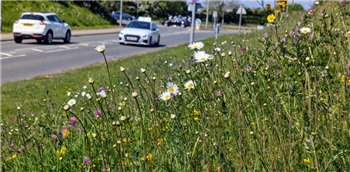
Nature’s been given a helping hand in Denbighshire for the last six years thanks to a project working to restore lost habitats.
Our Wildflower Meadows Project which started in 2019, aims to restore and increase this habitat in the county as since the 1930s. The UK has lost 97% of its meadow land, with Wales in particular having less than 1% left. This loss has impacted heavily on nature and communities.
The project is also part of our wider Bee Friendly campaign aimed at supporting the recovery of bees and other pollinators across the county
Our meadows are usually left uncut between March and August, except a small border mown around each site, allowing the flowers to set seed, and ensures that the meadow provides the greatest benefit to wildlife.
Cut and collect is carried out at the sites to help to lower the richness of the soil, and create the low-nutrient ground that our native wildflowers and grasses need to thrive.
Grass and wildflower seeds collected from areas around the county have been used to enhance our meadows. Some of the seeds have also been grown on at our tree nursery to produce plug plants. Only using local seeds ensure the plants which then grow are genetically suited to Denbighshire and will be the most beneficial to biodiversity in the area.
Here County Voice takes a look back at some of the project highlights that have benefitted both plant and wildlife across Denbighshire.
During 2021 the Biodiversity team recorded a nationally declining species on the Prestatyn Beach Road West site.
Hound’s tongue (Cynoglossum officinale) and was previously only recorded in Denbighshire 18 times within the last 116 years.
Seeds were taken from the site to the Council’s tree nursery and thanks to the effort of the staff, new plants germinated for planting on other coastal meadow sites to help expand its range in Denbighshire.
In 2021 Bithynian Vetch, a species of flowering plant in the bean family Fabaceae grew on a single project site managed by the Biodiversity team. Since 2019, this was the only place in Wales it was recorded growing in the wild.
During June staff collected a small number of seeds from the Bithynian Vetch. These were taken back to the Council’s tree nursery at St Asaph to be grown on site to help boost the plants dwindling numbers.
An innovative organic method was carried out as well in 2021 to help control the length of grass in a Denbigh meadow.
The site was treated with locally sourced Yellow Rattle seeds. Yellow rattle is a parasitic plant, tapping in to the roots of grasses and other neighbouring plants and stealing their nutrients. This reduces the dominance of grasses within a meadow, allowing more native wildflowers to take hold.
During the 2022 season the Biodiversity team inspected the site and found a reduction in grass length and an increase in wildflowers. The successful trial meant more food for pollinating insects and their predators
‘Bee Friendly’ really came into its own in 2023 after the Biodiversity team found a new resident at a Ruthin meadow.
A female Tawny mining bee was found resting in a nest on the site. The spring flying bee with dense orange and red hair feed from a variety of flowers which make wildflower meadows the perfect area to locate to.
Tawny mining bees are usually seen from March to June and are common throughout south and central Britain. This showed how designated sites are providing support for local nature to flourish as well by providing plants for pollinators and grass for insect food.
The team also discovered during this season pyramidal orchids at two coastal sites at Prestatyn which was recorded as a first.
And last year a pyramidal orchid was discovered inland at a meadow in Ruthin indicating the network of meadows were really starting to help nature fightback.
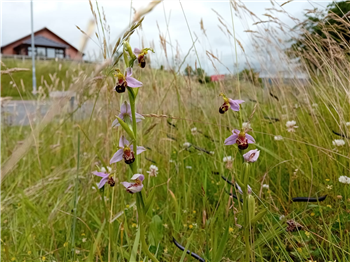
This year extra bee orchids were discovered at a meadow in Denbigh which shows the meadows are working as a combined highway for plants, insects and animals to move across the county, increasing biodiversity as they go.
Orchid produce seeds which are incredibly small (also known as dust seeds). These seeds must come in contact with a special type of mycorrhizal fungi that will help the orchid seed germinate and aid it in its early growth. Each orchid tends to have a particular mycorrhizal fungi that it partners with, so unless the soil conditions are right for the fungi, orchids won’t grow. The resurgence of orchid shows the project in 2025 is heading in the right direction, and the meadows are continuing their journey to recovery.
Working Denbighshire helps residents overcome barriers to employment
Working Denbighshire provides tailored support to residents across the county who are facing barriers to employment, including low confidence, anxiety, and limited work experience. Through mentoring, volunteering opportunities, and skills development, the service helps individuals build confidence and move closer to their goals.
One example of this support is Derek, who was referred to Working Denbighshire through the Job Centre a few years ago. At the time, Derek was experiencing low confidence, anxiety, and lacked the skills and experience needed to enter the workforce.

With guidance from the Working Denbighshire team and through a volunteering placement at St Kentigern’s Warehouse, Derek has made significant progress. He’s now actively working towards a career in IT support or administration.
Derek, Working Denbighshire participant said:
“At one point I was extremely shy, with bad anxiety and no confidence.
“I never thought I’d get to where I am now, but with support from Working Denbighshire and through volunteering, I’ve overcome so many barriers.
“I know the younger me would be proud of how far I’ve come.”
Councillor Jason McLellan, Leader of Denbighshire County Council and Lead Member for Economic Growth and Tackling Deprivation, said:
“Derek’s journey is a brilliant example of the positive impact Working Denbighshire can have on people’s lives.
“It’s about more than just finding a job, it’s about helping people unlock their potential, overcome personal barriers, and feel confident in their future.
“We’re proud to support residents like Derek on their journey towards employment.”
Derek continues to build his skills and experience through volunteering and is determined to secure a full-time role in the near future.
His journey forms part of the Working Denbighshire Complex Disabilities and Mental Health Team’s wider “Work Works” campaign, which highlights the positive impact that working, or taking steps towards work can have on people’s lives. Whether it’s improving wellbeing, gaining confidence, meeting new people, or learning new skills, the campaign shares real stories from across Denbighshire to inspire others.
Working Denbighshire is a free service that helps residents access training, find employment, and build confidence in their job search. Anyone looking for support can get in touch by visiting our website.
Working Denbighshire is part funded through the Welsh Government Communities for Work Plus Programme which supports those most disadvantaged in the labour market to overcome the barriers preventing them from gaining employment.
Working Denbighshire is part funded by UK Government.
Ever wondered where your Council tax goes?
Many people think that Council tax pays for everything that a local authority delivers, however, the money collected from residents annually only accounts for 26% of total Council spending.
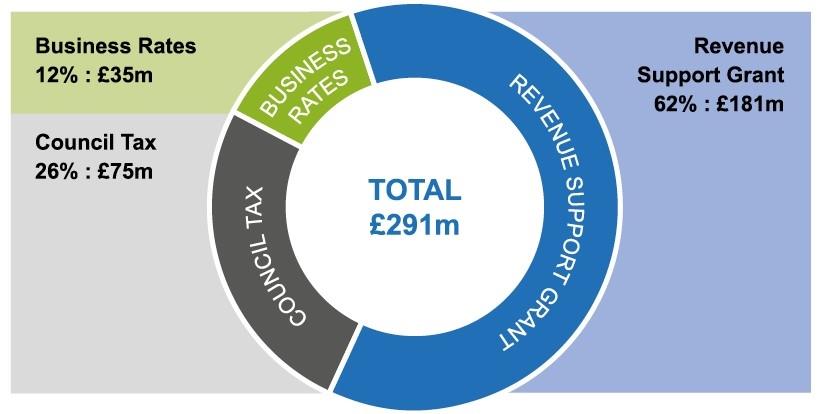 The majority of funding (62%) comes in the form of a ‘Revenue Support Grant’ from Welsh Government, while the remaining 12% comes from business rates which is a property tax that businesses pay to help fund local services. You can find out more about how the Council is funded on our website.
So where does your Council tax actually go? We’ve produced an infographic based on a Band D property council tax bill to help give a clear explanation of how council tax payments are used to fund the range of services for residents in the county. While this infographic gives a picture of how the money is shared between different services, understanding what residents gets for that money is really important.
As you can see, the majority of council tax spending goes towards protecting the most vulnerable in our society, with 66% spent on schools and education and adult and children’s social care.
 With Education accounting for 36.7%, it means that Denbighshire can educate approximately 16,500 pupils in 44 primary schools, 2 all-through schools, 2 special schools, 6 secondary schools and 1 pupil referral unit across the county, with approximately 780 teachers delivering this education
Still in the field of education, school transport accounts for 2.9% for which the Council transports approximately 2,871 learners safely to schools throughout the county. In total, there are 650 school bus and taxi trips every school day.
 Meanwhile, adult and children’s social care accounts for 29.8% of Council tax spending. For this, in 2024-2025, an average of 668 members of staff had over 25,000 contacts with the most vulnerable children and adults and provided a package of care and support where necessary giving these residents the opportunity to exercise choice, voice and control over their lives.
In other service areas, 1.9% goes towards public protection and environmental health and the Council’s teams inspects approximately 720 restaurants, cafes and take aways every year to ensure they’re operating safely for the residents of Denbighshire.
 Emptying bins and recycling accounts for 1.8% of your council tax bill, which equates to £32.89 per year (based on a Band D property). That involves collecting around 73,000 containers from over 47,000 households every week across the county.
For 1.8% of council tax, we maintain 1,419km of carriageways (excluding trunk roads), 601 highway bridges and culverts, 302 retaining walls and 26,000 gullies. And for 0.8%, we maintain 11,763 street lights and 1,547 illuminated signs and bollards throughout the county.
 Other services residents may not be aware that are delivered by the Council are the Countryside and Heritage Services. With 1.1% of council tax going to the countryside service, the teams manage over 80 sites and more than 1,200 hectares of public green for both recreation and conservation. These range from the Country Parks of Loggerheads and Moel Famau, the county tree nursery at St. Asaph, Brickfield Pond in Rhyl, Prestatyn Dyserth Way, Llantysilio Green in the Dee Valley and numerous smaller amenity community spaces across the county.
While the heritage service accounts for 0.9% of Council tax spending and for this, the service preserves and promotes the county’s unique history, caring for important historic sites including Ruthin Gaol, Plas Newydd, Nantclwyd Y Dre, Rhyl Museum (based in the library) and a large collection store. This work ensures Denbighshire’s rich history remains accessible for education, wellbeing, and enjoyment.
Planning and economic development accounts for 0.7% of Council tax spending and for that the Local Planning Authority processes around 1,000 planning applications each year alongside 10-20 appeals and 50-100 pre-application enquiries. We also respond to over 500 planning compliance cases.
 Libraries account for 0.5% of Council tax spending and in 24-25, Libraries delivered 514 Bookstart sessions to nearly 6,500 children for this money. It also lent 2,869 audiobooks to 1,028 library members on Borrowbox (part of the Digital Offer) and printed over 56,000 pages on public access printers.
Not all Council tax collected pays for council services, 2.5% goes towards the Fire service to contribute to the funding of fire protection and prevention across the county.
Councillor Delyth Jones, Lead Member for Finance at Denbighshire County Council said, “I am pleased to see the production and release of this infographic information. It will, I hope, provide residents with the context they need in order to understand how their council tax payments are used to support the breadth of services delivered by the Council.
“In what is a continuing financially challenging climate, I think it’s important to be open and clear about the costs and the pressures. It’s also important to emphasise that many of the aspects of expenditure are, quite rightly, aimed towards the legal requirement to provide Adult Social Care, Children’s Services, and Education etc. These are the areas that support the most vulnerable in our society.”