FEATURES
7 Welsh adventure essentials that are ready for their next journey
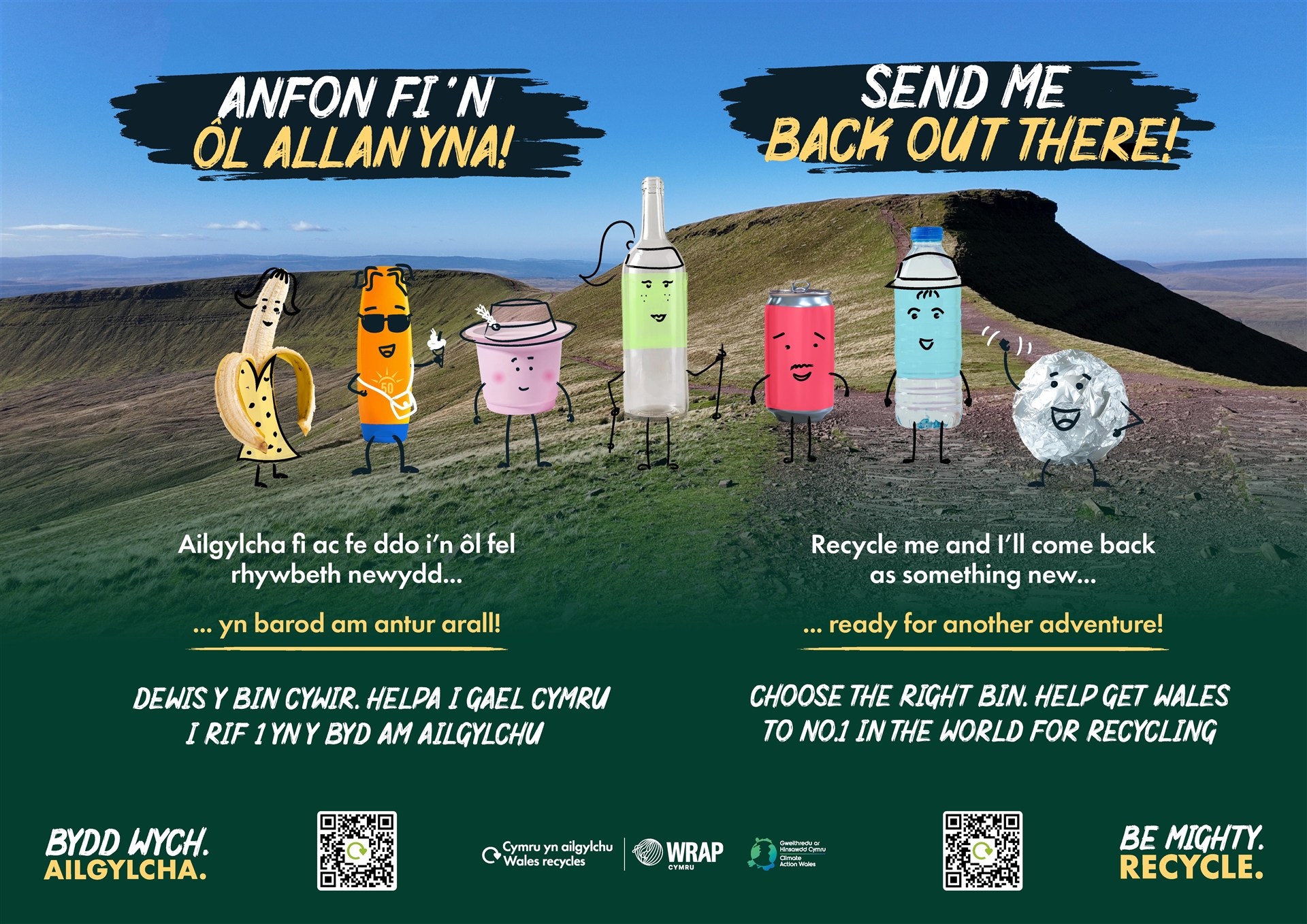
Wales is already one of the world's best recyclers, in fact, we're currently second on the global charts. But every great adventure wants to reach No.1.
This summer, we're backing Wales Recycles' Be Mighty. Recycle. campaign to help make that happen, one bottle, can and banana skin at a time.
Every recyclable item has a story to tell that doesn't end when you're finished with it.
Put it in the right bin and it keeps valuable materials in circulation for years to come, whether it's becoming something new or, like our food waste, helping to power Wales.
Here are seven adventure essentials that are ready for their next chapter.
- The drinks bottle that's ready for its next Welsh adventure
After keeping you hydrated on a coastal path, castle trail or mountain summit, a plastic drinks bottle still has plenty left in the tank.
Recycling just one plastic bottle saves enough energy to power a smartphone 14 times! Not bad for something that spent most of the day rattling around in a hiking pack.
Its next adventure starts with the right bin.
- The can that's already planning its next summit
Aluminium drinks cans are one of recycling's true legends.
They can be recycled again and again without losing quality, making them one of the most remarkable materials in the recycling world.
Pop it in the right bin and it could be back on the shelves and out on the trails well before next summer rolls around.
- The glass bottle with miles still to go
Glass is a material that loves another chapter. It can be recycled endlessly and transformed into new bottles and jars time after time.
Even better, recycling a single glass bottle saves enough energy to power a lightbulb for hours. That's a lot of mileage from one simple choice made on a Welsh hillside.
- The suncream bottle keeping the good times topped up
Suncream is a Welsh summer essential, whether you're exploring Pembrokeshire's coastline or soaking up the views from Yr Wyddfa. But once it's empty, the job isn't done.
When recycled, the plastic can be transformed into new products, helping valuable materials stay in use for longer. The same goes for many of the everyday essentials we pack for a day out, from toiletries to hand sanitiser to aerosols. Pop them in the right bin.
A little protection for your skin. A little protection for the planet too.
- The foil that's been on quite the picnic
Whether it wrapped your sandwiches on a clifftop, your snacks on a forest trail or your picnic spread on the beach, foil has one of the longest careers in recycling.
Producing products from recycled aluminium uses around 95% less energy than making them from raw materials. Which means that scrunched-up piece of foil could still be making a difference long after your tan has faded and your boots have dried out.
- The yoghurt pot ready for another Welsh adventure
From beach breakfasts to snacks on the go, pots, tubs and trays are a familiar part of any Welsh day out.
Don't let the fun stop there. When recycled correctly, plastic pots, tubs and trays can be transformed into new products and packaging, helping keep valuable materials in circulation for longer.
Today's yoghurt pot could be tomorrow's hummus tub. Now that's quite the transformation!
- The banana skin with surprising power
Some of the most impressive performers are hiding in plain sight.
In Wales, food waste collected for recycling is turned into renewable energy and nutrient-rich fertiliser.
In fact, just one recycled banana skin can generate enough renewable energy to fully charge a smartphone. That's more photos of those incredible Welsh views, more videos of memorable moments, and a few more chances to capture the magic of a Welsh summer.
So when you're enjoying Wales this summer, make sure all your food waste, from apple cores and inedible peelings, to tea bags, eggshells and leftovers all goes in the food waste caddy.
Every great adventure deserves another chapter
From bottles and cans to yoghurt pots and banana skins, every recyclable item has the potential to do something amazing after you've finished with it.
And every item recycled correctly helps Wales move one step closer to the top spot.
So when you're out exploring castles, coastlines, mountains and everything in between this summer, give your recycling the send off it deserves. Choose the right bin.
Want to see where they go next? Visit Wales Recycles and discover the journey your recycling takes after you bin it.
Can you spot these wildflowers in Denbighshire?
As the weather gets warmer our county wildflower meadows are starting to spring to life.
Back in 2019, Denbighshire County Council declared a climate and nature emergency with the aim to tackle climate change and biodiversity loss.
One of the first actions was to start managing some of the Council’s grassland for wildflower meadow creation across the county. The aim of the project is to restore and increase the amount of habitat available throughout the county for pollinators and wildlife.
This project also brings many benefits or ‘ecosystem services’ to residents in the county, such as reduced flooding, improved air quality, and air cooling.
Here’s a guide to the flowers you could spot by visiting our meadows across Denbighshire which are recognised by our Bee Friendly signage
May wildflowers
Bird's Foot Trefoil
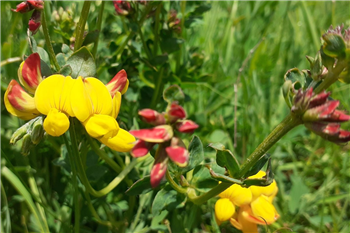
Visiting our wildflower meadows in May you will find bird's foot trefoil in bloom. Bees and other pollinators love it as it is very rich in nectar and is the larval food source for some of our favourite butterflies - Common Blue, Dingy Skipper and Green Hairstreak.
Red Clover
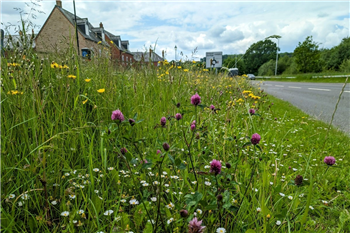
Have you spotted red clover at our wildflower meadows during May? This lovely little wildflower is rich in pollen and provides an essential food source for bees - in the past it was known as "bee bread". It's not just our pollinators that enjoy this little flower, cows love it too!
Red Campion
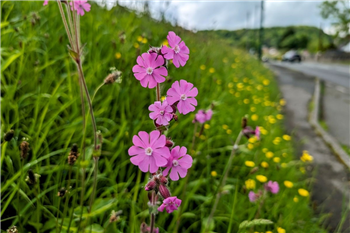
Red Campion is visible across our wildflower meadows during May. This woodland wildflower can grow to almost 1m high and attracts bees and butterflies to its deep pink flowers by opening the petals during the day. Where to find it: Shady areas such as hedge banks, woodlands, woodland edges and rural roads.
June wildflowers
Bee Orchid (Ophrys Apifera)
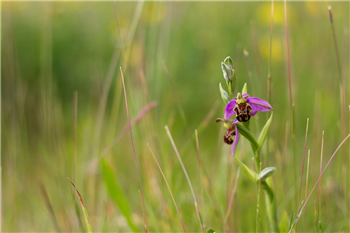
Have you spotted the bee orchid in any of our wildflower meadows this month? These little orchids are the masters of deception! The flower not only looks like a resting bee but it is also slightly hairy and even produces a scent similar to a female bee – all to attract the attention of a passing male bee.
Yellow Rattle (Rhinanthus minor)
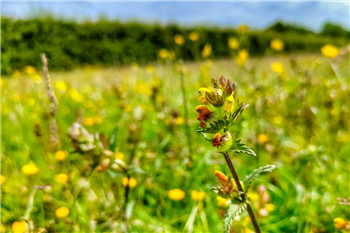
Yellow rattle is managing the height of our wildflower meadows this month. This little wildflower is great for wildflower meadows! As a hemi-parasite it restricts the growth of grasses by feeding off their nutrients and weakening them. By weakening the more aggressive grasses, the more delicate wildflowers are able establish themselves.
Foxglove (Digitalis purpurea)
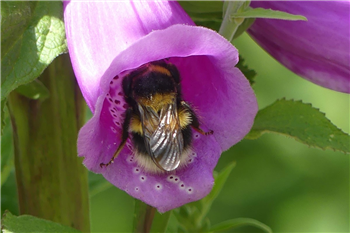
The Foxglove is blooming in June around our meadows, one of most recognisable wildflowers which splashes our woodlands edges and rural roadsides with bright pink bell-shaped flowers. According to Plantlife a single 'glove' can produce a million seeds!
July wildflowers
Field scabious (Knautia arvensis)
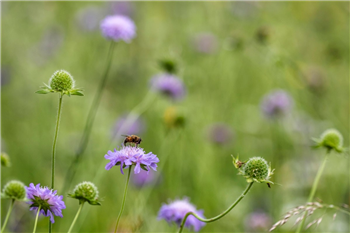
The purple–blue flowers of Field scabious are great for attracting our native bees, moths and butterflies. It’s also an essential food source for some of our most vulnerable species such as the Narrow-bordered Bee Hawk moth and the Marsh Fritillary butterfly.
Common Knapweed (Centaurea nigra)
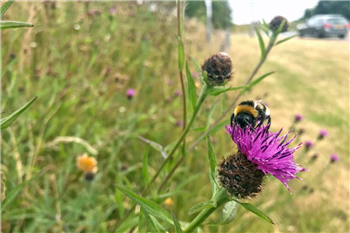
July brings the common knapweed into bloom across our meadows. A standout wildflower with bright pink thistle-like flowers. Common knapweed is one of our top pollinator friendly wildflowers. It provides a great source of quality nectar for bees, butterflies and beetles. Later in the season its seeds provide a sought after food source for a variety of our native bird species.
Meadow Crane's-bill (Geranium pratense)
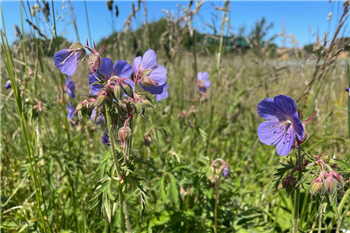
Meadows crane’s bill is our most wide spread Geranium wildflower provides a splash of blue/violet in early summer and can last for a number of months at our wildflower meadows. In the autumn months the leaves change from green to a deep red prolonging this amazing wildflowers visual impact – it’s no wonder it has become a favourite in many cottage gardens!
Oxeye daisies (Leucanthemum vulgare)
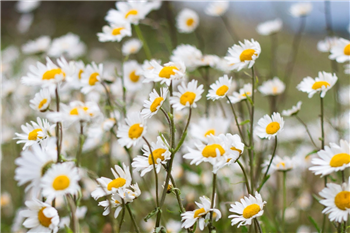
A resilient flower, look for oxeye daisies in our wildflower meadows. Oxeye daisy flowers from May to September.
Have you met our fabulous Bookstart Team? ❤
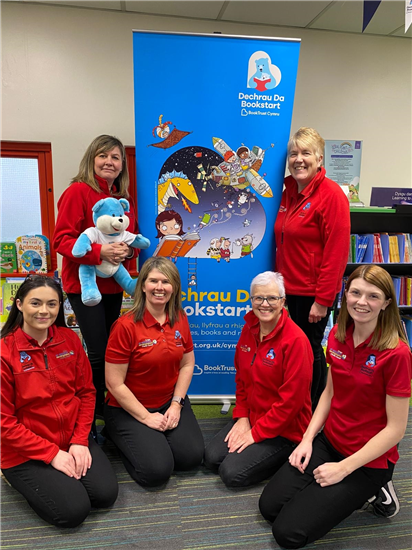
They run free, weekly, bilingual rhyme times for babies and toddlers in all our libraries. It’s never too soon to start sharing books and rhymes with your baby and you will find a great selection of books for all ages in our libraries.
Our libraries are free to join; books are free to borrow and there are no late charges!
The rhyme times are a great way to build up your confidence sharing books and rhymes with your little one, and a brilliant way to meet other new parents.
Please book your free rhyme time place here 👇🏼
https://bookwhen.com/denbighshire-bookstart
Josh’s Journey
Due to a relationship break down, Josh, who is 34, found himself seeking the Council’s homelessness team’s help at the start of last year. In February of 2025 Josh was placed in temporary accommodation and was assigned a homeless support practitioner.
 Josh
Josh
“I was homeless at the start of last year. I had been in homeless before and was placed in temporary accommodation previously, but I wasn’t in the right mindset previously to try and sort out my wider situation.
I was only in there briefly this time. I was asking everyone, trying to find a flat of my own. I eventually found one and moved out of temporary accommodation quite quickly.”
A month later, Josh had found himself privately rented accommodation to live in and was looking to write the chapter in his story.
“Whilst I was in temporary accommodation, my homeless support practitioner mentioned the intuitive thinking skills courses to me.
I was a little sceptical about doing the courses at first, but I didn’t realise until I sat them, that really, I had nothing to lose, and everything to gain from giving them a go.
I started the courses in April and March. I did the skills to life course first, which I really enjoyed and learned a lot from.
It teaches you how to deal with your own mindset, and how you think about problems. I used to really struggle with my confidence and doubt myself all the time.
They asked me at the start of the course what I would like to improve on, and so I put down work on my confidence.”
Josh then went on to take the Information, advice and guidance course, and dove deeper into his learning.
“I went on to do the Information, advice and guidance course, which taught me some more technical aspects. I would be put in other people's shoes, and I learned how to help those who may be more vulnerable.
I learned how to help others who may be in circumstances such as homelessness or maybe struggle with substance misuse.”
In early summer, Josh was offered an ambassador placement with the Intuitive Thinking team, with the hopes of that scheme then leading to a permanent job within the team itself.
“I was really buzzing as that was the placement I wanted the most out of the ones that were offered to me. I learned to give speeches and administer training by shadowing members of the team. That helped my confidence so much, standing up and speaking in front of people. I was terrified at first, but it got easier and easier over time.
I was about two months into my placement with the team when I got offered a job in the energy sector which I felt I just couldn't turn down.
The skills I learned during the courses I took, and my placement have given me so much confidence in my new role. This job is so different from what I’ve done previously, and these new skills have given me the confidence to go and try something new. That’s the main take away for me.
I was very much set in my ways of staying in my comfort zone before I did these courses. I would just do what I’d always done, but ultimately, I kept getting the same results. I feel like I spent years at a standstill really.
Since I’ve sat these courses, I’ve never felt better in my life. It sounds crazy to say that a course can change that, but I learned why I am thinking things and how to deal with those thoughts.”
Josh has chosen more positive ways to ways to pass the time.
“I have chosen more healthy options in life now, I struggled with boredom when I got sober about four years ago, I needed different outlets.
I started playing golf and going to the gym. I am now a member at Rhyl Golf Club.”
Josh has now graduated from the Intuitive thinking courses, with a number of certificates under his belt, and is enjoying his new role in the energy sector.
“I think these courses would benefit everyone; you don’t have to be in a bad position to take it. You can’t lose anything from learning from this course, as long as you are invested in it, you’re going to benefit from it.
People have said that they can see a change in my confidence. From where I was in February, to where I am now, it feels like two different people. I felt lost and had no hope really. It taught me to think differently and rationally think about situations. It has helped me to gain the focus and drive to get what I want.
It was like a snowball effect, as soon as I decided to start helping myself, things got gradually better.”
Restoring the Past, Building the Future: Nantclwyd y Dre
The site boasts nearly 600 years of local history and is one of the oldest timber-framed townhouses in Wales.
Ruthin is a town is steeped in history. Razed to the ground by Owain Glyndwr in the year 1400, the historic feel of the town as we know it today comes in large part from the timber-framed vernacular style of architecture which was used during the town’s reconstruction.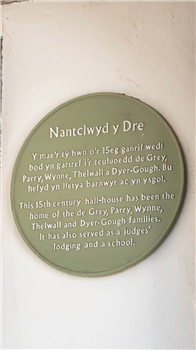
Among the charming streets and historic frontages sits an important piece of Ruthin’s built heritage. Originally built in 1435 as a weaver’s hall house, Nantclwyd y Dre boasts nearly 600 years of local history and is one of the oldest timber-framed townhouses in Wales open to the public.
Now managed by the Denbighshire Heritage Service, visitors to Nantclwyd y Dre historic house and gardens can relive the house’s fascinating past through immersive soundscapes, interiors and exhibits that give a captivating insight into what life was like for the families that lived there.
In 2023, funding was granted to restore parts of the site as the UK Government confirmed their intention to provide £10.95 million of grant funding for 10 capital projects aimed at protecting Ruthin’s unique heritage, wellbeing, and rural communities.
This funding, known as the Local Regeneration Fund (LRF), was awarded exclusively for successful projects included in Clwyd West and cannot be directed to other projects.
As one of the successful projects, £667,000 was allocated to redevelop some currently unused parts of the house in need of some repair to preserve this important piece of local heritage for generations to come, create new opportunities for the attraction to improve its future sustainability and make some exciting additions to the visitor experience.
Construction works began in October, focussing on bringing the largely unused west wing of the property back to life. This section of the house will become a small holiday let, designed and furnished in keeping with the historic nature of the building, and see improved facilities on the first floor with a dedicated space for the weekly volunteers who are a critical and valued part of the day-to-day workings at Nantclwyd.
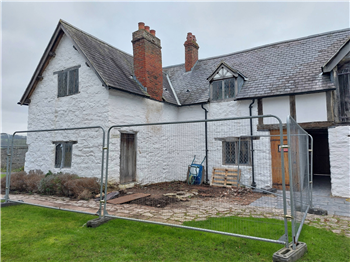
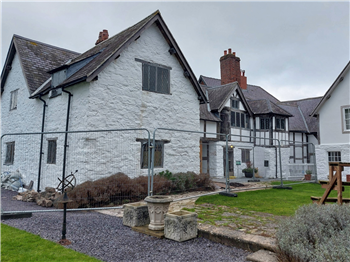
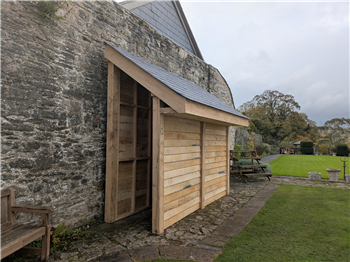
However, before the works could begin, one set of longstanding residents needed to be taking into consideration. Denbighshire County Council consulted with ecologists to ensure that the planned developments would not disturb the resident protected bat maternity roost, which houses a significant number of the Pipistrelle and Lesser-Horseshoe population in Wales. Contractors were given specialist training, and a large bat shelter was installed in the garden, giving the winged residents an additional space to thrive.
 The planned improvements will also make the kitchen area more suitable for event catering, and the summerhouse will be restored to its former glory for visitors to enjoy during the summer months, also serving as an additional space for the ceremonies taking place at the historic house such as weddings and civil partnership ceremonies.
Undertaken by B&W builders & decorators alongside TACP Architects, the project is expected to be completed by April 2026. A more sustainable approach to the improvement works has also been implemented through using wool to insulate the building rather than the more widely used oil-based insulation which emits higher carbon emissions and isn’t renewable.
Councillor Jason McLellan, Leader and Lead Member for Economic Growth & Tackling Deprivation said:
“The beginning of these improvement works to Nantclwyd y Dre serves as a major milestone in securing the future of such a prominent historical site that sits at the heart of Ruthin.
“Nantclwyd is as a great visitor attraction and community hub for our dedicated volunteers, and we are looking forward to seeing the newly developed spaces being enjoyed and used by visitors.
“The wellbeing of the bat population will remain as a priority whilst the works are being carried out, and we will be in continuous communications with the ecologists throughout the completion of the works”.