Project aims to improve resilience of limestone sites in Denbighshire
Work has begun to survey and map the extent of the non-native invasive species on the Graig Fawr hillside.
Work has begun to survey and map the extent of the non-native invasive species on the Graig Fawr hillside.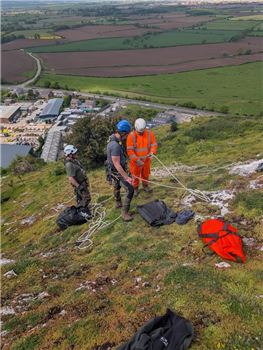
Nestled between Meliden and Dyserth, Graig Fawr is a designated Site of Special Scientific Interest (SSSI) due to its limestone (calcareous) grassland communities and has been subject to recent surveying by the Clwydian Limestone Links Project.
The Clwydian Limestone Links Project is funded by the Nature Networks Programme being delivered by the Heritage Fund on behalf of the Welsh Government and aims to improve the resilience and condition of five SSSI limestone grassland and woodland sites in Denbighshire.
Working in partnership with Denbighshire County Council, the Clwydian Range and Dee Valley National Landscape, the North Wales Wildlife Trust, the National Trust and private landowners, the project looks to facilitate management that will enhance the diversity of special features at the sites, increase the extent of the limestone grassland habitats and improve the condition of the plant communities and associated fauna.
There are many non-native invasive species of cotoneaster that can be found in the UK, with several species of these a particular concern to this site. Although cotoneaster is a popular garden plant, with the flowers attracting bees and the berries favoured by birds, it is incredibly damaging to our wild areas, especially rare habitats such as limestone (calcareous) grasslands. This is due to its fast-growing nature, where it can dominate whole hillsides rapidly.
Ecologists with the assistance from an Industrial Ropes Access Trade Association (IRATA) certified ropes access team have begun surveying the limestone outcrop overlooking the Prestatyn Dyserth Way to identify the species and density of cotoneaster present on Graig Fawr, along with other non-native invasive species such as holm oak (Quercus ilex) and red valerian (Centranthus ruber).
Councillor Barry Mellor, Lead Member for Environment and Transport said:
“Supporting and improving our local biodiversity is vitally important and a priority of the Council.
“The project will enhance the habitat connectivity within and between the protected sites by managing nature corridors through the creation and restoration of habitats that link them and limiting the effects that these invasive species are having”.