Can you spot these wildflowers in Denbighshire? 🌼
As the weather gets warmer our county wildflower meadows are starting to spring to life.
Back in 2019, Denbighshire County Council declared a climate and nature emergency with the aim to tackle climate change and biodiversity loss.
One of the first actions was to start managing some of the Council’s grassland for wildflower meadow creation across the county. The aim of the project is to restore and increase the amount of habitat available throughout the county for pollinators and wildlife.
This project also brings many benefits or ‘ecosystem services’ to residents in the county, such as reduced flooding, improved air quality, and air cooling.
Here’s a guide to the flowers you could spot by visiting our meadows across Denbighshire which are recognised by our Bee Friendly signage
May wildflowers
Bird's Foot Trefoil
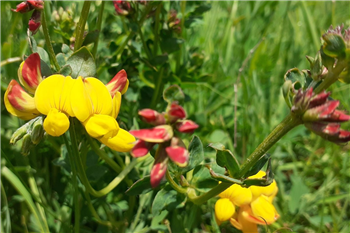
Visiting our wildflower meadows in May you will find bird's foot trefoil in bloom. Bees and other pollinators love it as it is very rich in nectar and is the larval food source for some of our favourite butterflies - Common Blue, Dingy Skipper and Green Hairstreak.
Red Clover
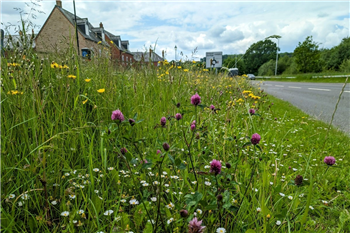
Have you spotted red clover at our wildflower meadows during May? This lovely little wildflower is rich in pollen and provides an essential food source for bees - in the past it was known as "bee bread". It's not just our pollinators that enjoy this little flower, cows love it too!
Red Campion
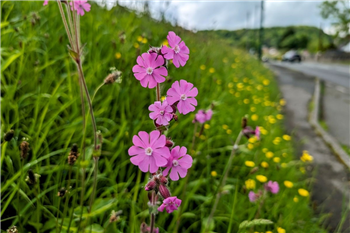
Red Campion is visible across our wildflower meadows during May. This woodland wildflower can grow to almost 1m high and attracts bees and butterflies to its deep pink flowers by opening the petals during the day. Where to find it: Shady areas such as hedge banks, woodlands, woodland edges and rural roads.
June wildflowers
Bee Orchid (Ophrys Apifera)
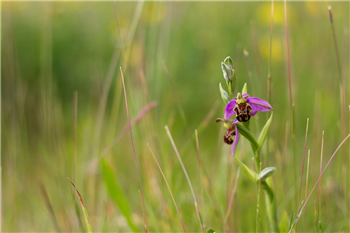
Have you spotted the bee orchid in any of our wildflower meadows this month? These little orchids are the masters of deception! The flower not only looks like a resting bee but it is also slightly hairy and even produces a scent similar to a female bee – all to attract the attention of a passing male bee.
Yellow Rattle (Rhinanthus minor)
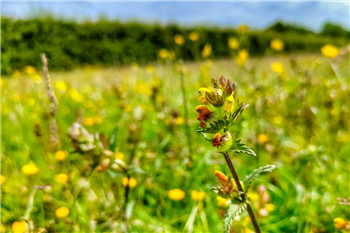
Yellow rattle is managing the height of our wildflower meadows this month. This little wildflower is great for wildflower meadows! As a hemi-parasite it restricts the growth of grasses by feeding off their nutrients and weakening them. By weakening the more aggressive grasses, the more delicate wildflowers are able establish themselves.
Foxglove (Digitalis purpurea)
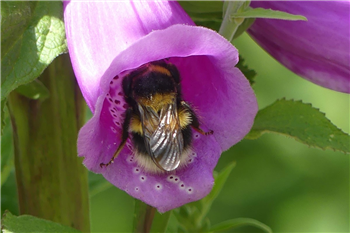
The Foxglove is blooming in June around our meadows, one of most recognisable wildflowers which splashes our woodlands edges and rural roadsides with bright pink bell-shaped flowers. According to Plantlife a single 'glove' can produce a million seeds!
July wildflowers
Field scabious (Knautia arvensis)
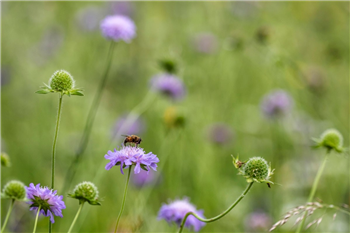
The purple–blue flowers of Field scabious are great for attracting our native bees, moths and butterflies. It’s also an essential food source for some of our most vulnerable species such as the Narrow-bordered Bee Hawk moth and the Marsh Fritillary butterfly.
Common Knapweed (Centaurea nigra)
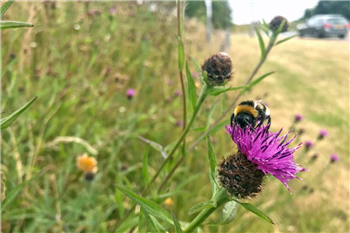
July brings the common knapweed into bloom across our meadows. A standout wildflower with bright pink thistle-like flowers. Common knapweed is one of our top pollinator friendly wildflowers. It provides a great source of quality nectar for bees, butterflies and beetles. Later in the season its seeds provide a sought after food source for a variety of our native bird species.
Meadow Crane's-bill (Geranium pratense)
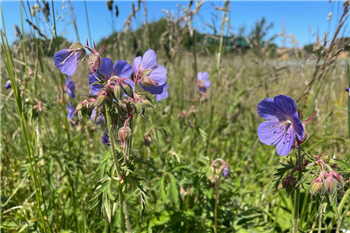
Meadows crane’s bill is our most wide spread Geranium wildflower provides a splash of blue/violet in early summer and can last for a number of months at our wildflower meadows. In the autumn months the leaves change from green to a deep red prolonging this amazing wildflowers visual impact – it’s no wonder it has become a favourite in many cottage gardens!
Oxeye daisies (Leucanthemum vulgare)
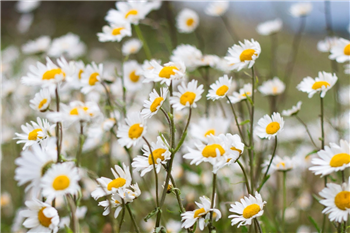
A resilient flower, look for oxeye daisies in our wildflower meadows. Oxeye daisy flowers from May to September.