NEWS
Dolwen Care Home sees ‘good’ ratings in CIW inspection report
A Care Inspectorate Wales (CIW) inspection report on Dolwen residential Care Home in Denbigh has seen ‘good’ ratings on all four criteria.
The care home, which is operated by Denbighshire County Council had its most recent inspection in December.

Dolwen residential care home
The inspection summary noted that staff “provide good quality care and support, encouraging people to maintain as much independence as possible” and recognised that “people live in a service which is homely and comfortable and provides good access to specialist equipment which meets their needs.” The inspection summary also stated that “the manager and responsible individual (RI) are approachable and friendly, ensuring people are listened to and treated with dignity and respect.”
In relation to well-being, which is one of the four criteria, the care home received a ‘good’ rating, with the report highlighting that residents “are offered consistent choices in daily activities and have opportunities to reach their potential by engaging in meaningful activities” and that the home “offers a varied programme of activities.”
The home’s safeguarding environment was also praised, with the report stating that residents “felt safe and secure knowing no one could enter the building without making themselves known to care staff” and that they also “feel confident and comfortable raising any issues or concerns with care staff.
This section of the report also praised the staff’s approachable nature, with the inspectors noting that “the manager is approachable, and one person stated they never have to speak with the manager as the care staff effectively deal with any issues they have.”
On a similar note, the report noted that visitors such as family or friends of residents were “made to feel welcome” and that residents are “encouraged to develop and sustain existing relationships with family, friends, and important people in their lives, as far as possible.”
It went on to state that “all the relatives we spoke with are happy with the service and told us they are kept well informed.”
The service was also praised for it’s meeting of the Welsh Active offer, with the promotion of the Welsh language and culture described as “fully integrated into the service.”
In relation to Care and support, the care home received a ‘good’ rating.
The report stated that residents’ “personal plans are strengths based and outline how staff should support them to achieve their wellbeing outcomes” which include “detailed one-page profiles in place which clearly record their likes, dislikes, and valuable information for care staff to know about them.” The report praised the care home's handling and administration of medication, stating that “there is a clear record to track the effectiveness of this medication and any side effects” and that “there is a clear record to track the effectiveness of this medication and any side effects.”
When assessing the environment at the care home, which also received a ‘good’ rating, the report stated that residents “live in a homely and comfortable service and have access to a variety of different spaces in which to spend time alone, socialise or entertain visitors.”
The report also praised the accessibility in this area, and the “range of specialist equipment for people to access.” It went on to feature the grab rail provisions throughout the home, as well as the security of the building itself.
Leadership and management at the care home received a ‘good’ rating, with the report praising the “effective audit processes” when it comes to the quality of care. The report highlighted that there are “strict selection and vetting processes for hiring staff to ensure all staff are qualified and trustworthy.”
It went on to say that staff have stated that they “feel well supported in their roles and have an approachable and proactive management team, which they have confidence in.”
Ann Lloyd, Head of Adult Social Care & Homelessness Service said:
“The staff at Dolwen care home work so hard, and I am glad to see this recognised in this most recent CIW inspection report.
I think it is clear from this report how homely the staff make this care home, and how good the relationship is between staff and residents. I’d like to thank the staff who work tirelessly day in day out for their efforts, which have been recognised in this report.”
New community cabin opens at Ysgol Cefn Meiriadog
The community eco cabin build at Ysgol Cefn Meiriadog is now complete, with the building now fully operational and in use.
Funded through the Community Focused Schools initiative by Welsh Government, the cabin build started earlier in the year, and features a kitchen area, accessible toilet and a spacious main space which can be used by both the school and local community.
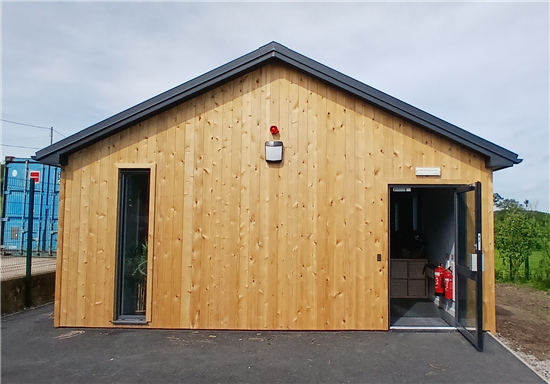
The new cabin now complete at Ysgol Cefn Meiriadog
The cabin features a 60 square metre footprint and is a space that supports family engagement, collaboration with other services and the needs of the school community.
As well as the cabin build, solar panels will be installed on the roof of the main school building, reducing the carbon impact from this project.
Laura Martin, Head Teacher at Ysgol Cefn Meiriadog said:
“We are absolutely thrilled that the community cabin is open and bustling with activity, this is a vital resource that bridges the gap between our school and the wider community and we are delighted with the outcome.
We would like to extend our thanks to the Welsh Government and Denbighshire County Council for the funding allocation. We now have a dedicated, sustainable space where families can connect, services can collaborate, and our pupils can use for years to come.”
Councillor Diane King, Lead Member for Education, Children and Families said:
“I am glad to see that this new project is now complete, it will be a brilliant asset for both the school and the community.
This new cabin at Ysgol Cefn Meiriadog not only benefits the school and the pupils, but also the community, bringing with it a new and exciting space to utilise.
Replacing an older, outdated building, this new cabin project offers a spacious and modern new asset for the school.”
Road Cyclic maintenance update
Cyclic maintenance work will take place near St Asaph and Rhuddlan at the beginning of June.
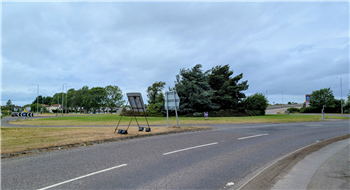
Cyclic maintenance work will take place near St Asaph and Rhuddlan at the beginning of June.
Work comprising of grass cutting, strimming, litter picking and sweeping will be carried out on the A525 Dual Carriageway between the Talardy Roundabout and Bryn Cwybyr roundabout and on the A547 Abergele Road on the dates provided below.
- A525 Talardy to KFC Road Closure - Monday 1st and Tuesday 2nd June 2026
- A525 Rhuddlan Bypass Road closure - Wednesday 3rd June
- A525 Bryn Cwybr Ffordd Derwen Roundabouts Lane Closure Thursday 4th June
- A547 Abergele Road to Borth roundabout to County Boundary Monday 8th June.
The works will be carried out between 7pm and 6am and take 3 evenings/nights to complete. To ensure that the works are carried out safely, the A525 and A547 will be closed to all vehicular and pedestrian traffic on during the times and dates of work listed.
Cllr Barry Mellor, Lead Member for Environment and Transport, said: “Our Streetscene and Highways teams will be working hard during this period to improve these routes, and we would like to apologise for any inconvenience that this may cause and would be grateful for your cooperation and patience during this time.”
Alternative diversion route for each section of road closure will be signed accordingly.
Cabinet supports County Hall low carbon heat project
Denbighshire County Council’s Cabinet has backed the initial steps for work to improve energy efficiency at Ruthin County Hall,

Denbighshire County Council’s Cabinet has backed the initial steps for work to improve energy efficiency at Ruthin County Hall, subject to their funding bid to Welsh Government being successful.
Cabinet members supported the process to secure grant funding from the Welsh Government Low Carbon Heat Grant to initiate the County Hall low carbon heat project.
This work is part of the Denbighshire County Council’s Energy Team’s continuing drive to reduce energy use and costs at buildings run by the local authority to address the climate and nature emergency declared in 2019 and continue the reduction of its own carbon footprint.
The team has looked after projects across Council owned buildings including schools, to help improve building energy efficiency, reduce carbon emissions and also usage costs over the longer term.
County Hall was built over 20 years ago and contributes higher than necessary carbon emissions per annum due to key building fabric assets now being end of life.
The proposed project is to replace the end-of-life gas boilers at the site with air source heat pumps, to replace the Air Handling Units (AHU’s), upgrade the radiators, heating pumps and building management system.
Proposed work will also see the replacement of windows with modern energy efficient windows (with approximately half the heat loss), draught strips and areas of ceiling insulation.
The completed project will decrease energy consumption, enhance the working environment, reduce future potential expenditure on replacing the end-of-life assets and decrease carbon emissions by an estimated 48.7tonnes per year.
Cllr Julie Matthews, Deputy Leader and Lead Member for Corporate Strategy, Policy, Equalities and Strategic Assets, said: “This is a really exciting piece of work that supports Denbighshire County Council’s continuing drive to lower energy usage and costs and reduce carbon footprints across our building estate. 90% of the project cost will be covered by external grant funding should we be successful which is great inward investment for the County supporting the supply chain. The proposals in this project will also provide a better working environment for the staff and help future proof County Hall going forward.”
Archive volunteer drop-in session at Ruthin Gaol
Have you ever wondered what happens behind the scenes at your local archives? Are you interested in learning new skills, meeting new people, and helping to preserve important local history?
North East Wales Archives is inviting members of the community to attend a volunteer drop-in session at Ruthin Gaol on Friday 5 June, where you can drop in anytime between 10am and 12pm to find out more about exciting volunteering opportunities.
Visitors will have the chance to meet the archives team, learn about current volunteer projects, and discover how they can play a hands-on role in caring for and protecting the region’s remarkable historical collections.
The service is looking for enthusiastic individuals who are detail-oriented, have good manual dexterity, and are keen to contribute to an important heritage service.
Whether you’re passionate about local history, looking to gain new experience, or simply want to give back to your community, this could be the perfect opportunity.
Councillor Emrys Wynne, Lead Member for Welsh Language, Culture and Heritage, said:
“Volunteers play a hugely important role in helping us preserve and share the rich history of our communities for future generations. North East Wales Archives offers a fascinating opportunity for people to get involved, learn new skills, and work closely with unique historical collections. I would encourage anyone with an interest in local heritage, history, or simply giving something back to their community to come along to the drop-in session and find out more.”
📅 Friday 5 June 2026
⏰ Drop in anytime between 10am – 12pm
📍 Ruthin Gaol, LL15 1HP
To find out more or if you want to contact us please view our website at https://www.newa.wales/ or email archives@newa.wales.
Cabinet approves design and build contract for Denbigh High School refurbishment project
Denbighshire County Council’s Cabinet has today (May 26th) approved the award of the contract to design, and subsequently deliver, the construction elements of the Denbigh High School refurbishment project to Wynne Construction.
In late 2025, the Cabinet gave their approval to commence the procurement process for the design and build contract for the refurbishment of Denbigh High School.
They also gave their approval to submit the Strategic Outline Business Case to the Welsh Government, which was approved in March of this year.
This project forms part of the Council’s outline plan for the Sustainable Communities for Learning Programme.
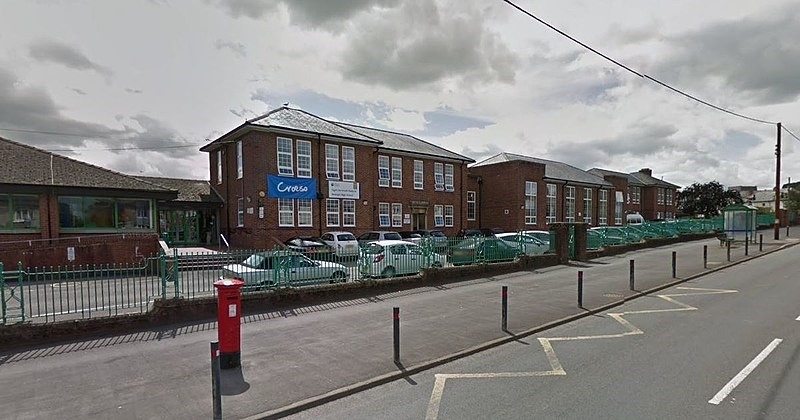 Denbigh High School
The next steps will see engagement with the school community and pupils, who will play their part to help develop the design.
The total agreed project allocation at this stage for the Denbigh High project is currently £19.8 million.
The Sustainable Communities for Learning Programme, funded by the Welsh Government, is funding 65% of this project, with the remaining 35% funded by the Council. In addition, further funding is being provided by Welsh Government for carbon net zero improvements.
Glen Williams, Headteacher at Denbigh High School said:
“This is excellent news, and is such an exciting time for Denbigh High School and the community it serves.
I am looking forward to working with the local authority, designers, and contractors to make sure that the modernisation of the school helps provide learners with an environment that will further support their progress and options in the future.”
Councillor Diane King, Lead Member for Education, Children and Families said:
“I am glad to see that this project has taken the next necessary step. With a design and construction contract now in place, we are one step closer to starting work on this exciting development.
Modernising and improving the facilities at this site will improve capacity at the school, and will help to provide the highest quality education for pupils in the Denbigh area for generations to come.”
Residents invited to have their say on Prestatyn High Street project
The drop-in session will be held on 3 June.

The council are encouraging anyone who lives, works or visits Prestatyn to participate in the public consultation on the public realm improvement scheme’s detailed design that will run from 3 June to 5 July 2026.
In 2025, UK Government confirmed their intention to provide just under £20 million of grant funding for seven capital projects to improve pride of place and natural environment in Rhyl, Prestatyn and Denbigh.
This funding, known as the Local Regeneration Fund (LRF), has been awarded exclusively for the successful projects and cannot be directed elsewhere.
As part of the project to improve pride of place and the natural environment in Prestatyn, Denbighshire County Council were awarded funding to improve the public realm (visible space) of the high street.
A drop-in session has also been arranged by the council and residents are invited to have their say on the proposed improvements to the high street.
The session will be held on 3 June, at the Scala Cinema in Prestatyn between 1pm-7pm.
Councillor Jason McLellan Leader and Lead Member for Economic Growth & Tackling Deprivation said:
“We would like to thank residents, visitors, and businesses for their co-operation and engagement throughout the project so far.
“Our aim is to deliver a scheme that improves the public realm of the high street and supports the long-term regeneration of the town.
“We would like to encourage as many residents as possible to have their say by either attending the drop-in event or by completing the online consultation.”
Residents that are unable to attend the in person drop-in event, can share their thoughts by completing the online consultation on the council’s website.
Paper versions of the feedback survey are also available and can be found in Prestatyn Library and One Stop Shop. The closing date for all responses is 5 July 2026.
Group to tackle Rhyl beach marine litter
A litter pick is set to tackle marine littering on a popular section of Rhyl’s shoreline this month.

A litter pick is set to tackle marine littering on a popular section of Rhyl’s shoreline this month.
Fresh from tackling beach areas near the East Nova carpark and Barkby Beach at Prestatyn, Denbighshire County Council’s Flood Risk Team is organising an event to cover areas coastal areas around Rhyl Pavilion.
The beach clean will take place on May 27 from 2pm until 3pm. Those who want to support the marine litter pick are welcome to join the group at Rhyl Pavillion Theatre car park by 2pm.
This Rhyl event will also be supported by Keep Wales Tidy who will provide some of the litter picking equipment.
Marine litter can block up waterways and drainage, stopping the flow of water, leading to higher risks of localised flooding further upstream.
Removing marine litter off beaches can provide stronger help also to natural defences as shorelines, dunes and seagrass beds are more able to maintain their natural function as defences against the sea.
Claudia Smith, Coastal Erosion and Flood Risk Officer, said: “We want to this time concentrate on the stretch of the promenade by the Rhyl Pavilion as we know more marine litter tends to wash up this side which can contribute to local flooding and damage the environment and wildlife as well.”
Councillor Barry Mellor, Cabinet Lead Member for Highways and the Environment, said: “Managing the risk of localised flooding from the impact of marine litter washing up on our beaches is extremely important to protect people from flooding. It’s also much better for the wellbeing of our residents and those who visit these areas and the wildlife found on these beaches, I would encourage anyone who feel like they can make a difference to join in and help.”
For further details contact claudia.smith@denbighshire.gov.uk/ 07785517398
Changes to the ongoing traffic trial in Prestatyn
The council will be introducing further changes to improve the traffic flow in the area.
The council will be introducing further changes to improve the traffic flow in the area.
On 13 April, Denbighshire County Council began a trial to make Bridge Road in Prestatyn two ways to alleviate congestion in the area as a part of a wider project to enhance and regenerate the town.
The trial was requested following feedback the council received in consultations with the public, as part of the public realm improvement project on Prestatyn High Street.
In 2025, UK Government confirmed their intention to provide just under £20 million of grant funding for seven capital projects to improve pride of place and natural environment in Rhyl, Prestatyn and Denbigh.
This funding, known as the Local Regeneration Fund (LRF), has been awarded exclusively for successful projects included in Vale of Clwyd and cannot be directed to other projects.
The trial will be in place for a minimum period of three months and could last up to 18 months under the Temporary Traffic Regulation Order (TTRO) that the council have in place.
From 26 June, the flow of traffic at the bottom of High Street will be reversed. This means that vehicles leaving Parc Prestatyn will now be able to exit through High Street.
This change will also mean that the retail park will now benefit from three exit routes (High Street, Bridge Road and Nant Hall Road).
Vehicles will no longer be able to turn left down High Street Ffordd Penisardre toward the mini roundabout and retail park, instead drivers should use Nant Hall Road to access the retail park from that side of town.
This additional trial is being introduced to see if the traffic congestion at the bottom of the High Street can be alleviated further, along with the Bridge Road two-way system.
Councillor Barry Mellor, Lead Member for Environment and Transport said:
“We appreciate residents’ cooperation and patience as we monitor the impact of these changes and work to improve traffic flow across Prestatyn.
“The council are aware that a lot of concerns were previously raised relating to vehicle congestion on this particular road before these changes were implemented, and officers will be seeking feedback from motorists and pedestrians as the trail continues”.
New wildflower habitat created to celebrate Denbighshire Wildflower Week
Rhyl primary pupils have helped celebrate the return of an annual biodiversity campaign.
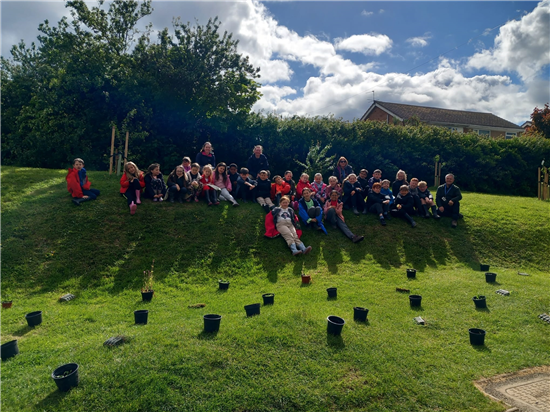
Rhyl primary pupils have helped celebrate the return of an annual biodiversity campaign.
Ysgol Llywelyn pupils linked up with Denbighshire County Council’s Biodiversity team to help set the scene for the 2026 Wildflower Week starting this May half term.
The youngsters worked alongside the officers to create a new wildflower meadow area at the school to help them learn about the benefits these habitats bring to nature, the theme of the upcoming main Denbighshire Wildflower Week.
Early this year pupils also planted with the Biodiversity and Countryside Service team over 700 trees of varied species at the school grounds. This work was funded by the UK Government through the 2025/26 UK Shared Prosperity Fund which has granted Denbighshire County Council £278,600 for nature recovery works across the county.
Now the pupils have created a new wildflower habitat which includes wildflower species wild carrot, oxeye daisy, cat's-ear, red campion, selfheal, knapweed, Meadow buttercup, common bird's-foot trefoil, and bladder campion
The area will help provide support to local pollinators such as bees and also provide an additional outdoor area at the school to learn about nature.
Denbighshire County Council’s tree nursery at St Asaph and the Woodland Skills Centre at Bodfari provided the wildflowers for planting.
Biodiversity Officer, Ellie Wainwright, said: “It was great to return to Ysgol Llywelyn following working with the pupils to plant all the trees. The school is really passionate about supporting nature and this latest project to create the meadow will help create a great habitat for all animals and plants around the school grounds.
Councillor Barry Mellor, Lead Member for Environment and Transport said: “A big thanks to Ysgol Llywelyn pupils and staff for helping us welcome in the 2026 Denbighshire Wildflower Week by creating this fantastic habitat for nature at the school.”
“Its great to see youngsters putting out a helping hand to our local nature, their support is an inspiration to us all.”
“Watching confidence grow into independence” - Denbighshire foster carer reflects on breakthrough moments for Foster Care Fortnight
The first time a child laughs, opens up about their day, asks to watch a film; these are moments that many might take for granted, but for foster carers in Wales, they symbolise one thing, a breakthrough.

Rob
Children who have experienced trauma often develop ways of protecting themselves. This might include behaviour such as anxiety, emotional shutdown, intense reactions or difficulty following rules.
A national survey commissioned by Foster Wales found around 80% of carers surveyed have supported children who displayed behaviour like this. While these challenges can be tough, half of foster carers surveyed also said they noticed a meaningful breakthrough within the first six months.
Foster carers shared that these breakthrough moments were often centred around small moments of connection, but they represent more than that: for children in care, it means they have made progress, they have started to feel safe, they have started to heal, to feel loved and to feel supported following childhood trauma.
After experience, support and professional guidance, almost all carers (93%) said they are now confident responding to trauma‑related behaviour.
The findings are released ahead of Foster Care Fortnight, the UK’s largest annual campaign to raise awareness of fostering, which takes place every May. This year’s theme, 'This is Fostering', shines a spotlight on the real experiences of foster carers and the vital role they play in helping children feel safe.
Rob from Denbighshire says his decision to become a foster carer was deeply influenced by his own upbringing and family life. Growing up alongside his siblings, with his father playing a central role in their day-to-day care, and later becoming a parent himself, Rob developed the values, patience and understanding that ultimately led him into fostering.
One of the most powerful aspects of his journey has been witnessing a young person in his care move confidently into adulthood and independence.
“Seeing them go to college, get themselves up in the mornings, take the bus and show up for themselves every day has been incredibly rewarding.
It’s the little things that matter most, those everyday moments that show growing confidence and independence — and they reassure me that I’ve done something right.
Above all, my fostering experience has been full of unforgettable memories. Many of those moments are among the best of my life, and watching a child grow and thrive is something that’s hard to put into words — it’s incredibly meaningful and deeply rewarding.”
Rhiain Morrlle, Head of Children's Services at Denbighshire County Council said:
“We are extremely proud of foster carers like Rob and their families. Fostering goes far beyond providing a safe and stable home — it’s about nurturing a sense of belonging and developing strong, supportive relationships that enable children and young people to thrive.
Stories like Rob’s highlight how powerful those everyday breakthrough moments can be — from small steps towards independence to the confidence that grows over time.
Foster Care Fortnight is an opportunity to celebrate these life-changing moments and to recognise and thank our dedicated fostering community here in Denbighshire for the difference they make every day.”
To find out more about becoming a foster carer in Denbighshire, visit: denbighshire.fosterwales.gov.wales
New archive centre plans move forward for North East Wales
Plans for a new state-of-the-art archive centre for North East Wales are continuing to progress, with residents invited to attend a series of public drop-in sessions to find out more about the ambitious project. 
In April 2024, The National Lottery Heritage Fund approved development phase funding to support plans for a new purpose-built archive centre adjacent to Theatr Clwyd.
The proposed new centre will bring together the staff and collections of both Flintshire and Denbighshire archive services, creating a modern, accessible home for the region’s rich historical collections while also supporting a wide-ranging three-year community activity programme.
Following a successful tender process through the North Wales Construction Framework, Wynne Construction has now been appointed as the project’s Design and Build Contractor.
A pre-planning consultation process for the planning consent will run from 21 May to 18 June. If you’re interested in seeing these documents, they are available at:
- North East Wales Archive (Hawarden), The Old Rectory, Rectory Lane, Hawarden CH5 3NR; open Monday, Tuesday, and Thursday (9.30am – 4.30pm); and
- North East Wales Archive (Ruthin) The Old Gaol, 46 Clwyd Street, Ruthin LL15 1HP; open Wednesday to Friday (9.30am – 4.30pm)
As part of this next stage, residents are being encouraged to attend two public consultation events. The sessions will provide an opportunity for people to learn more about the proposals, ask questions and share their views.
The two public pre-planning consultation events will take place at:
- Old Courthouse Ruthin: Thursday, 4 June (3pm – 7pm) (St Peter’s Square, Ruthin LL15 1AA)
- Mold Library: Wednesday, 10 June (12 noon – 5pm) (14 Daniel Owen Precinct, Mold, CH7 1AP)
Alongside the development of the building plans, a wide-ranging programme of activities is also being developed to introduce archives to a broader and more diverse audience across North East Wales. The activities aim to encourage more people to explore and engage with the rich cultural heritage and stories of North East Wales.
Councillor Emrys Wynne, Denbighshire County Council’s Lead Member for Welsh Language, Culture and Heritage said:
“This is an exciting opportunity to create a modern archive centre that will help preserve and celebrate the shared history of our communities for generations to come.
“The project is about far more than a building – it is about creating opportunities for more people to connect with the fascinating stories, collections and heritage of North East Wales. We would encourage residents to come along to the drop-in sessions and find out more.”
Councillor Mared Eastwood, Flintshire County Council’s Cabinet Member for Education, Welsh Language, Culture and Leisure said:
“This project represents a significant investment in the cultural heritage of the region and will help ensure our important archive collections are protected, accessible and enjoyed by a much wider audience.
“It has been fantastic to see so many people already involved in helping shape the activity programme, and we look forward to continuing that engagement as the project develops.”
Andrew White, Director for Wales, The National Lottery Heritage Fund said:
“We are pleased to be supporting the continuing development phase of this exciting project and look forward to seeing it progress over the coming months. Thanks to National Lottery players, the project aims to bring communities together to help design a welcoming, accessible space that protects and shares the region’s rich heritage for future generations.”
The project is being funded by The National Lottery Heritage Fund, Flintshire County Council, Denbighshire County Council and Welsh Government.
For anyone wishing to learn more about the service that NEWA offers or the latest news on the Creative Archives project, please visit our website – https://www.newa.wales/
Next stop: Opening of the VIBE Station in Rhyl for all your wellbeing and employment support
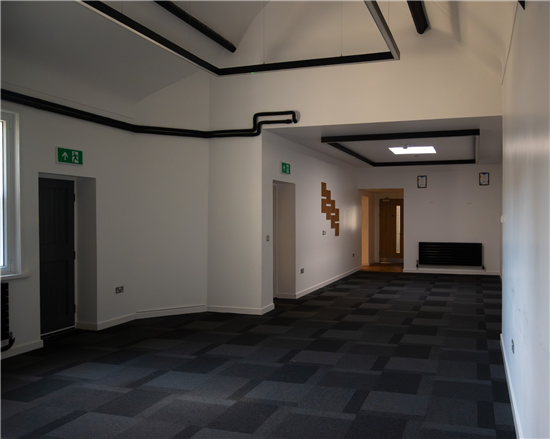
Working Denbighshire is set to open The VIBE Station in Rhyl this month, a new community space designed to support people to move forward in their lives, starting with their wellbeing.
Opening on 29 May, The VIBE Station has been developed as a place people can come to at any point in their journey to employment. Whether someone is looking to improve their wellbeing, rebuild confidence, connect with others or begin exploring opportunities, the space is designed to meet people where they are.
Located near Rhyl Railway, The VIBE Station has been intentionally shaped as a ‘station’ where people can stop, access support, and take their next steps forward. It recognises that for many individuals, the journey towards employment begins long before job searching, and often starts with confidence, stability and wellbeing. The space will also offer a mix of wellbeing activities, training opportunities, one-to-one support and informal ways to connect with others.
A key feature of The VIBE Station is its role as a Visual Integrated Base for Employment (VIBE), bringing services together in one place to provide more joined-up, accessible support for the community.
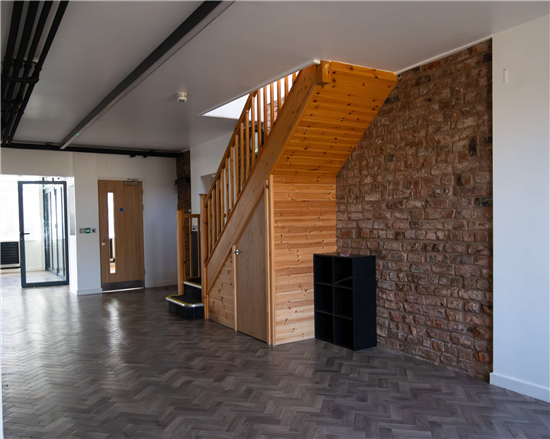
Partners and organisations are being encouraged to get involved and be part of The VIBE Station, whether by delivering sessions, offering services, or working alongside others to support local people more effectively. The space has been designed to evolve, with integration and collaboration at its core.
The launch event on 29 May will provide an opportunity for invited guests and the public to explore the space, meet partners and learn more about the support available.
Residents, partners and community organisations are invited to attend the public opening from 1:00pm to 3:30pm and experience how The VIBE Station can support people to take their next steps forward.
Melanie Evans, Principal Manager, Strategic Employment, said:
“The journey towards employment is not always straightforward, and for many people it starts with wellbeing and feeling ready to take that first step. The VIBE Station has been created as a place people can come to at any stage, access the right support and begin to move forward in a way that works for them.
By bringing together wellbeing, training and support in one space, we’re making it easier for people to connect with services, build confidence and progress at their own pace.”
Councillor Jason McLellan, Leader of the Council and Lead Member for Economic Growth and Tackling Deprivation added:
“The VIBE Station represents an important investment in both people and place. Supporting individuals to improve their wellbeing and progress is key to building stronger, more resilient communities.
This reflects our commitment to tackling inequality and supporting long-term economic growth by ensuring opportunities are accessible within our communities.”
Event Details
Location: The VIBE Station, 40 Bodfor Street, Rhyl LL18 1AT
Date: 29 May 2026
Public Opening: 1:00pm – 3:30pm
Working Denbighshire’s one‑to‑one support is free and available to anyone aged 16+ living in Denbighshire who would like help moving forward.
Residents can learn more at: www.denbighshire.gov.uk/working-denbighshire
Working Denbighshire is part‑funded by the UK Government and multiple programmes, including the Welsh Government’s Communities for Work Plus, the UK–Wales Trailblazer initiative targeting economic inactivity, the UK Shared Prosperity Fund (SPF), and Connect to Work.
Over 900 residents supported through Talking Points sessions in one year
Recent statistics show that 923 residents in Denbighshire have received advice and guidance through the Talking Points service between April 2025 and March 2026.
Based at all of Denbighshire’s Libraries, Talking Points are a convenient way for Denbighshire residents to find out what help and support is available in their local area.
The Community Navigators service is provided by the British Red Cross in partnership with Denbighshire County Council and key partners.
The 388 Talking Points sessions, which were held during this period, also garnered 100% positive feedback from those who went on to fill in a feedback form after a session. The feedback forms also showed that 100% of those who completed the form stated that they were able to speak in the language of their choice.
The support offered by the Talking Points service through British Red Cross Community Navigators is wide reaching, and can range from simply providing advice, referring to relevant further support, and housing support and assistance.
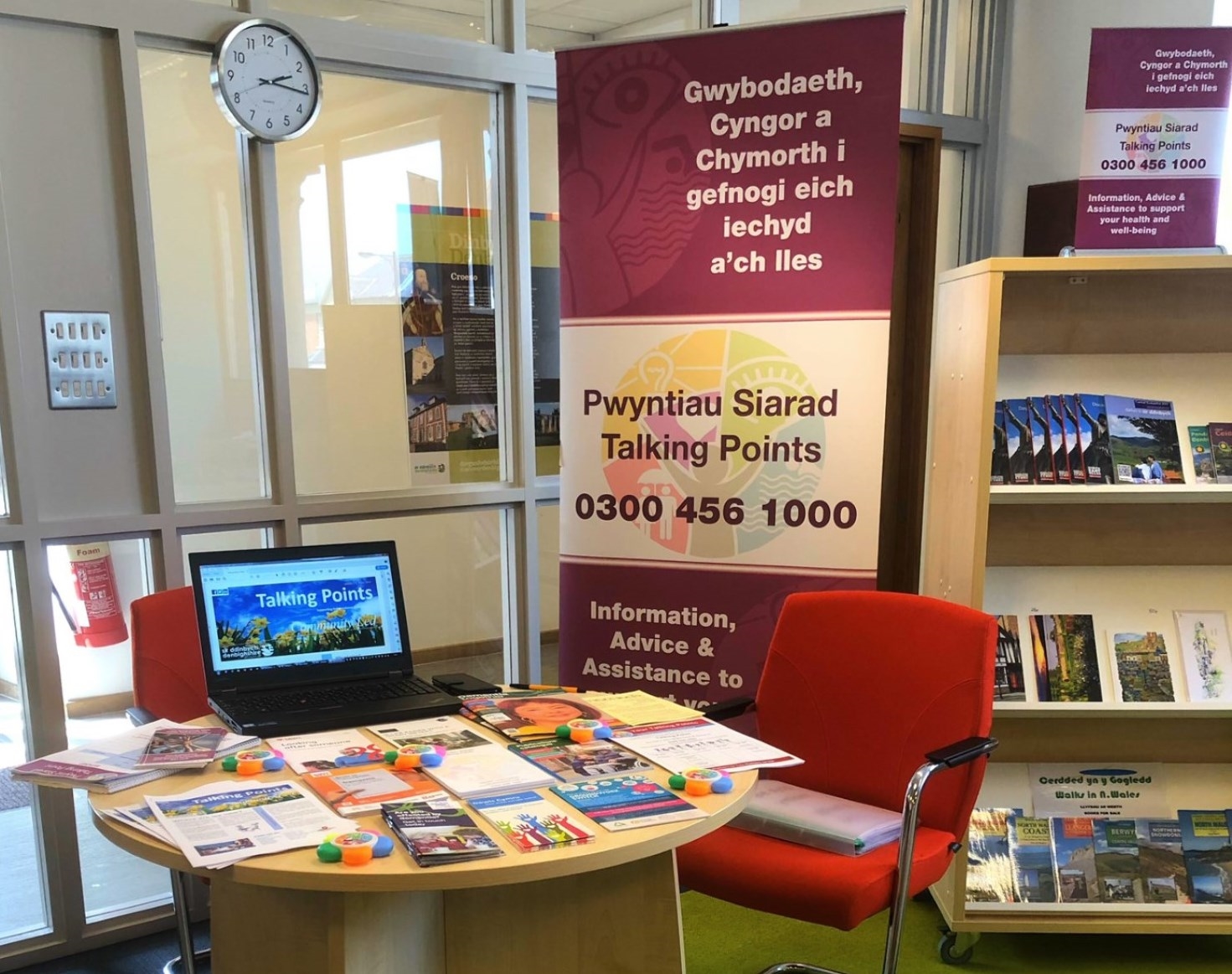
The current Talking Points locations and times are as below:
Every Monday (except bank holidays) - St Asaph Library, 10:00am – 12.30pm
Every Tuesday - Rhyl Library and Ruthin Library, 10:00am – 12.30pm
Every Wednesday - Denbigh Library and Corwen Library, 10:00am – 12.30pm
Every Thursday - Llangollen Library, 10:00am – 12.30pm
Every Friday (except bank holidays) - Prestatyn Library and Rhuddlan Library, 10:00am – 12.30pm
Ann Lloyd, Head of Adult Social Care & Homelessness said:
“Talking Points provide a valuable service in our communities, giving residents the option to have a person-centred, face to face conversation about what matters to them.
The wide range of support offered by Talking Points can provide vital signposting and advice opportunities, and reduce the strain on other services down the road. Talking Points provide residents with an easy-access, reliable and dependable support resource at the heart of their community.”
Youngsters grow support for Wildflower Week
Denbighshire primary pupils have come together to help grow support for an annual campaign aimed at highlighting the importance of our meadows.
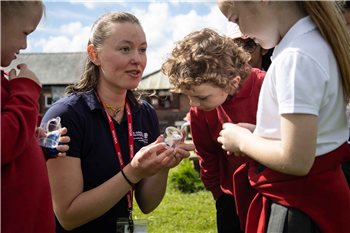
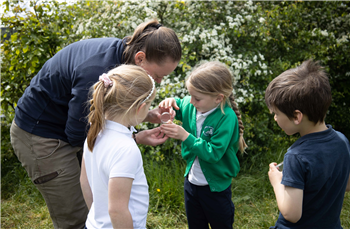
Denbighshire primary pupils have come together to help grow support for an annual campaign aimed at highlighting the importance of our meadows.
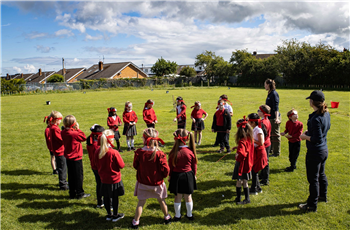
Pupils from Ysgol y Faenol and Ysgol Llanfair DC received special educational sessions from the Council’s Biodiversity team on new wildflower habitats that were recently created at both schools.
The sessions were held with the children to celebrate the return of the Council’s annual Denbighshire Wildflower Week during this May half-term.
Pupils took part in activities including a pollination game, a food web activity, a bug hunt, and enjoyed spotting plants on their site to complete wildflower bingo sheets.

Ellie Wainwright, biodiversity officer, said: “It was wonderful to see how enthusiastic the children at both schools were about the sites we had recently helped them create. It’s so important for them to learn about and interact with nature for both their health and the future health of the planet and helping them learn is a great way to start our Denbighshire Wildflower Week events.”
Cllr Barry Mellor, Lead Member for Environment and Transport, said: “The children at both schools have worked really hard to help nature on their sites through tree and wildflower planting with our officers recently and its fitting they should help us kick start the celebration of how important meadow habitats are for local nature and communities.”
Please check the Council’s social media for the latest Wildflower Week event timetables and information.
If you are interested in attending any of the events please click on this link to book.
For further information, please email biodiversity@denbighshire.gov.uk
Contractor appointed for Ysgol Pendref refurbishment project
The contractor for the Ysgol Pendref refurbishment programme in Denbigh has now been appointed, with a two-part contract for both the design and delivery of the project awarded to Wynne Construction.
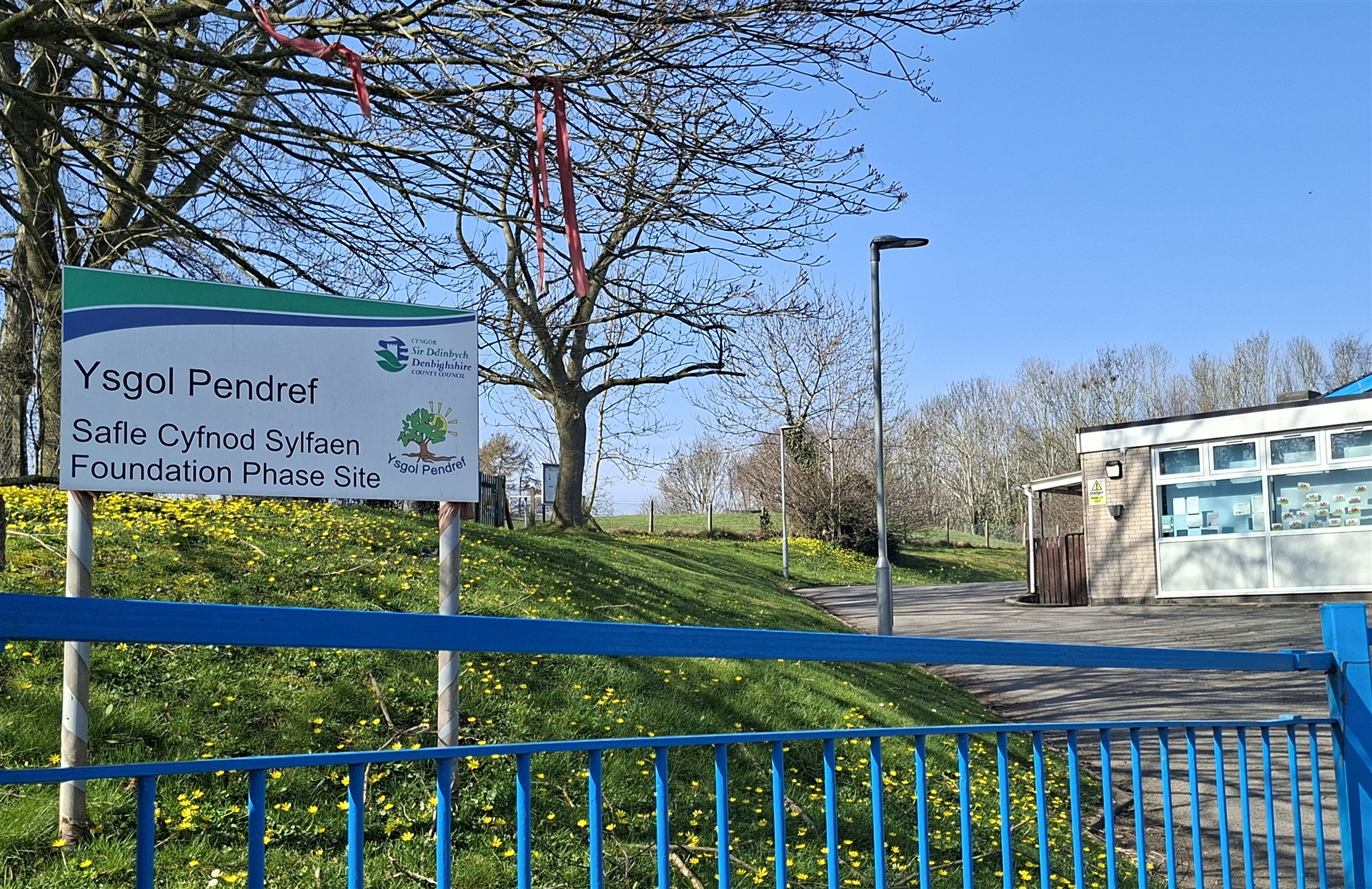 Ysgol Pendref
With the Strategic Outline Case now approved by Welsh Government for the project, and the necessary approvals needed from Denbighshire County Council’s Cabinet, the design stage will now commence, which will inform the overall look of the refurbishment work.
Ysgol Pendref was established in 2012 following the amalgamation of two neighbouring schools. The school has operated since 2012 from two separate buildings on one site, with this new project aiming to consolidate all teaching and learning into a single building.
In the summer of 2025, a Design and Construction Agent was appointed to support the development of the Ysgol Pendref project, and manage the procurement of a contractor to lead on the design and build for the extension and refurbishment of the current site. Approval to progress the procurement was provided by Cabinet in September 2025.
The total agreed project cost is presently £11.74 million for the Ysgol Pendref project.
Geraint Davies, Head of Education at Denbighshire County Council said:
“This project will bring a significant investment to upper Denbigh, bringing support families and children within their community.
This next step is step closer to bringing new, high quality building and education facilities for the pupils at Ysgol Pendref.”
Nicola Griffiths, Headteacher at Ysgol Pendref said:
“This next phase in the project is a step closer to bringing a new, high-quality building and education facilities for the pupils at Ysgol Pendref.
I’m looking forward to seeing the designs being further developed for the project.”
Young people and families invited to free community day in Corwen this May half term
Families and young people in Corwen are being invited to enjoy a free youth-led community day during the May half term, bringing together local organisations, sports clubs and community groups for a fun-filled day of activities and support.
The event will take place on:
- Friday, 29 May
- 10am – 3pm
- Corwen Sports Pavilion, Green Lane LL21 0DN
and has been planned in partnership with Families First, Flying Start, Denbighshire Play Rangers, South Denbighshire Community Partnership, Denbighshire Leisure Limited and Corwen Town Council.
A wide range of free activities will be available throughout the day, including tennis, football, cricket and bowling sessions delivered by local clubs. Little Learning Company will also be running arts and crafts activities, while Drosi Bikes will be offering bike maintenance sessions. Healthy food and drinks will be provided by Families First.
The event aims to bring families together, encourage young people to become involved in opportunities within their local community, and help residents find out more about the services and support available in the area.
Activities for families and younger children will run throughout the morning and early afternoon. From 1pm – 3pm, the focus will turn towards young people aged 11+, giving them the opportunity to meet local youth workers, learn more about their local youth club and discover the activities and support available to them.
Councillor Diane King, Denbighshire County Council’s Lead Member for Education, Children and Families, said:
“We are really pleased to be supporting this fantastic community event in Corwen during the half term holidays.
“This is a brilliant opportunity for families and young people to come together, try new activities, meet local organisations and find out more about the support and opportunities available within their community.
“I’d encourage anyone in the area to come along and enjoy what promises to be a fun, welcoming and engaging day for all ages.”
If you would like to know more about our Youth Services and what they can provide for our young people, please visit our website.

First set of classroom extensions completed at Rhuddlan school
The first set of classroom extensions at Ysgol y Castell in Rhuddlan have recently been completed on schedule.
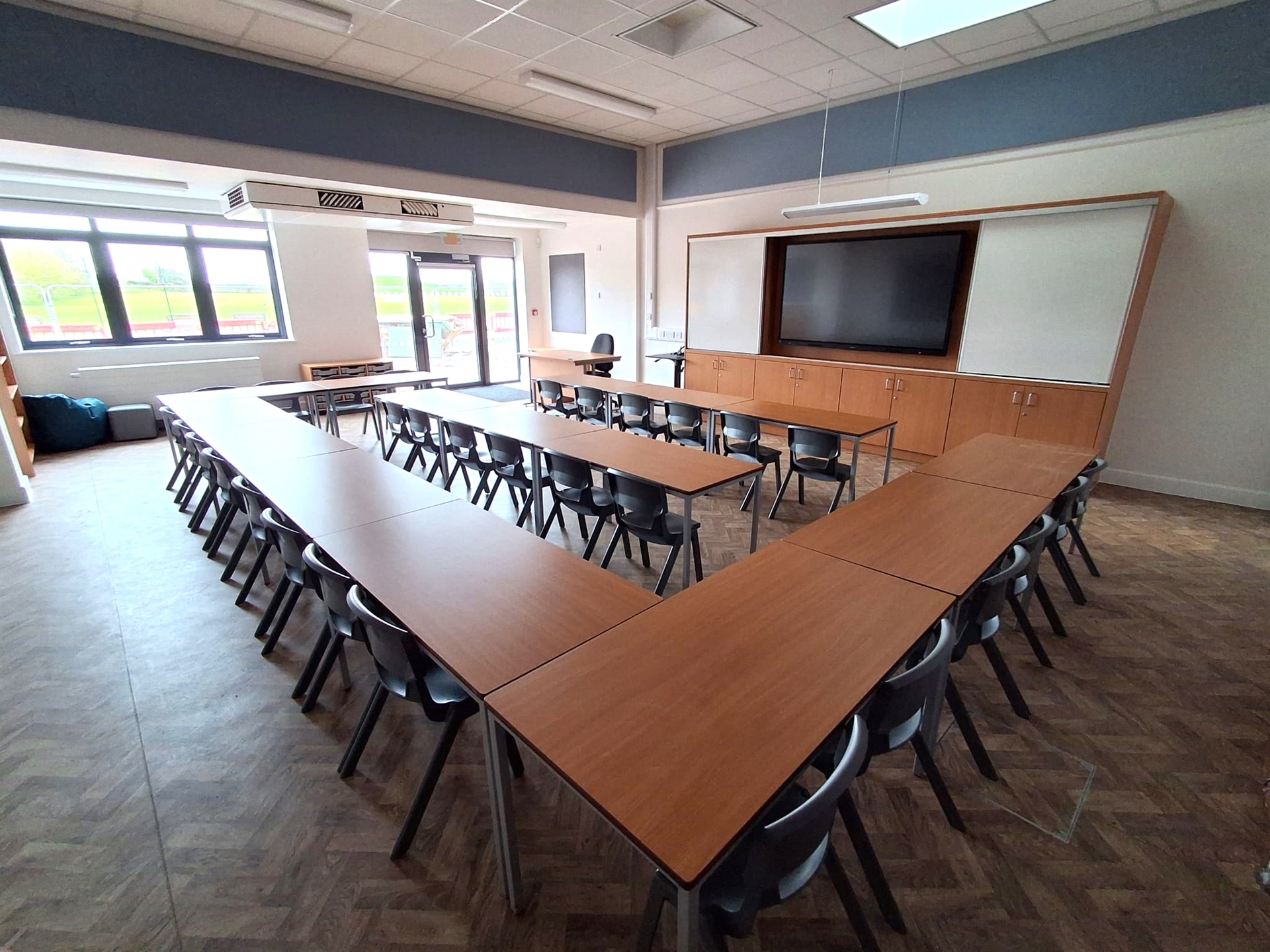 Classroom after the new extension.
This first step has seen the completion of extensions on the first two classrooms, which are now in use by the pupils.
Work has now commenced with the strip out of the next two classrooms, ready for those to be extended.
The extensions will provide 16 square metres of addition classroom space in all four of the classrooms, producing a total extension of 64 square metres for pupil use and will see updated learning facilities added at the same time.
All external works such as creating access to the playground, the external render of all four classrooms, installation of solar panels and upgrades to the school hall will be completed by Winter 2026.
This project is being delivered by BrynBuild Ltd.
It is 65% match funded by the Welsh Government, through its Sustainable Communities for Learning Programme, with the remaining 35% of funding primarily coming from a developer’s contribution provided by the Tirionfa housing development in Rhuddlan.
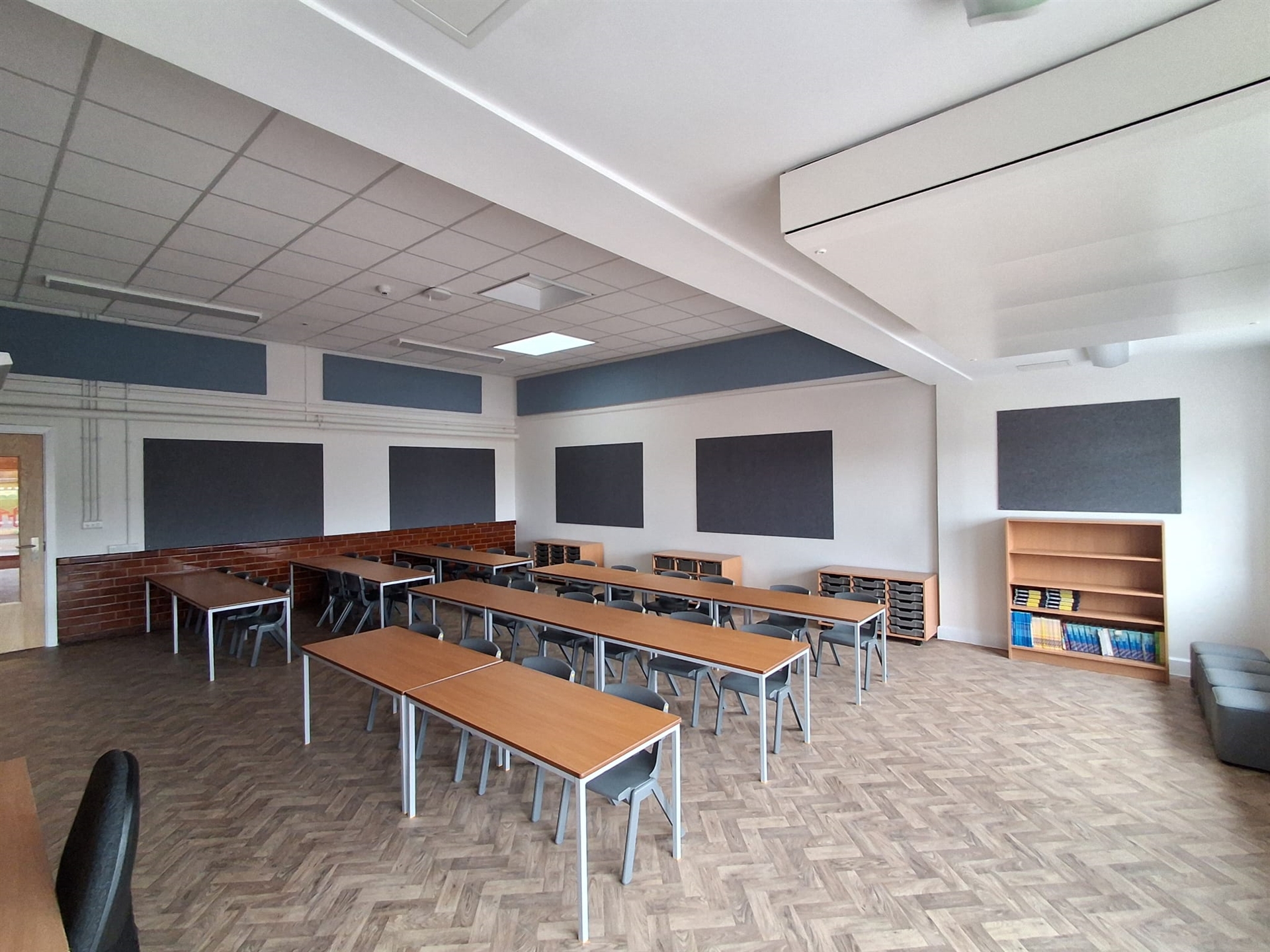
Extended classroom.
Geraint Davies, Head of Education at Denbighshire County Council said:
“I am delighted to see that the first phase of this project has now complete, and that the first two classrooms of this project are now in use by the pupils.
This is a long-awaited scheme, which is bringing updated facilities and much needed additional space for four classrooms at the school.”
Sara Tate, Headteacher at Ysgol y Castell said:
“We are delighted with the completion of the first phase of our new classroom extensions. The additional space and modern design have created brighter, more welcoming learning areas that are already enhancing day-to-day teaching and learning for both pupils and staff.
We look forward to the continued transformation, ensuring the very best opportunities for all pupils at Ysgol y Castell.”
Catering service recognised for school menu provision

Denbighshire Catering Service has achieved a Certificate of Compliance from the Welsh Local Government Association (WLGA) for its new 3-week school menu which started after the Easter holidays.
The service ensures all menus are balanced, analysed, and approved in line with the Healthy Eating in schools (Nutritional Standards and Requirements) (Wales) Regulations 2013.
In preparation for updated Welsh Government Regulations taking effect on 31st October 2026, the service is proactively introducing several healthy changes.
These include:
- Overhaling the menu to provide a wide range of home-cooked dishes.
- Reducing dessert offerings from five days a week down to two, with fruit-based options.
- Replacing desserts on the other three days with Fruit Wedges and locally sourced Llaeth y Llan Yoghurt.
- Introducing 50/50 bread for all sandwiches.
The School Catering Service was recently recognised as the best performing catering service at The Association for Public Service Excellence (APSE) awards earlier this year.
This recognition, from The Association for Public Service Excellence (APSE) is based upon comparisons with other school meals services from across the UK. It takes into account aspects such as paid and free meal uptakes, staff training, service performance and management of the service.
Councillor Diane King, Lead Member for Education, Children and Families said: “We are grateful to our catering staff for achieving this recognition through their continuing work to provide a better healthier menu to support our county pupils through their daily education.
“The catering service also remains committed to providing value for money in terms of the quality of food given to pupils across our schools”.
All Primary school pupils in Denbighshire are entitled to a free school meal and eligible parents, specifically those in receipt of certain benefits, are encouraged to officially apply for Free School Meals, as this application also grants access to the Student Essentials Grant.
For more information, parents can view the new primary menus on the Denbighshire School Meals website.
Libraries shine a light on dementia support during Dementia Action Week
Denbighshire Libraries are helping to raise awareness of dementia and the support available during Dementia Action Week 2026, taking place from 18 – 24 May.
This year, the library service has been working alongside Making Sense to promote a unique collection of memory boxes, available to borrow free of charge from local libraries.
The themed memory boxes are filled with handling objects and familiar items from across the decades, designed to spark conversation, unlock memories and encourage reminiscence. From a nostalgic trip to the cinema with the 1950s cinema box and its traditional usherette tray, to memories of school days, seaside holidays, sheds, DIY projects and workplaces of the past, the collections offer meaningful opportunities for connection and conversation.

Memory boxes
The memory boxes are ideal for use in care homes, community groups and reminiscence sessions, while libraries also offer smaller memory bags for one-to-one use, alongside jigsaws designed to support relaxation and mental stimulation.

Cinema box
Denbighshire Libraries also provide access to the Reading Well for Dementia collection, which recommends books and digital resources for people living with dementia, as well as information and support for families, friends and carers. The collection includes personal stories, practical advice and age-appropriate books for children.
Residents are being encouraged to attend a special event at St Asaph Library on Monday 18 May at 2.30pm, where Making Sense will officially launch a new promotional video showcasing the Memory Boxes project.
Visitors will have the opportunity to enjoy refreshments, explore the collections and find out more about the support and resources available locally for people living with dementia and those who care for them.
Councillor Emrys Wynne, Lead Member for Welsh Language, Culture and Heritage said:
“Dementia affects many families and communities across Denbighshire, and it is important that people know help and support is available. These wonderful Memory Boxes offer a simple but powerful way to spark memories, encourage conversation and support wellbeing.
“I would encourage anyone interested to come along to the event at St Asaph Library on 18 May to discover the resources available and learn more about the fantastic partnership work taking place across the county.”
Councillor Elen Heaton, Lead Member for Health and Social Care, said:
“Living with dementia can present daily challenges not only for individuals, but also for families, friends, and carers. Initiatives such as the Memory Boxes provide comfort, connection and opportunities for meaningful interaction, helping people to feel valued and supported.
“It is fantastic to see organisations across Denbighshire working together to raise awareness and create dementia-friendly communities. The support available through our libraries offers an important lifeline, and I would encourage residents to explore the resources and advice on offer during Dementia Action Week.”
The memory box collections and promotional video have been developed by Making Sense in partnership with local care homes and libraries, with funding support from the DVSC Dementia Aware Grants programme.
Volunteers refurbish signs at popular Rhyl nature reserve
Denbighshire County Council’s countryside team alongside volunteers have been hard at work.
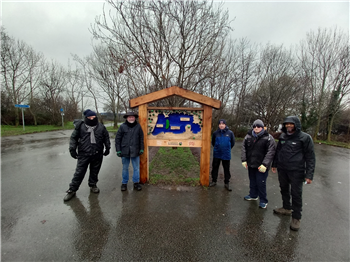
Denbighshire County Council’s countryside team alongside volunteers have been hard at work to refurbish signs at Brickfield ponds nature reserve.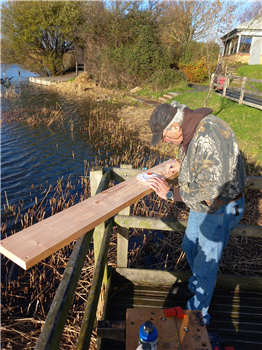
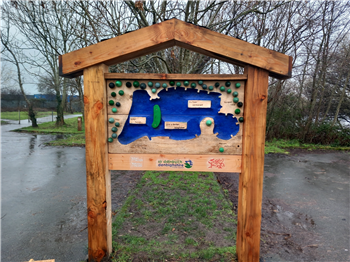
Working alongside Nature for Health they worked to improve the interpretation signs across the reserve that were previously in disrepair.
Nature for Health is a collaborative project that engages with individuals and communities to promote how access to nature can improve health and wellbeing.
The programme welcomes people of all abilities to get involved with conservation and take part in a range of activities.
Brickfield Nature Reserve was supported by the Nature for Health Programme which was funded by the UK Government’s Shared Prosperity Fund.
Timber framing sessions were organised at the Willow Collective to construct the frame and legs for the refurbished map of Brickfields Pond.
Volunteers also sanded and painted the signs at the workshop on the nature reserve before placing them back up on the site.
Emlyn Jones, Head of Planning, Public Protection and Countryside Service said:
“I’d like to thank our countryside team and the volunteers for their hard work in replacing the signs at Brickfields ponds nature reserve.
“Brickfields ponds is a popular nature reserve in the county and the volunteers and staff have made a real positive difference for the community who visit the site.”
Sold-out piano recital a success for historic house
Celebrated as a “Master Poet of the Piano”, Janusz Piotrowicz captivated guests with his expressive artistry and technical brilliance.
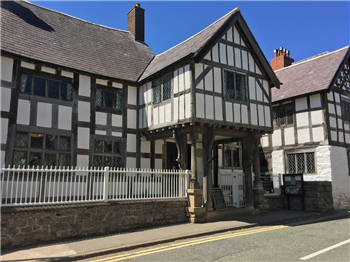
Nantclwyd y Dre historic house and gardens recently welcomed a full house for a memorable afternoon of music, as world-renowned pianist Janusz Piotrowicz delivered a sold-out recital within the intimate surroundings of the treasured heritage site.
The special performance, held recently proved a resounding success, with audience members enjoying an exceptional programme of pieces, surrounded by the unique setting of the historic house, steeped in nearly 600 years of history.
Celebrated as a “Master Poet of the Piano”, Janusz Piotrowicz captivated guests with his expressive artistry and technical brilliance throughout a programme featuring works by Liszt, Scarlatti, Chopin, Tchaikovsky and Rachmaninov.

The recital marks an exciting moment for Nantclwyd y Dre, showcasing the house’s potential as a venue for cultural events and performances.
Kate Thomson, Nantclwyd y Dre Site Manager said:
“We have been truly thrilled to host Mr. Piotrowicz’s recital. The audience couldn’t speak highly enough of his performance, and we hope this will be the first of many similar events to come that will offer new experiences at Nantclwyd y Dre and keep its longstanding tradition as a place of creativity alive.”
Councillor Emrys Wynne, Lead Member for Welsh Language, Culture & Heritage said:
“We would like to thank everyone who attended and supported the recital, as well as the Historic Houses organisation who made this performance possible.
“Nantclwyd y Dre boast significant historic value and it’s important that we remember and celebrate the history that is on our doorstep. These events provide an alternative way to enjoy the house, and we hope that we can host similar events in the future”.
Nantclwyd y Dre is open for visitors to explore its fascinating history and beautiful gardens between 10.30am - 4.30pm (last entry at 3.30pm) every Thursday, Friday and Saturday from April to September (admission fees apply). The historic also offers general hire options year-round and is open to working with artists and performers to deliver future events collaboratively.
For further information about visiting or future events, please contact the Denbighshire Heritage Service via heritage@denbighshire.gov.uk
Council consult on new parking and road layout changes to Llangollen
We're looking to introduce new ‘super short stay’ parking and other road layout changes to Llangollen town centre.
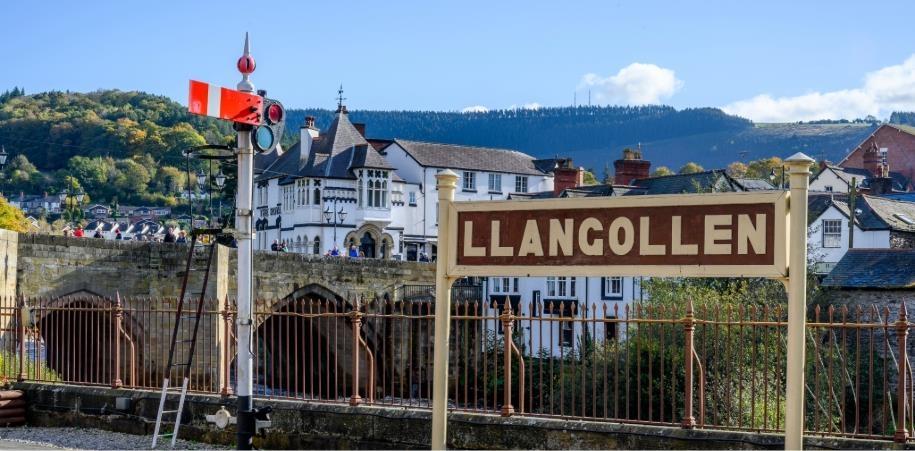
Denbighshire County Council are consulting on a Traffic Regulation Order to introduce new ‘super short stay’ parking and other road layout changes to Llangollen town centre.
Traffic regulation orders (TROs) are legal documents which are necessary for making changes to traffic and parking restrictions such as double yellow lines and one-way streets.
The council are proposing the following changes to Llangollen town centre:
- Market Street: Remove two parking spaces nearest the junction with Castle Street. Replace one of the taxi rank spaces with a parking space. This parking will be free of charge. Between the hours of 9am and 5pm the parking space will have a maximum stay of 1 hour, and no return to the same space within 2 hours.
- Hill Street (outside Rani’s Kitchen): Introduce new, legally enforceable, short stay parking to enable "pop and shop" parking. This parking will be free of charge. Between the hours of 9am and 5pm the parking spaces will have a maximum stay of 1 hour, and no return to the same space within 2 hours.
- Willow Street: Introduce double yellow lines to the left-hand side of the road for the entire length of the road. Introduce additional double yellow lines on a short section of the right-hand side of the road outside the youth club.
The new ‘short stay’ parking will be free of charge, in line with existing similar spaces elsewhere in the town centre. However, they will be enforced by Civil Enforcement Officers (CEOs) between the hours of 9am and 5pm to ensure they are used correctly.
Denbighshire County Council hopes that by introducing the proposed changes in Market Street, Hall Square and Willow Street it will improve traffic flow and maintain pedestrian access by reducing inconsiderate parking in these areas.
Councillor Barry Mellor, Lead Member for Environment and Transport said:
“Llangollen is an historically important town in the south of Denbighshire. In addition to being popular with tourists and day-trippers, Llangollen is a 'hub' town which serves a large network of villages and other rural communities locally. We hope that with these changes, the town centre will be safer and more accessible to visitors travelling by foot or by car.
“It’s also important to note that with these proposed changes, there will be no net loss of parking in the town centre and there will be no impact on marked disabled badge (blue badge) spaces. There will also be no impact on bus stops or bus stop locations as a result of these proposed changes.”
For more information on the proposed changes:
- View the consultation online by visiting denbighshire.gov.uk/consultations
- Copies of the proposals will be available to view in Llangollen Library during usual library opening hours between 27 May and 17 June 2026
The closing date for all feedback is Wednesday 17 June 2026.
Election of new Chair and Vice Chair of the Council
The council elected a new Chair and Vice Chair for the 2026/27 term during the Annual Meeting of the County Council.
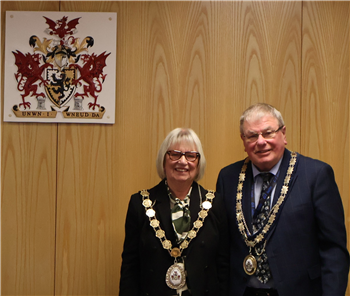 Newly elected Chair Cllr Bobby Feeley & Vice Chair Cllr Peter Scott
The Council has elected a new Chair and Vice Chair for the 2026/27 term.
During the Annual Meeting of the County Council, which was held at County Hall, Ruthin, Councillor Bobby Feeley was elected as Chair and Councillor Peter Scott as Vice Chair of the authority for the next municipal year.
Speaking as the new Chair of the Council, Councillor Bobby Feeley congratulated Councillor Arwel Roberts, the former Chair on his successful fundraising for his chosen charities and wished him the best for the future.
Reflecting on his time as Chair, Councillor Arwel Roberts said:
“It has been a great pleasure to be Chairman of Denbighshire County Council for the year 2025/26.
“I am extremely proud that a significant amount has been collected for both good causes, and I would like to thank the councillors for supporting the events organised to raise the money.
“No Chairman can please everyone, but I have tried to follow the example of many chairs in the past and do my best by following the county motto of ‘We join to do good’”.
During his time in office, Councillor Arwel Roberts raised £6,000 for his chosen charities namely Fund for All (Cyfle I Bawb) and St Kentigern’s.
During the meeting, Councillor Arwel Roberts was thanked for his service as Chair.
As it was the first full council meeting since the passing of Councillor Jeanette Chamberlain-Jones, tributes were paid by the Political Group leaders and all present in the Council Chamber observed a period of silent reflection in memory of Councillor Jeanette Chamberlain-Jones and gratitude for her distinguished service.
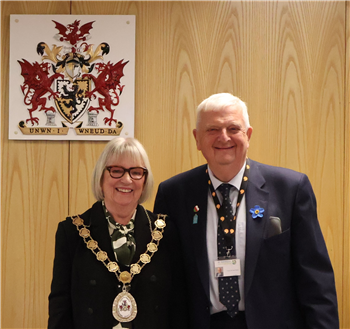
Newly elected Chair Cllr Bobby Feeley with former Chair Cllr Arwel Roberts
Denbighshire employers invited to participate in a new inclusive employers pilot
Employers across Denbighshire are being given the opportunity to take part in a new, fully funded initiative, designed to help businesses attract, recruit and retain a wider range of talent.
Working Denbighshire has now launched its Inclusive Employers Trailblazer Pilot, funded by the Welsh Government, to support local businesses in building more inclusive and sustainable workplaces. The main aim of this employer support is to help reduce economic inactivity within Denbighshire.
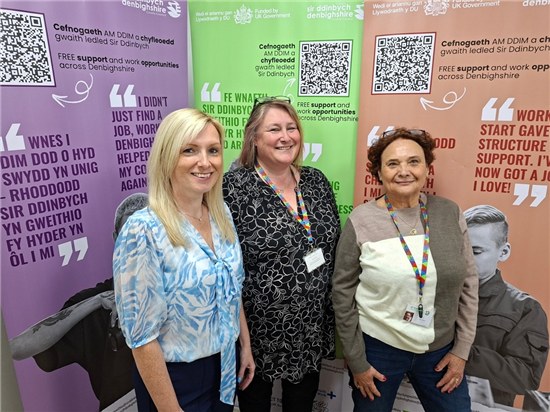
The Pilot offers a practical, hands-on opportunity for a small number of employers to receive tailored support from a professional hiring specialist. The aim is to help businesses strengthen their recruitment and onboarding practices while making opportunities more accessible to individuals who may currently face barriers to employment, including people with disabilities, health conditions or caring responsibilities.
This new initiative comes at a time when many employers are facing ongoing challenges in attracting and retaining the right people. By adopting more inclusive approaches, businesses can access a broader and often underutilised talent pool, improve staff retention, and reduce recruitment costs.
Participating employers will receive:
- Practical guidance on inclusive recruitment and selection
- Tailored support and resources to attract and hire a more diverse range of candidates
- Advice on supporting employees with additional needs
- Tools that can be embedded into day-to-day operations
- Recognition as a certified Working Denbighshire Inclusive Employer
In addition to supporting individual businesses, the programme aims to strengthen the local economy by helping more residents into sustainable employment.
Denbighshire is one of only three local authorities selected to take part in the wider Welsh Government Trailblazer programme, which focuses on tackling economic inactivity and testing new and innovative approaches to workforce inclusion.
Strategic Employment Service Manager, Melanie Evans, at Working Denbighshire, part of Denbighshire County Council, said:
"This Pilot is about more than recruitment, it is about creating a stronger, fairer local economy. By supporting employers to become more inclusive, we can help raise living standards, improve health and wellbeing, reduce child poverty, and create opportunities from which everyone in Denbighshire can benefit. This is a real opportunity for local businesses to be part of meaningful, long-term change."
Councillor Jason McLellan, Leader of the Council and Lead Member for Economic Growth & Tackling Deprivation added:
“We're helping Denbighshire businesses hire local people who've been held back by disability, health issues, or caring duties. It's a win-win - employers fill jobs with motivated people, and residents get the support and opportunity they need to succeed at work.”
A total of 20 employers will be supported through the Pilot, with the first cohort limited to just five places. This initial group will begin on Monday, 1 June 2026.
Local employers interested in taking part are encouraged to register their interest by contacting the Project Manager, Dawn Johnson, via dawn.johnson@denbighshire.gov.uk by Friday, 29 May 2026.
Libraries invite residents to step back in time this Local and Community History Month
Residents across Denbighshire are being encouraged to discover the rich history of their communities this May as libraries across the county celebrate Local and Community History Month with a range of free events, activities and resources.
From exploring fascinating archive collections to trying out local history-themed family activities, there are plenty of opportunities for people of all ages to uncover stories from the past through their local library.
Throughout May, North East Wales Archives will be hosting a series of ‘Ask the Archivist’ sessions, offering residents the chance to find out more about archive collections and how to access them.
Sessions will take place at:
- Rhyl Library on Tuesday 12 May from 10am to 12pm; and at
- Corwen Library on Monday 18 May from 10am to 12pm.
Families can also enjoy a special ‘Little Time Travellers’ event at Denbigh Library on Friday 29 May from 12pm to 2pm, featuring local history-themed crafts, games and dressing up activities.
Meanwhile, visitors to Rhuddlan Library can explore a new display created by Rhuddlan Local History Society, looking at the impact of the General Strike of May 1926 on the local community.
Rhyl Library will also be marking its 40th birthday on 21 May, inviting residents to discover how libraries have changed since the 1980s and how they continue to support communities today.
The library has recently installed a new Digital Microfilm Scanner, purchased through the National Library of Wales Small Grants Scheme. The scanner provides access to Rhyl Library’s unique collection of local newspapers on microfilm, including the Rhyl Record from 1856 to 1922 and the Rhyl Journal from 1922 to 2007.
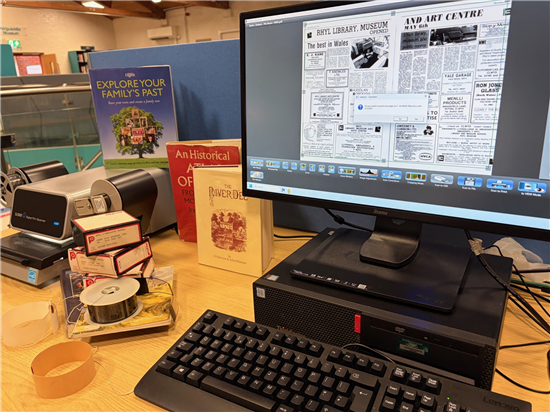
Digital Microfilm Scanner
These historic newspapers offer a fascinating glimpse into everyday life in the local area and how national and regional events shaped communities over the years. The new scanner allows customers to view and print high-quality digital images from the collection. Residents can find out more at special drop-in events on Friday 22 May and Friday 29 May from 10am to 12pm.
Library members can also access family history resources including Ancestry.com and Find My Past free of charge on library computers.
Another popular resource available through libraries is BFI Replay, a free video-on-demand service featuring thousands of digitised films and television programmes from the BFI National Archive and regional film archives across the UK. Highlights include historic footage of pupils leaving Christchurch School in Rhyl in 1902 and circus elephants walking through Denbigh after arriving by train in 1960.
Lead Member for Welsh Language, Culture and Heritage, Councillor Emrys Wynne, said:
“Local libraries are much more than places to borrow books — they are gateways to the stories, memories and history that have shaped our communities. Local and Community History Month is a wonderful opportunity for residents of all ages to explore the amazing resources available in our libraries, discover something new about where they live, and enjoy some fantastic free activities along the way.
“Whether you are researching your family history, exploring old newspapers, speaking with archivists or simply enjoying historic films and photographs, there is something for everyone to enjoy. We would encourage residents to visit their local library this May and take a step back into the past.”
For more information about events and activities taking place in Denbighshire libraries, visit: Denbighshire Libraries.
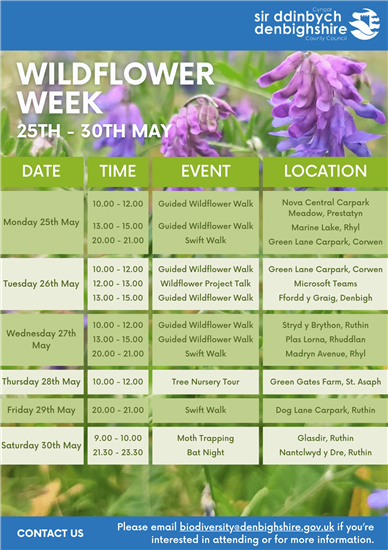
Wildflower week blooms into action this month
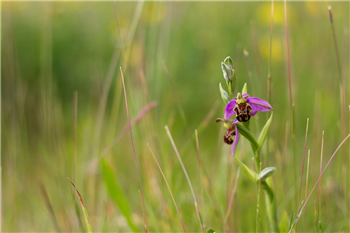
Have you ever wanted to learn how wildflowers benefit both humans and animals?
A whole host of wildflower facts will be on offer for residents across the county this half term as Wildflower Week returns once again.
During the week there are planned wildflower meadow walks across Denbighshire to help understand the importance of the habitat for supporting species of wildflowers, providing food for insects and pollinators and in turn giving a source of food for larger animals to survive on.
It’s a chance to also see how the meadows benefit county communities by helping to cool the land for example and acting as a deterrent against flooding.
Other events during the week will look at the animals which need the meadows to survive, such as swifts, bats, and moths.
And there’s an opportunity to learn how local provenance is helping meadows survive by the chance to visit the Council’s Tree Nursery at St Asaph.
Established in 2019, Denbighshire County Council’s Wildflower Meadow Project currently includes approximately 60 acres of native wildflower habitat helping and protecting local nature and supporting community wellbeing across the county.
It has also been funded by Welsh Government, through the Local Places for Nature programme.
During the 2025 season several of the wildflower meadows saw a resurgence in orchid species growing for the first time across the county.
Cllr Barry Mellor, Lead Member for Environment and Transport and Biodiversity Champion, said: “Our Biodiversity Team is really looking forward to helping people of all ages learn more about this important project and the benefits it brings to both nature and our communities.
“We have lost almost 97 per cent of wildflower meadows across the UK since the 1930s, so this work is vital in helping to restore habitats that have been severely impacted over time. As wildflowers return, they bring greater diversity and colour for communities to enjoy, while providing essential support for pollinators that play a crucial role in putting food on our tables.
“This week of events is a great opportunity to learn more about why these habitats matter, and I would encourage anyone living near the featured meadows to join the walks and see first-hand just how much they contribute to both nature and local wellbeing.”
Please check the Council’s social media for the latest event timetables and information.
If you are interested in attending any of the events please click on this link to book.
For further information, please email biodiversity@denbighshire.gov.uk
Foster Care Fortnight begins in Denbighshire
Foster Care Fortnight, which is an annual two-week nationwide spotlight on fostering, has kicked off once again this year, running from the 11th-24th of May.

Foster Care Fortnight, which is an annual two-week nationwide spotlight on fostering, has kicked off once again this year, running from the 11th-24th of May.
Foster carers in Denbighshire make a real difference to the lives of children and young people, helping many of them to stay and thrive within their local community, providing brighter futures for them.
This year’s theme “This is fostering”, shines a light on those real, everyday moments that makes fostering so powerful.
The Foster Wales Denbighshire team at Denbighshire County Council are celebrating the fortnight with a range of events for foster families and prospective foster carers across the county.
Throughout the 14-day campaign, a variety of activities have been planned, including events and days out for Denbighshire foster families, as well as opportunities to meet the team out and about in the Community.
These drop-in sessions give people the chance to find out more about fostering and have an informal chat with the team. These include a Fostering Information Drop-In Session at Prestatyn Library on 12 May 2 – 4pm and and Online Information Session on 13 May 12pm – 1.30pm.
Rhiain Morrlle, Rhiain Morrlle, Head of Children’s Services said:
“I always look forward to these two weeks in May where we get to celebrate the work of our amazing foster carers here in Denbighshire.
We have a great schedule lined up once again this year, and are taking part in The Fostering Network’s Foster Care Fortnight North Wales walk also.
We have recently updated our package of assistive policies for foster carers who foster through the local authority, and we’d love to hear from anyone who is considering taking the next rewarding step to making a massive impact on a young person’s life.”
The link for the online information sessions can be found here: Information events - foster wales
For more information about fostering with Foster Wales Denbighshire, please go to: https://denbighshire.fosterwales.gov.wales/
Improvement work planned for Llangollen Cemetery
Llangollen Cemetery will undergo a period of infrastructure improvements this month.
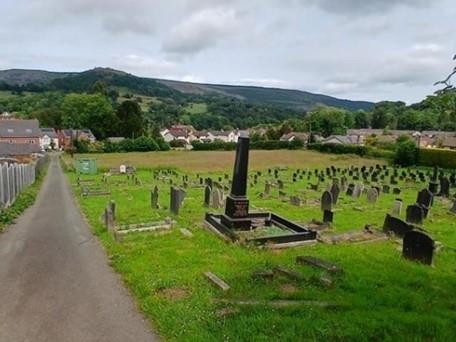
Llangollen Cemetery will undergo a period of infrastructure improvements this month.
Denbighshire County Council’s Streetscene has secured UK Government Shared Prosperity Funding alongside capital funding to carry out infrastructure improvement work at the site.
Currently vehicular access to the cemetery is only possible by traffic driving through the adjacent housing estate, which is narrow and difficult to navigate, this has resulted in some complaints being received from residents in recent years.
To address this issue and improve accessibility to the cemetery, it is proposed to create a new vehicular access at the bottom of the site which will be accessed via Vicarage Road.
This improvement will not only facilitate easier access for visitors but will enable funeral directors to access the site without disturbing neighbouring residents as well as providing onsite parking at the cemetery.
Additionally, adjoining land located to the south of the site, which has in recent years been used for grazing has always been earmarked for future burial provision when required.
This project will support the development of the infrastructure on this plot of land for increased burial provision. There will also be some minor landscaping completed including tree planting in some areas around the car park to enhance the appearance of the site along with improvements to aid biodiversity such as installation of bat and bird boxes.
Paul Jackson, Head of Highways & Environmental Services, said: “This project will help massively improve the infrastructure at Llangollen Cemetery to provide a more dignified and respectful service to local families going forward.”

Flying Start childcare applications now open
Applications for Flying Start childcare provisions in eligible postcodes have now opened this week.
Flying Start childcare provides up to twelve and a half hours of funded childcare during school term time at a registered childcare setting.

The provision is currently available at partner playgroups, Cylchoedd Mudiad Meithrin or Day Nurseries from Monday to Friday during school term time.
This round of applications is for parents and carers who have children born between 1 September 2023 and 31 August 2024. It is important to note that birthdays which do not fit this date range are not eligible for this round of applications. Applications for Flying Start childcare are available at different times during the year and is done in rounds based on children’s ages.
Flying Start childcare is available for families who are within eligible postcodes.
To check if a postcode is in the Flying Start programme, go to: https://flyingstart.denbighshire.gov.uk/Home/Index?culture=en-GB
The closing date for applications for this round is the 19th of June.
Rhiain Morrlle, Head of Children’s Services said:
“This provision is there to help families with their childcare needs during term time.
We would like to invite parents and carers who have children born between the dates for this application to apply, and our team will be in touch to process your application once submitted.
There are a number of rounds of applications at different times during the year, so please keep an eye on our website for the next round.”
For more information please visit: https://www.denbighshire.gov.uk/en/childcare-and-parenting/families-first-and-flying-start/flying-start-childcare.aspx
Thousands of illegal cigarettes seized by council’s trading standards team
Three premises were targeted following successful test purchases of illegal cigarettes.
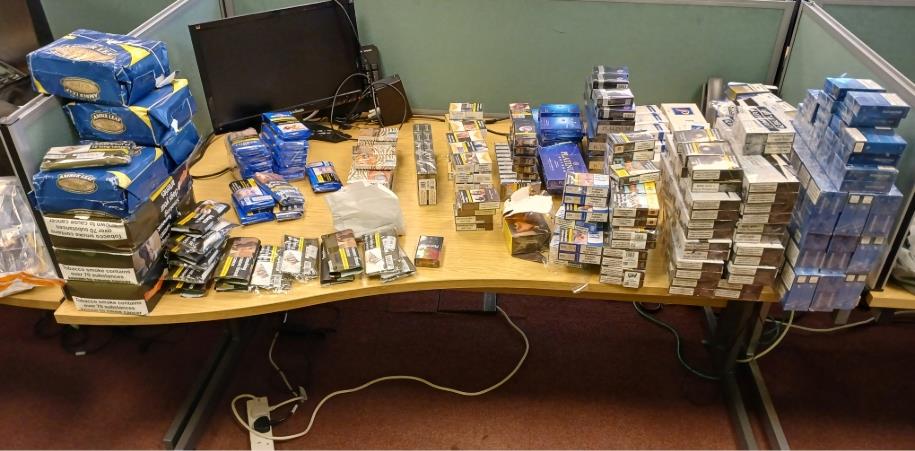
Following previous successful operations to crack down on the sale of illegal cigarettes, Denbighshire County Council’s trading standard officers along with the Trading Standards Wales Regional Tobacco Team and North Wales Police conducted further visits to premises across the County.
Three premises were targeted following successful test purchases of illegal cigarettes.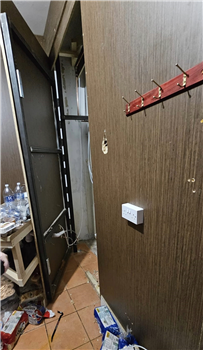
Across the visits officers seized over 12,000 illegal cigarettes and 6.7 kilograms of hand rolling tobacco in two premises’, resulting in the temporary closure of one with the agreement of the owner.
During the search these items were discovered concealed in a variety of ways. Illegal tobacco and cigarettes were found in purpose built hidden compartments and false walls that were secured by electromagnets.
Emlyn Jones Head of Planning, Public Protection and Countryside Service said:
“This is another example of the great work that our trading standards officers are doing to take illegal products such as these off the shelves. The items seized were counterfeit and carry serious safety and health issues to those people buying and using them.
“The products have not been safety tested, and the cigarettes pose a real fire safety risk as they do not have the safety burn ring. From a health point of view, the contents of the tobacco are unknown, and they could potentially have harmful levels of illegal chemicals far beyond the normal risks of genuine authorised tobacco products.
“Our residents play a vital role in identifying areas and persons of interest, which help our trading standard officers to investigate and get illegal tobacco, vapes and other products out of the community”.
Businesses can get in touch with Denbighshire’s Trading Standards Team for advice on illegal cigarette, tobacco and vaping products on Denbighshire’s website.
New immersive sensory classroom provision opens at St Asaph school
Ysgol Glan Clwyd has recently completed work on its new immersive sensory classroom, which will be used to support ALN (additional learning needs) pupils.
The new room features three projectors, which project scenes onto three walls in the room, creating an immersive experience for users.

New immersive sensory room
LED light bars run along the top of the room, projecting the appropriate corresponding colour, adding to the immersive experience within the new classroom.
This new classroom has the ability to create interactive and engaging environments, which can be tailored to the unique needs of students, bringing a unique offering to the ALN provision at Ysgol Glan Clwyd.
Work on the project began during the February half-term, with alterations to the existing room including light blocking where needed and the removal of an adjoining door to another room. The room was then painted, and electrical work, installation of the projectors and the sound system was completed.


Built in scenes
The room is located in the Encil area, which is the behavioural support and ALN provision area of the school.
There is the ability to input custom scenes onto the walls, with roughly 20 built in scenes available at the moment.
The room will be used for one-to-one support but can also support small group sessions.
Additional training is now underway for staff to be able to expand the use of the classroom further.
 Built in scene
Geraint Davies, Head of Education at Denbighshire County Council said:
“This will be a brilliant asset to the ALN team at Ysgol Glan Clwyd, and this new immersive classroom will be a great asset for the students also.
The work on this project began during the February half-term, and it’s great to see that this classroom is now complete, and ready to be used.”
Sian Alwen, Headteacher at Ysgol Glan Clwyd said:
“Ensuring that we provide the most progressive ALN support to our pupils is a priority for us. With the strong and dedicated teaching team here, a resource like this room offers specialist provision that will help smaller groups of pupils and individuals to overcome challenges.
We are extremely fortunate to have received this provision and are confident that many pupils will feel the benefit soon.”
Denbighshire County Council re-design taxi plates and badges
We will be rolling out a new taxi driver badge and vehicle plating system over the coming weeks.

The council are currently in the process of transferring taxi license plates and driver badges to a new supplier.
During the process Denbighshire have also taken the opportunity to re-design the taxi plates and badges.
Denbighshire County Council will be rolling out a new taxi driver badge and vehicle plating system over the coming weeks.
As the council moves to this new production system over the next year, residents may notice some differences in the layout and design of taxi driver badges, vehicle plates and door stickers. This is a normal part of the phased changeover process.
Vehicles will continue to display the current plate design until the next renewal, whereas new to fleet and renewals due from the middle of April onwards will begin receiving the new layout.
Emlyn Jones, Head of Planning, Public Protection and Countryside Service said:
“We would like to notify taxi businesses and service users of the changes we are making to the taxi licensing plates and driver badges. We appreciate their patience whilst these changes are being made”.
Council engages with Rhyl businesses on major regeneration projects
Council officers and project teams have begun meeting with businesses based in Rhyl town centre.
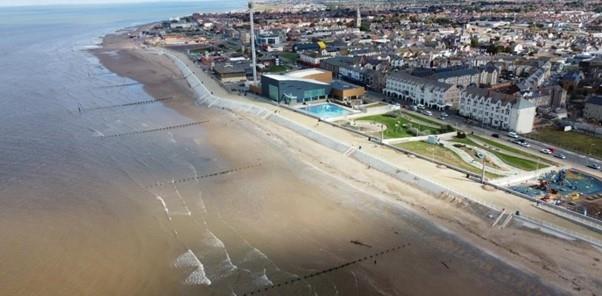
Following Cabinet approval by Denbighshire County Council, work on UK Government–funded Local Regeneration projects in Rhyl town centre will progress to the pre-construction phase, with a programme of engagement activities set to begin with local businesses and residents.
Council officers and project teams have begun meeting with businesses based in Rhyl town centre to discuss the proposed regeneration scheme in greater detail as design work continues to develop.
Engagement will focus on key operational considerations, including deliveries, access and waste management, with the aim of minimising disruption and carefully managing impacts throughout the construction phase. Feedback from businesses and residents will help inform detailed planning and ensure that day-to-day operations are taken into account.
The regeneration projects aim to transform the area surrounding Rhyl’s Clock Tower into a more pedestrian-friendly space. Plans also include comprehensive repaving across the town centre, the introduction of additional seating, and enhanced green infrastructure to create a more welcoming, accessible and attractive environment for residents, visitors and businesses.
Tony Ward, Corporate Director for Economy and Environment at Denbighshire County Council said:
“These projects form part of wider regeneration work being undertaken in Rhyl which has already seen the delivery of coastal defences, an improved and more accessible promenade, a new fully accessible children’s play park, as well as the opening of Queen’s Market. The next phase of works forms part of the vision of reconnecting Rhyl town centre with the promenade and the beach.
“Projects such as these aim to generate renewed energy and confidence in Rhyl and are a catalyst for change. We really appreciate the patience of residents and businesses while these changes take place, and we hope that everyone can see the positive impact this work is having on the town.”
Youngsters encouraged to snap meadow moments
Denbighshire’s school pupils are encouraged once again to take part in a competition to capture photos of the county’s wildflower meadows near them.

Denbighshire’s school pupils are encouraged once again to take part in a competition to capture photos of the county’s wildflower meadows near them.
This week the Council has relaunched for 2026 the Schools Wildflower Meadow Photography Competition as the season this year begins to bloom.
Back in 2019, Denbighshire County Council declared a climate and nature emergency with the aim to tackle climate change and biodiversity loss.
One of the first actions was to start managing some of the Council’s grassland for wildflower meadow creation across the county. The aim of the project is to restore and increase the amount of habitat available throughout the county for pollinators and wildlife.
This project also brings many benefits or ‘ecosystem services’ to residents in the county, such as reduced flooding, improved air quality, and air cooling.
Youngsters are encouraged to take time to explore and notice what they find interesting about their chosen wildflower meadow, school meadow or community nature reserve site and capture it with a photograph and some chosen words. The Council’s meadows can be spotted thanks to a bee friendly logo on each site or using the online mapping available on the council’s website (via the competition details).
Photos can be of the whole site or of a tiny part such as an insect, flower or grass species, it’s up to the photographer to pick their favoured subject to make the best photograph. Each entrant needs to write something about their photo or find a quote that compliments the photo.
Winning entries will be printed up to A2 size and put on the walls outside the council chamber in Russell House, Rhyl .
Winners will receive a selection of environmental books for their school, and a smaller version of the image will be available for the winner to put up at home or school. This year the school with the most entries will also win a selection of books. All winners will receive a visit from our Council Chair and colleagues to present the books and prints.
Emlyn Jones, Denbighshire County Council's Head of Planning, Public Protection and Countryside Services, said: “We know our pupils have a fantastic understanding of how climate change is impacting their lives through meeting and chatting to them. They all have brilliant ideas and carry out a lot of good work themselves. Many pupils have helped us in creating wildflower meadows across Denbighshire.
“We want to open the floor to them to see how they view meadow life through the lens by taking part in this competition and we are looking forward to seeing the results.”
For more information on how to enter the competition please visit this link
The competition is open until 14 August 2026.
FEATURES
Can you spot these wildflowers in Denbighshire? 🌼
As the weather gets warmer our county wildflower meadows are starting to spring to life.
Back in 2019, Denbighshire County Council declared a climate and nature emergency with the aim to tackle climate change and biodiversity loss.
One of the first actions was to start managing some of the Council’s grassland for wildflower meadow creation across the county. The aim of the project is to restore and increase the amount of habitat available throughout the county for pollinators and wildlife.
This project also brings many benefits or ‘ecosystem services’ to residents in the county, such as reduced flooding, improved air quality, and air cooling.
Here’s a guide to the flowers you could spot by visiting our meadows across Denbighshire which are recognised by our Bee Friendly signage
May wildflowers
Bird's Foot Trefoil

Visiting our wildflower meadows in May you will find bird's foot trefoil in bloom. Bees and other pollinators love it as it is very rich in nectar and is the larval food source for some of our favourite butterflies - Common Blue, Dingy Skipper and Green Hairstreak.
Red Clover
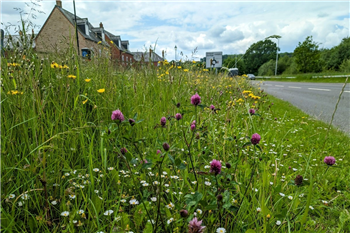
Have you spotted red clover at our wildflower meadows during May? This lovely little wildflower is rich in pollen and provides an essential food source for bees - in the past it was known as "bee bread". It's not just our pollinators that enjoy this little flower, cows love it too!
Red Campion
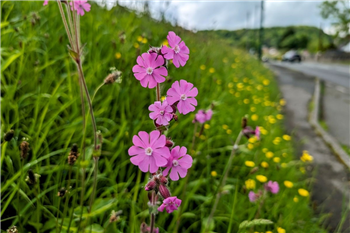
Red Campion is visible across our wildflower meadows during May. This woodland wildflower can grow to almost 1m high and attracts bees and butterflies to its deep pink flowers by opening the petals during the day. Where to find it: Shady areas such as hedge banks, woodlands, woodland edges and rural roads.
June wildflowers
Bee Orchid (Ophrys Apifera)
Have you spotted the bee orchid in any of our wildflower meadows this month? These little orchids are the masters of deception! The flower not only looks like a resting bee but it is also slightly hairy and even produces a scent similar to a female bee – all to attract the attention of a passing male bee.
Yellow Rattle (Rhinanthus minor)

Yellow rattle is managing the height of our wildflower meadows this month. This little wildflower is great for wildflower meadows! As a hemi-parasite it restricts the growth of grasses by feeding off their nutrients and weakening them. By weakening the more aggressive grasses, the more delicate wildflowers are able establish themselves.
Foxglove (Digitalis purpurea)
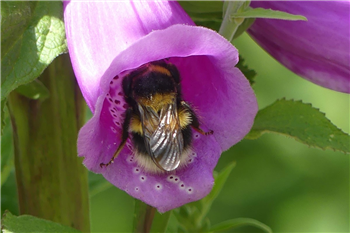
The Foxglove is blooming in June around our meadows, one of most recognisable wildflowers which splashes our woodlands edges and rural roadsides with bright pink bell-shaped flowers. According to Plantlife a single 'glove' can produce a million seeds!
July wildflowers
Field scabious (Knautia arvensis)
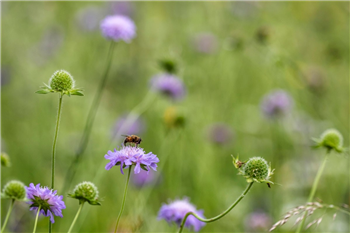
The purple–blue flowers of Field scabious are great for attracting our native bees, moths and butterflies. It’s also an essential food source for some of our most vulnerable species such as the Narrow-bordered Bee Hawk moth and the Marsh Fritillary butterfly.
Common Knapweed (Centaurea nigra)
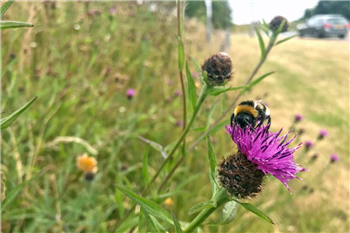
July brings the common knapweed into bloom across our meadows. A standout wildflower with bright pink thistle-like flowers. Common knapweed is one of our top pollinator friendly wildflowers. It provides a great source of quality nectar for bees, butterflies and beetles. Later in the season its seeds provide a sought after food source for a variety of our native bird species.
Meadow Crane's-bill (Geranium pratense)
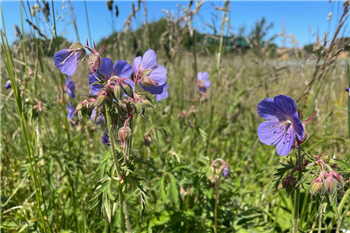
Meadows crane’s bill is our most wide spread Geranium wildflower provides a splash of blue/violet in early summer and can last for a number of months at our wildflower meadows. In the autumn months the leaves change from green to a deep red prolonging this amazing wildflowers visual impact – it’s no wonder it has become a favourite in many cottage gardens!
Oxeye daisies (Leucanthemum vulgare)

A resilient flower, look for oxeye daisies in our wildflower meadows. Oxeye daisy flowers from May to September.
Have you met our fabulous Bookstart Team? ❤
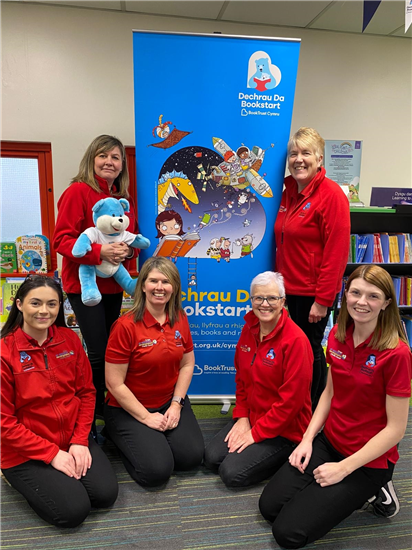
They run free, weekly, bilingual rhyme times for babies and toddlers in all our libraries. It’s never too soon to start sharing books and rhymes with your baby and you will find a great selection of books for all ages in our libraries.
Our libraries are free to join; books are free to borrow and there are no late charges!
The rhyme times are a great way to build up your confidence sharing books and rhymes with your little one, and a brilliant way to meet other new parents.
Please book your free rhyme time place here 👇🏼
https://bookwhen.com/denbighshire-bookstart
Natural wonders inspire active nature career
A love of animals from a young age and an inspiration from a teacher who supported nature in the Galapagos has helped shape a career that now protects and preserves Denbighshire’s biodiversity.
Ellie Wainwright is part of the Council’s Biodiversity Team who are hard at work all year supporting existing nature in the county, establishing new habitats to help local wildlife thrive and survive, and helping educate all ages towards what they can do to protect their own biodiversity.
County Voice sat down with Ellie to find out the inspiration that has carried her through a career full of experiences helping nature across the UK.
Ellie said: “I grew up near a lake in a small town in Northamptonshire. Seasonally the baby frogs would come up through our garden in late summer, after leaving the lake, and I have memories of me and my brother going out and making frog hotels and handling them.
“So, I’ve always loved animals, but I had no idea what I wanted to do as a job until I reached sixth form. I did Human Biology as one of my A-levels and amazingly one of my teachers happened to be a conservationist.
“He’d worked for Operation Wallacea in the Galapagos Islands which is a really cool organisation running biodiversity research expeditions all over the world, I believe he was researching turtles. That was the first time I realised that you could do this as a career, I decided that’s what I wanted to do and started looking into universities that offered ecology and conservation courses.”
To support the career, she’d set her eyes on, Ellie swiftly set about volunteering at the weekends as well with the local Wildlife Trust group to her home to gain valuable experience whilst working in one of their woodlands.
Using her volunteer experience, she embarked on a wildlife conservation degree at the University of Kent.
Ellie explained: “It was a really good course, where I learnt a lot about conservation theory. My favourite modules were probably Evolutionary Biology and Genetics, and Behaviour Change. A lot of the lectures used examples from tropical ecosystems as a lot of my lecturers had lived abroad and done work with species in Madagascar, Mauritius, and Borneo.
“Although we did have one lecturer who did a lot of work with UK reptile and amphibian species, which is more closely related to my work now.”
Between her second and third year for professional practice experience, Ellie spent time adding elements of Zoology to her learning by working with Durrel Wildlife Conservation Trust at Jersey Zoo.
She said: “I worked as a placement student/trainee zookeeper, in the bird department for five months and for the rest I was on the mammal department and that was really fun. It was fascinating learning about all the different species and how they keep and breed them for different conservation projects around the world.”
Finishing University, Ellie found herself making her first steps into the landscape of Denbighshire to discover the county’s nature.
She explained: “I applied for a job as an assistant countryside ranger with the Clwydian Range and Dee Valley AONB which was three days a week post. I moved up to live in a house share in Wrexham and very quickly the role was expanded to five days a week.
“I worked with the Nature for Health Project which is such a nice project for engaging with people outdoors to help their physical and mental health. I always tried to bring biodiversity into this work as much as I could. As well as activities such as mindfulness and arts and crafts, I also tried to get people to get involved in things like bat surveys.”
After working with Nature for Health, Ellie became a permanent ranger with the AONB working outdoors around the Llangollen and Dee Valley areas, during which she tackled the difficult period of monitoring sites such as the Horseshoe Falls during the Covid Pandemic and the many introduced regulations the public had to follow.
Through all of this, volunteering was still providing new challenges and discoveries for Ellie, which helped her move further forward into the biodiversity career she carried out today for Denbighshire County Council.
She said: “I’d been doing a lot of volunteer wildlife surveys around my post over the years I was there; I’d been going out with the Clwyd Bat Group and the North Wales Mammal Group. As well as helping with great crested newt surveys with the Wrexham rangers at one of their sites and through work as well.”
Linking in with the North Wales Mammal Group allowed her to take part in studying the Nathusius’ pipistrelle bat using safe and humane bat trapping methods to look at how they migrate.
“It was great because there were some very knowledgeable people running it. You'd get to identify the bats close up which was fascinating, I learnt a lot. At one point I was releasing a tiny Pipistrelle bat, who had clearly got quite warm on my hands and didn't want to leave.”
Through this experience Ellie moved into an assistant biodiversity officer role for Flintshire County Council.
Ellie added: “I learnt a lot there, it’s very different from Denbighshire as there are more urban areas… I got really involved with their wildflower project and was able to carry out a lot more nature and wildlife surveys in that role, which was great experience.”
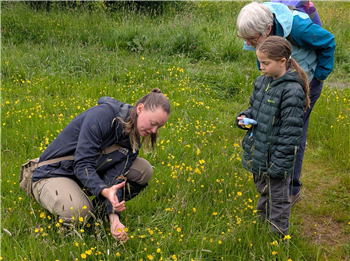
Stepping into her current role as biodiversity officer, it’s evident that the passion for protecting nature is burning bright.
She explained: “I love getting out on surveys and seeing these species that we are trying to save and create more habitat for. It really focuses you on why you are doing this role and for me…its so good for my own mental health
“Every time I see a frog; I get really happy. The first time I saw a sand lizard, I was ecstatic. I've seen my first dormouse as well in this job.
“The Wildflower Project is fantastic; it's one of the best conservation projects I think that any local authority can do. A simple change to the way the council manages it’s grassland areas, can result in such a big payoff for wildlife.
“I think it's made a real difference across the county, we've converted all 1820km of the rural road verge network to long grass/wildflower habitat over the summer. As well as over 60 acres of urban verges and greenspaces to wildflower meadow and they've all improved in species diversity.
Ellie added: “Because we’ve been carrying out wildflower surveys on the sites every growing season since the project began in 2020, we can definitively say that all of the urban sites have increased in plant species diversity – some quite significantly! I love feeling like I’m making a difference for biodiversity and seeing positive impacts from our work. It makes me feel like I am I am doing my part to address the biodiversity crisis and the climate change crisis.”
Currently keeping Ellie and her colleagues busy is the creation of the 70-acre Green Gates Nature Reserve which already contains the successful local provenance tree and wildflower nursery the Biodiversity Team have helped establish.
Ellie explained: “It's been a while in the making, but I think we’ve created a really valuable habitat for wildlife. You walk around the site now and it’s buzzing with life, we've spotted kingfishers, we've had eels in the stream. I see kestrels and buzzards hunting over the rough grassland, and we've seen three grass snakes this summer.
“We've installed over 20 ponds on site, all of which are starting to green up. Now we've had different aquatic plant species starting to pop through, and we've recorded frogspawn and some smooth newts in a couple of the brand-new ones as well. We have recorded great crested newts on site before, and we expect this will be a really important site for them going forward.”
Thousands of trees grown from seeds sourced locally by Ellie and the Biodiversity Team have also been planted out on the site, and preparations are underway for hopefully two or more new special residents at the reserve next year.
She added: “We’ve been working in the background on the Denbighshire Beaver Project, to assess if it would be feasible and learn about the species. I was very lucky and got to go to Bavaria with the North Wales Wildlife Trust and the Beaver Trust to see beaver habitats in person. It was fascinating to learn about all the different ways that they manage beavers in Bavaria since they were reintroduced in the 1960’s, and what could be applied now that they are back in Britain. Now, we're a lot closer to releasing them into the enclosure on site.
The team are currently working on a licence application to home the beavers in the created enclosure and all being well would look to bring the new residents in after summer 2026.
With so much experienced in nature and wildlife so far in her career, Ellie’s hopeful that more people will follow in her footsteps to provide the help our environment needs.
She said: “Anyone who wants to get into the conservation field, I would say you pretty much have to have a degree nowadays. So doing some sort of formal education is a good idea. And… volunteer, volunteer, volunteer. You just want to get experience doing as much as possible and you want to try as much as possible so you know exactly what you want to go into in this field.
“I did three years of practical conservation work which is brilliant if you want to get stuck in and you want to see the difference you're making as you do it on the ground. There are so many different paths that you can take. Try all of them, do a little bit of each and see what you like.”
Catering cook creates memories for Clawdd Offa pupils
A Prestatyn cook is stirring up a school dining hall filled with healthy food, a dash of learning and many bowls full of smiles and laughter.

A Prestatyn cook is stirring up a school dining hall filled with healthy food, a dash of learning and many bowls full of smiles and laughter.
Cooking up 30 years of experience in the catering world this year, Carol McWilliams is busy creating tasty delights for the pupils of Ysgol Clawdd Offa.
County Voice dropped into the kitchen at the school to find out what inspirations are in Carol’s recipe book for progressing in catering and to find out the secret ingredients for a happy food fulfilled school of pupils.
Born in Manchester, Carol with her family moved to Rhyl when she was seven years old and 20 years ago she moved over to Prestatyn.
She said: “I did catering in college, I’d always worked in cafes part time. I worked in the Russel café in Rhyl, liked it, went to catering college at Coleg Llandrillo, did a course on hotel keeping and catering which is everything from making beds to cleaning toilets, right the way through to running a hotel.
“The Catering course covered all aspects of catering from cooking to waiting on and at that time I did prefer waiting on. After college I went to work down south to High Wycombe in a large conference centre, waiting on there."
The lure of home life soon tempted Carol back for a new slice of career and she travelled back to North Wales to work for a while for McDonalds to continue honing her trade.
Carol said: “Then I heard about school catering, went for it and I’ve been in this profession ever since… I’ve been 30 years in the service now and I love it."
Rewinding the school cooking timer to the start, Carol began at Ysgol Tremerchion looking after 60 pupils which she admits was a great training ground to get used to timings for preparing, cooking and serving the food for the children.
She then moved on to making sure the children of Ysgol Bryn Hedydd, Rhyl, were well fed and happy through the school terms for 17 years before moving to Ysgol y Llys and then arriving at Ysgol Clawdd Offa in 2017.
Looking back, Carol explained: “It’s a great way to start off and then you progress to a bigger school because you are given that opportunity here. The bosses are great, they encourage you into getting additional qualifications and if you want to move up and progress, you have that opportunity to move to a bigger school.”
Catering in schools also cooks up a good work life balance dish according to Carol for anyone with busy families be it humans or a loving home of animals.
She said: “It's just a great place to work, especially if you've got a family, not many people who work in catering can say they are off every school holiday. I get up early to feed all the animals because I’ve got four dogs, two birds, two snakes, two rabbits, crested gecko, tortoise, bearded dragon… I feed all those first!
“Then I have a coffee and I’m set for work and in for eight o’clock, I do all my morning food safety checks, set up the kitchen ready, looking at the menu, seeing what’s on for today, looking at what I can prep for tomorrow as well.”
Standing in the beating heart beat of the school kitchen facilities, Carol demonstrates how forward thinking her role is by showing how the prep is done for the day after’s lasagna on the menu with just the fresh sauce to do to go on top.
Thanks to the efforts of Carol and her team there’s always a feast of choice on offer to suit all young appetites each day as well as the main dish delights.
She explained: “There’s always a choice, there’s the two hot main courses, jacket potatoes with a choice of fillings and a selection of sandwiches. We also cater and prepare a selection of meals for the children with allergens, intolerances and special care needs to make sure they are catered for.”
The busy prep and cooking of catering is all worth it though as Carol admits seeing the children smile and laugh at lunchtimes lights up the catering team’s day.
“The Pupils are great, no two days are the same, every day we have a laugh at something they’ve either said or done but its always with them not at them… they are fabulous.”
Throughout the year at school the pupils have themed learning and Carol and her team have put their own thoughts and ideas together to carry the education and the fun into the school dining hall.
“We do theme days, we have one a month, we’ve just done the Chinese New Year in cooperation with one of the school's teachers, she very kindly brought in some Chinese decorations for me to use, I had some at home, so we decorated the serving counter to make it more fun for the pupils.
“On the menu that day we had chicken chow mein and spring rolls, along with chicken curry and rice and for dessert we did a golden crispy cake as well, it was lovely. The pupils loved it, especially seeing the counter decorated it makes it more special for them.”
Working in the school catering service also gives Carol and her colleagues the chance to input into how the daily school menus are designed across Denbighshire.
She explained: “The management team create the menu, we are due to change to a new 3-week menu starting from Easter. They work with the cooks and discuss what goes well and what changes can be made and take feedback on board before the nutritional content is then balanced and analised in line with Welsh Government Healthy Eating in School regulations. We’ve just been informed the new menu has gained Gold Accreditation approval from Welsh Local Government Association.”
To support healthy eating, along with all the main course choices, the catering team offers a selection of fruit, yoghurt and salad to go with the sandwiches and jacket potatoes.
With the kitchen full of tempting smells, the big question is, what’s the dish of the day for Clawdd Offa pupils?
Smiling, Carol said: “They love the curry here, they love katsu curry because it’s a chicken goujon with a homemade katsu curry sauce and rice - it's lovely, very simple to make but really tasty and the pupils love it."
That’s something Year 6 pupil Ralph can confirm and who admits he’s a big fan of Carol and her team’s skills…especially when he’s hungry.
Ralph, a big fan of the catering team, let County Voice know: “The katsu curry, I love that. The staff are really nice as well, instead of making it a boring dinner they make it, so you are excited actually to go.”
Going back to the school cook’s 30 years of experience in the catering field and still cooking up delights for many youngsters, what’s Carol’s advice to anyone wanting to follow in her footsteps and develop with the support of the Catering Service.
Taking a second to think in her kitchen, Carol put forward: “It’s just having the love for people and food…and it’s having that passion to feed school children a choice of healthy, nutritious meals and encouraging them to try new things.“
Make your own mini meadow to help local nature
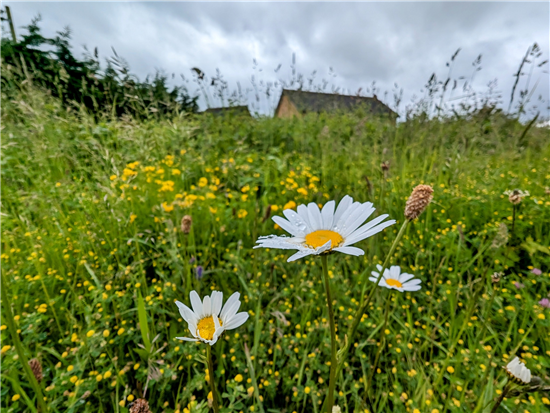
Did you know that it’s easy to give a helping hand to nature from your own back garden?
Preparations are in full swing for our 2026 Wildflower Meadows Project season. The project started in 2019 and includes approximately 70 acres of native wildflower habitat supporting local nature and also helping community wellbeing across the county. It has also been funded by Welsh Government, through the Local Places for Nature funding.
Residents can visit our meadows which are marked with the Bee Friendly sign, but those who want to do their bit from their home can also create their own mini meadow to support nature on their doorstep.
The first step is to decide the best place for your meadow on your garden area. Pick an area that isn’t too shady and where you are ok with leaving the grass long. You can pick the whole garden or just a patch and just simply let your chosen area grow.
During April, it’s the best time to make the decision to let your mini meadow grow as it is. Remember it takes time for a meadow to develop and it’s important to let it develop to see what it will produce.
Wildflowers that will thrive best in your meadow space are oxeye daisies, black knapweed and red campion.
Movement in your meadow will start appearing late May as the wildflowers begin to grow. As June arrives the actual flower can start to appear through your meadow.
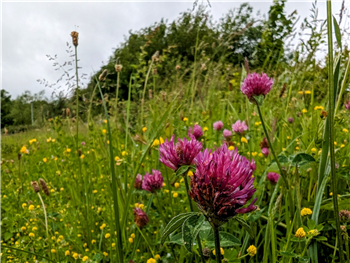
July is when your mini meadow will be at full strength supporting nature, it’s a great time to do a bug hunt through your area to see which insects are enjoying your creation.
As well as looking at what wildflowers you have blooming in your meadow, remember to look at all the different grasses. While we often focus on planting wildflowers for pollinators, many native grasses as just as important for caterpillars of butterflies and moth species.
August is a great time for your mini meadow as you will spot a slow change in what is flowering, with earlier species going to seed, and later species beginning to flower. Species that you might notice flowering at the end of the summer include black knapweed and yarrow, both of which are great for pollinators visiting your garden.
During August its also time to monitor when you need to cut your mini meadow. If you still have plenty of blooms you could leave it to September. You can also vary the cutting times across the year or the different parts of your own meadow depending on the size to make it more diverse for nature support. Cutting will help remove nutrients from the ground giving the wildflowers in the area the best chance to thrive.
Don’t forget to remove all the cuttings once their seeds have dropped and they have dried. A good tip as well is to keep your compost area as far away as your mini meadow to stop excess nutrients leaking back into the area and impacting on the growth of the wildflowers.
As September moves forward, it’s time to give your mini meadow a well-earned rest. You can leave the next cut until April or carry out several cuts to maintain the area if the winter weather stays mild. Before you shut down your mini meadow, take stock of what you have seen come through this season and the insects visiting the site as a record going forward for the next chapter of your own meadow.
Josh’s Journey
Due to a relationship break down, Josh, who is 34, found himself seeking the Council’s homelessness team’s help at the start of last year. In February of 2025 Josh was placed in temporary accommodation and was assigned a homeless support practitioner.
 Josh
Josh
“I was homeless at the start of last year. I had been in homeless before and was placed in temporary accommodation previously, but I wasn’t in the right mindset previously to try and sort out my wider situation.
I was only in there briefly this time. I was asking everyone, trying to find a flat of my own. I eventually found one and moved out of temporary accommodation quite quickly.”
A month later, Josh had found himself privately rented accommodation to live in and was looking to write the chapter in his story.
“Whilst I was in temporary accommodation, my homeless support practitioner mentioned the intuitive thinking skills courses to me.
I was a little sceptical about doing the courses at first, but I didn’t realise until I sat them, that really, I had nothing to lose, and everything to gain from giving them a go.
I started the courses in April and March. I did the skills to life course first, which I really enjoyed and learned a lot from.
It teaches you how to deal with your own mindset, and how you think about problems. I used to really struggle with my confidence and doubt myself all the time.
They asked me at the start of the course what I would like to improve on, and so I put down work on my confidence.”
Josh then went on to take the Information, advice and guidance course, and dove deeper into his learning.
“I went on to do the Information, advice and guidance course, which taught me some more technical aspects. I would be put in other people's shoes, and I learned how to help those who may be more vulnerable.
I learned how to help others who may be in circumstances such as homelessness or maybe struggle with substance misuse.”
In early summer, Josh was offered an ambassador placement with the Intuitive Thinking team, with the hopes of that scheme then leading to a permanent job within the team itself.
“I was really buzzing as that was the placement I wanted the most out of the ones that were offered to me. I learned to give speeches and administer training by shadowing members of the team. That helped my confidence so much, standing up and speaking in front of people. I was terrified at first, but it got easier and easier over time.
I was about two months into my placement with the team when I got offered a job in the energy sector which I felt I just couldn't turn down.
The skills I learned during the courses I took, and my placement have given me so much confidence in my new role. This job is so different from what I’ve done previously, and these new skills have given me the confidence to go and try something new. That’s the main take away for me.
I was very much set in my ways of staying in my comfort zone before I did these courses. I would just do what I’d always done, but ultimately, I kept getting the same results. I feel like I spent years at a standstill really.
Since I’ve sat these courses, I’ve never felt better in my life. It sounds crazy to say that a course can change that, but I learned why I am thinking things and how to deal with those thoughts.”
Josh has chosen more positive ways to ways to pass the time.
“I have chosen more healthy options in life now, I struggled with boredom when I got sober about four years ago, I needed different outlets.
I started playing golf and going to the gym. I am now a member at Rhyl Golf Club.”
Josh has now graduated from the Intuitive thinking courses, with a number of certificates under his belt, and is enjoying his new role in the energy sector.
“I think these courses would benefit everyone; you don’t have to be in a bad position to take it. You can’t lose anything from learning from this course, as long as you are invested in it, you’re going to benefit from it.
People have said that they can see a change in my confidence. From where I was in February, to where I am now, it feels like two different people. I felt lost and had no hope really. It taught me to think differently and rationally think about situations. It has helped me to gain the focus and drive to get what I want.
It was like a snowball effect, as soon as I decided to start helping myself, things got gradually better.”
Restoring the Past, Building the Future: Nantclwyd y Dre
The site boasts nearly 600 years of local history and is one of the oldest timber-framed townhouses in Wales.
Ruthin is a town is steeped in history. Razed to the ground by Owain Glyndwr in the year 1400, the historic feel of the town as we know it today comes in large part from the timber-framed vernacular style of architecture which was used during the town’s reconstruction.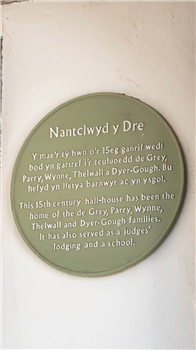
Among the charming streets and historic frontages sits an important piece of Ruthin’s built heritage. Originally built in 1435 as a weaver’s hall house, Nantclwyd y Dre boasts nearly 600 years of local history and is one of the oldest timber-framed townhouses in Wales open to the public.
Now managed by the Denbighshire Heritage Service, visitors to Nantclwyd y Dre historic house and gardens can relive the house’s fascinating past through immersive soundscapes, interiors and exhibits that give a captivating insight into what life was like for the families that lived there.
In 2023, funding was granted to restore parts of the site as the UK Government confirmed their intention to provide £10.95 million of grant funding for 10 capital projects aimed at protecting Ruthin’s unique heritage, wellbeing, and rural communities.
This funding, known as the Local Regeneration Fund (LRF), was awarded exclusively for successful projects included in Clwyd West and cannot be directed to other projects.
As one of the successful projects, £667,000 was allocated to redevelop some currently unused parts of the house in need of some repair to preserve this important piece of local heritage for generations to come, create new opportunities for the attraction to improve its future sustainability and make some exciting additions to the visitor experience.
Construction works began in October, focussing on bringing the largely unused west wing of the property back to life. This section of the house will become a small holiday let, designed and furnished in keeping with the historic nature of the building, and see improved facilities on the first floor with a dedicated space for the weekly volunteers who are a critical and valued part of the day-to-day workings at Nantclwyd.
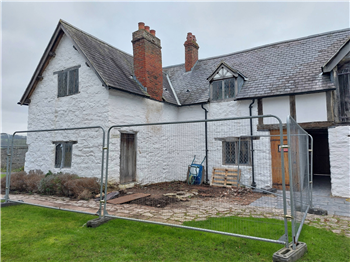
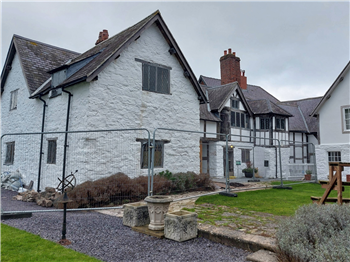
However, before the works could begin, one set of longstanding residents needed to be taking into consideration. Denbighshire County Council consulted with ecologists to ensure that the planned developments would not disturb the resident protected bat maternity roost, which houses a significant number of the Pipistrelle and Lesser-Horseshoe population in Wales. Contractors were given specialist training, and a large bat shelter was installed in the garden, giving the winged residents an additional space to thrive.
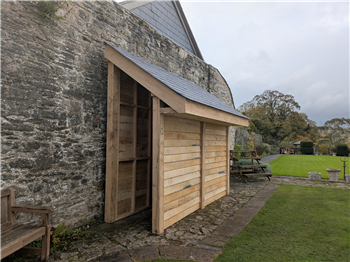 The planned improvements will also make the kitchen area more suitable for event catering, and the summerhouse will be restored to its former glory for visitors to enjoy during the summer months, also serving as an additional space for the ceremonies taking place at the historic house such as weddings and civil partnership ceremonies.
Undertaken by B&W builders & decorators alongside TACP Architects, the project is expected to be completed by April 2026. A more sustainable approach to the improvement works has also been implemented through using wool to insulate the building rather than the more widely used oil-based insulation which emits higher carbon emissions and isn’t renewable.
Councillor Jason McLellan, Leader and Lead Member for Economic Growth & Tackling Deprivation said:
“The beginning of these improvement works to Nantclwyd y Dre serves as a major milestone in securing the future of such a prominent historical site that sits at the heart of Ruthin.
“Nantclwyd is as a great visitor attraction and community hub for our dedicated volunteers, and we are looking forward to seeing the newly developed spaces being enjoyed and used by visitors.
“The wellbeing of the bat population will remain as a priority whilst the works are being carried out, and we will be in continuous communications with the ecologists throughout the completion of the works”.
SNAPSHOTS
New web page launched to support residents with disabilities
The Council has launched a new web page designed to provide residents with easy access to support and services for people with disabilities or impairments across the county.
The new resource brings together a wide range of information in one place, making it easier for residents to find and navigate the support available to them.
Councillor Julie Matthews, Lead Member for Corporate Strategy, Policy, Equalities and Strategic Assets, said: “We’re really pleased to launch this dedicated web page, which brings together valuable information in one accessible place.
“It’s important that residents with disabilities or impairments are aware of the services and support available in the county. Access to the right information can make a significant difference in helping people live independently. We hope these pages will provide that support, and we encourage anyone who feels additional information is needed to contact the Council.”
The web page includes links to a variety of services, such as support with Blue Badge applications, information about beach wheelchairs, assisted bin collections, and council tax discounts and exemptions and much, much more.
You can view the information on the following link - Support and services for people with disabilities and impairments
Residents can also access information through the Council’s One Stop Shops and libraries or by calling our contact centre.
Waste transfer station welcomes Cabinet visit
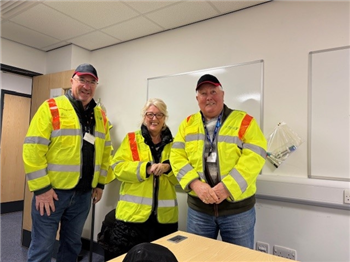
Staff at the Council’s Waste Transfer Station at Denbigh recently welcomed members of the Cabinet for a guided tour around the facility.
The visit offered a useful opportunity to see first-hand how the recycling process operates and how materials are managed once they arrive on site.
The group were shown the different stages involved in handling household waste and recyclable items, helping them gain a better understanding of the work carried out by staff each day.
At the waste transfer station, recyclable materials collected from Denbighshire residents by crews are carefully separated so that paper, cardboard, plastics, glass, metals, electrical items and other accepted materials can be directed into the correct recycling streams.
Staff highlighted to the Cabinet members the importance of efficient recycling services in protecting the environment, improving sustainability, and making the best use of resources across Denbighshire.
By observing how the station operates, the cabinet members were able to see the practical challenges and benefits of a modern recycling systems and the role they play with residential support in supporting a stronger sustainable future and cleaner environment.
Nursery nurtures new bed for wildflower support
A new bed full of support for local wildflowers is taking shape at our Tree Nursery in St Asaph.
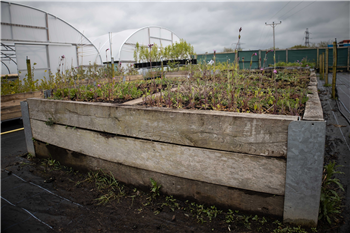
A new bed full of support for local wildflowers is taking shape at our Tree Nursery in St Asaph.
Thanks to the Tree Nursery community of volunteers, a new space has been created outside the growing tunnels to help the site’s local provenance work.
Volunteers have planted out excess plants that have been grown from seeds collected across Denbighshire into a newly prepared bed.
Once the plants go to seed, the seeds will be collected and stored appropriately ready for planting the season after.

Keegan Blazey, Tree Nursery Officer said: “We have a brilliant community of volunteers here at the tree nursery, it’s great to help them learn new skills and we also learn through them thanks to the different walks of life experience they bring in each week.
“Francesca who is one of our student volunteers, really got stuck in to help create this bed which will give us a really great source of seeds right on the site to help us continue to protect and grow our local nature going forward.”
A big helping hand to guide small seed growth
The tree nursery volunteer community have been helping staff at the St Asaph site with ‘pricking out’ field maples.
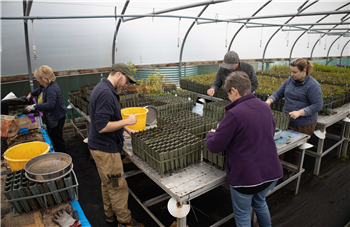
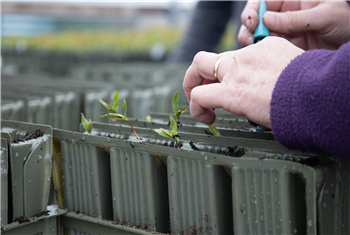
Small seedlings are being given a helping hand by our band of tree nursery volunteers this week.
The tree nursery volunteer community have been helping staff at the St Asaph site with ‘pricking out’ field maples. They have been carefully moving the tiny seedlings from a shared tray into individual modules to give them more room to develop roots and foliage. By replanting them they are also helping prevent weak growth and disease for the seedlings.
By transplanting them into Root Trainers, which have vertical ridges that encourage the roots to grow downwards and prevent pot bound circular growth. The trainers also allow the roots to be ‘air pruned’ at the base, encouraging lateral branching and fast healthy establishment.
Eventually when fully grown these field maples will provide food through their leaves for many species of moth and their flowers will give an important source of pollen for bees. The tree’s fruits also provide a source of food for small mammals.
If you would like to learn skills such as this and make new friends, you can volunteer at the tree nursery on Tuesdays and Wednesdays. To join or for further information email biodiversity@denbighshire.gov.uk
Do you know how to apply to put your name down on the housing register?
Do you know what SARTH stands for?
SARTH stands for ‘Single Access Route to Housing’.
This is where, if you want to be included on the Housing Register, you will only have to make one application. Instead of applying to different housing associations separately, you complete one application that is shared across all those landlords who are part of the scheme.
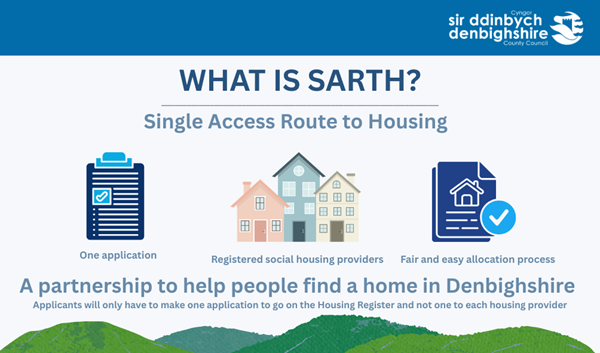
The SARTH is shared by all social housing providers in Denbighshire including:
- Denbighshire County Council
- Denbighshire Housing
- Grŵp Cynefin
- ClwydAlyn
- North Wales Housing and Wales and West Housing
- ADRA
- Cartrefi Conwy
Once you have made an application to go on the Housing Register, your housing need is then assessed and you’re placed in a priority band, helping ensure homes are allocated in a fair and transparent way to those who need them most.
All the information you need to know about the scheme, and how to apply, is on our website.
A month of collaboration and positive impact for Working Denbighshire
February saw Working Denbighshire deliver significant activity across national, local, and community settings, helping to widen opportunities for residents.
Working Denbighshire joined partners at the All‑Wales Trailblazer Event, bringing together the three Trailblazer pilot areas of Blaenau Gwent, Denbighshire, and Neath Port Talbot. The event provided a platform to explore emerging practice, discuss the support being delivered to people with complex and multiple barriers, and highlight the innovation taking place across the three regions.
Working Denbighshire also welcomed journalists from The Guardian as part of the newspaper’s ongoing national project, Against The Tide, an in‑depth series exploring the experiences of young people growing up in coastal towns across the UK.
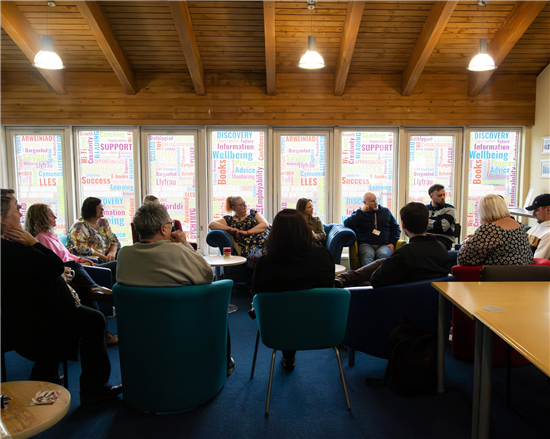 Rhyl is one of the communities featured in the project, and the visit focused on both the challenges faced by local young people and the community‑led work opening up new opportunities. As part of their visit, journalists attended one of Working Denbighshire’s Baking and Pizza sessions, delivered in collaboration with Use Your Loaf Training Bakery.
The session offered an environment where participants could build confidence, learn practical skills, and take part in meaningful activities. It provided The Guardian with an insight into the day‑to‑day experiences of young people engaging with Working Denbighshire’s services, including some of the barriers they face and the community partnerships helping them move forward.
The visit demonstrated how coordinated, person‑centred support is helping residents gain confidence, connect with others, and take steps toward a brighter future.
February also saw the delivery of a highly successful Working Denbighshire Jobs Fair at 1891 in Rhyl, bringing together over 520 residents and more than 50 business exhibitors.
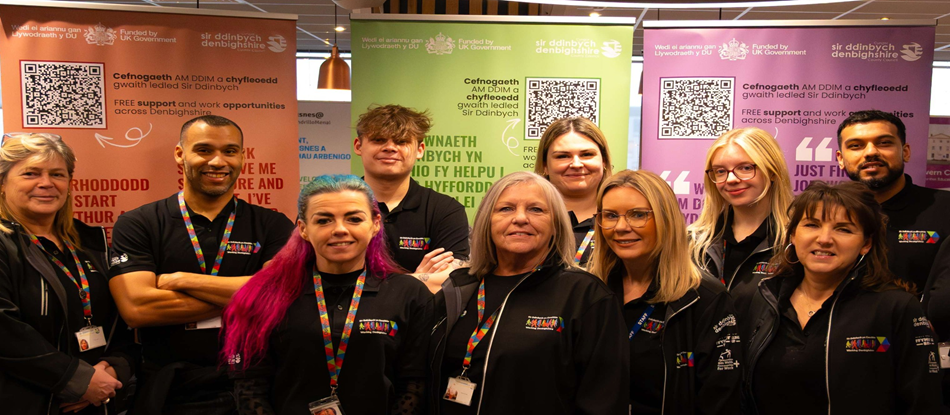
The event connected jobseekers with employers and training providers across a wide range of sectors, including hospitality, retail, construction, care, and public services. Attendees were able to meet recruiters directly, ask questions about live vacancies, and access on‑the‑spot support from Working Denbighshire staff.
The strong turnout resulted in many residents securing follow‑up interviews or signing up to the service for additional support to help move them closer to employment. The positive response from both employers and participants reflects the growing momentum of Working Denbighshire’s employability work and its commitment to creating real, practical opportunities for local people.
Melanie Evans, Principal Manager, Strategic Employment, said:
“The activities throughout February reinforced the importance of locally driven employment support that is collaborative and grounded in the needs of our residents. The insights gained through these events all show how vital this work is. As we move forward, these experiences will help shape how we continue to support people with complex barriers into opportunities.”
Together, these high‑profile engagements showcase one of Working Denbighshire’s most vibrant and productive months which demonstrates the increasing demand for its services.
Working Denbighshire will continue to collaborate with partners and communities to provide support for individuals seeking employment, training, and personal development opportunities.
To stay informed about upcoming events, training opportunities and support available, visit our website.
Working Denbighshire is part‑funded through the Welsh Government Communities for Work Plus Programme.
Council to engage with Rhyl businesses as project progresses
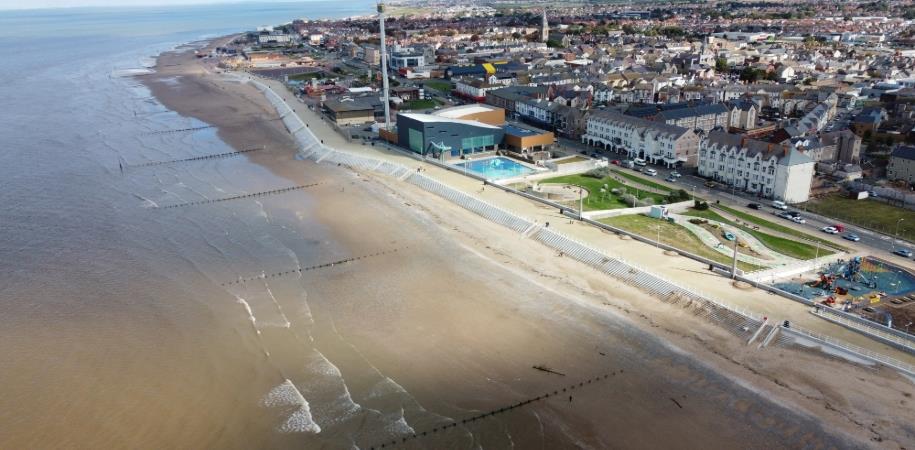
Following cabinet approval for the UK Government funded Local Regeneration projects to move into the pre-construction phase, the council will now engage with Rhyl town centre businesses and residents to further develop the design work for the project.
Following the Easter period, the council will begin a programme of engagement with local businesses to discuss the proposed scheme in more detail.
These discussions will focus on key operational matters, including deliveries and waste management, to ensure that potential disruption is minimised and impacts are carefully managed throughout the construction phase.
The projects aim to transform the area surrounding the Clock Tower into a pedestrian-friendly space, by making it more attractive, accessible and better connected to the promenade.
For more information on the project click here.
2026 Dates for free caravan weight check and security advice

Denbighshire and Conwy Trading Standards are offering free caravan and campervan weighing and advice sessions.
Residents who are going on in holiday in a touring or motor caravan can make sure that they are not overloading their vehicle or caravan and putting themselves at risk.
The free caravan weighing and advice sessions are available for Denbighshire and Conwy residents, and for those in other local authority areas if they can travel to the location.
This is an advice session, and no action will be taken if overloading or other issues are found, but we will work with you to reduce the load. Council officers will be accompanied by an officer from North Wales Police Community Safety section who will provide practical security advice to keep your car and caravan secure.
The free weight checks will take place at the weighbridge on the A525 between Rhuddlan and St Asaph on the following dates and times:
- Friday 22/05 – 10am-3pm
- Friday 17/07 – 10am-3pm
- Friday 28/08 – 10am-3pm
Appointments are not necessary for these sessions and residents are welcome to attend any of the listed sessions and find out if they’re within the legal weights for their vehicles.
The weighbridge can be found on the Rhuddlan to St Asaph A525 road, approximately three quarters of a mile from Rhuddlan, located in the layby, there will be signs indicating the weighbridge is in operation.
If you have any questions regarding the above please contact either Denbighshire Trading Standards section on tradingstandards@denbighshire.gov.uk or visit their Facebook page, likewise contact Conwy Trading Standards on trading.standards@conwy.gov.uk.-
St Peter's Square Programme of Works
Over the coming months, a series of carefully planned works will be carried out to complete the St. Peter’s Square public realm improvement scheme.
Over the coming months, a series of carefully planned works will be carried out to complete the St. Peter’s Square public realm improvement scheme. The following table provides an overview of the planned phases of work, including where and when each section will take place.
Traffic management systems and road closures are inevitable and will only be implemented where necessary to protect the public and Contractor’s workforce. Road closures during the Ruthin festival will be managed by the Contractor’s traffic management sub-contractors to ensure a co-ordinated approach.
All dates are indicative* and may be subject to change due to weather or programme adjustments, but every effort will be made to minimise disruption throughout the construction period.
|
Phase
|
Area
|
Dates (not closed for full period)
|
|
Phase 1
|
Well Street & area behind The Old Courthouse
|
3 March 2026 – 26 May 2026*
|
|
Phase 2
|
Market Street
|
26 May 2026 – 28 July 2026*
|
|
Phase 3
|
Castle Street / Upper Clwyd Street
|
28 July 2026 – 18 August 2026*
|
|
Phase 4
|
St. Peter’s Square
|
19 August 2026 – 16 October 2026*
|
|
Phase 5
|
Clock Tower
|
22 September – 6 November 2026*
|
Surfacing works are then planned to take place from 9 – 18 November 2026*.
Phase 1 - Well Street and area behind and around The Old Courthouse
Phase 2 - Castle Street
Phase 3 - St. Peter’s Square – East and West side around square and Market Street
Phase 4 - St. Peter’s Square – North side of square and junctions with roads off square
All resurfacing works are currently planned to be completed at night to minimise disruption.
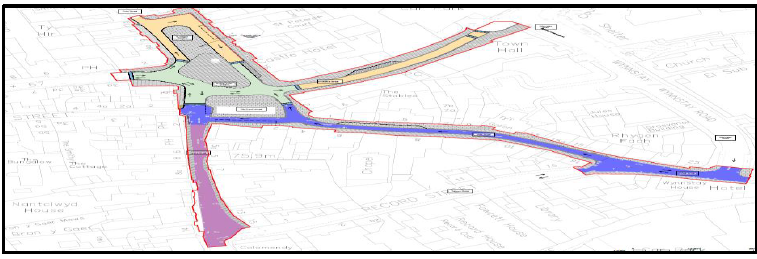
Throughout the project, pedestrian access will be managed, temporary ramps will be provided for accessibility, clear signage and secure barriers will be in place. Any issues can be relayed to either the Public Liaison Officer RuthinEnquiries@obrconstruction.com or the Project Team corporateprogrammeoffice@denbighshire.gov.uk.
We appreciate your patience and co-operation during the construction phase of this project.
Get inspired - things to do in Denbighshire!
Looking for some inspiration on the best things to do in Denbighshire and plan your next adventure. Read the latest blogs on the North East Wales website.

Senedd Election 2026
Wales will be divided into 16 new constituencies for the Senedd election on 7 May 2026. Each of the new constituencies will have six Members, making a total of 96 Members elected to the Senedd.
Residents in Denbighshire will be voting in one of three constituencies:
✅ Clwyd (covers most of the county)
✅ Bangor Conwy Môn
✅ Gwynedd Maldwyn
You can find your new constituency on the Senedd Cymru website by typing your postcode into the map.
Please remember, counts won’t take place in Denbighshire this year so to follow results live, check the relevant council's page:
🔹 Clwyd 👉 www.facebook.com/FlintshireCC
🔹 Bangor Conwy Môn 👉 www.facebook.com/ConwyCBC
🔹 Gwynedd Maldwyn 👉 www.facebook.com/CyngorGwyneddCouncil

Anyone aged 16 or over on 7 May 2026 who live in Wales, are eligible to vote in the upcoming Senedd election. Here are five key facts about the Senedd:
- Wales has its own parliament – the Senedd. The Senedd passes laws about all sorts of things which affect your daily life in Wales.
- Things like hospitals and GPs, housing, schools and education, road and rail transport, farming, culture, the environment and the Welsh language are all decided by the Senedd.
- On 7 May 2026 residents in Wales will have one vote to choose the party or independent candidate they want to represent their area in the Senedd.
- The Members of the Senedd which are elected in May 2026 have the power to make decisions that impact everyone in Wales.
- You can find out everything you need to know about the Senedd election on vote.wales
More areas to receive Flying Start assistance in Denbighshire
Further areas within Denbighshire are now set to receive assistance through the Flying Start childcare scheme.

The expanded areas now cover Rhyl, Prestatyn, Meliden, Rhuddlan, Dyserth, Denbigh, Corwen, Llangollen, Llandrillo, Llanfair DC and are applicable to families who have a child who turned 2 years old between 1st September 2024 and 31st August 2025.
This expansion means that families in the new areas will be eligible for up to 12 ½ hours of funded childcare per week during term time. With more settings offering funded Flying Start Childcare, and new postcodes being added regularly, families are encouraged to check their postcode using the postcode checker on the website.
Denbighshire Flying Start is a Welsh Government funded programme. The aim of the programme is to help children to have the best possible start in life for their future growth and development.
Councillor Diane King, Lead Member for Education, Children and Families said:
“This latest expansion of the Flying Start scheme will mean that more Denbighshire families can now get access to the free childcare provision. This assistance is a massive help for parents and families.
Residents in the newly expanded areas can check if their postcode is eligible through the postcode checker.”
For more information please visit our website.
Prestatyn Traffic Trial Preparation Works
Denbighshire County Council will begin a trial to make Bridge Road in Prestatyn two ways
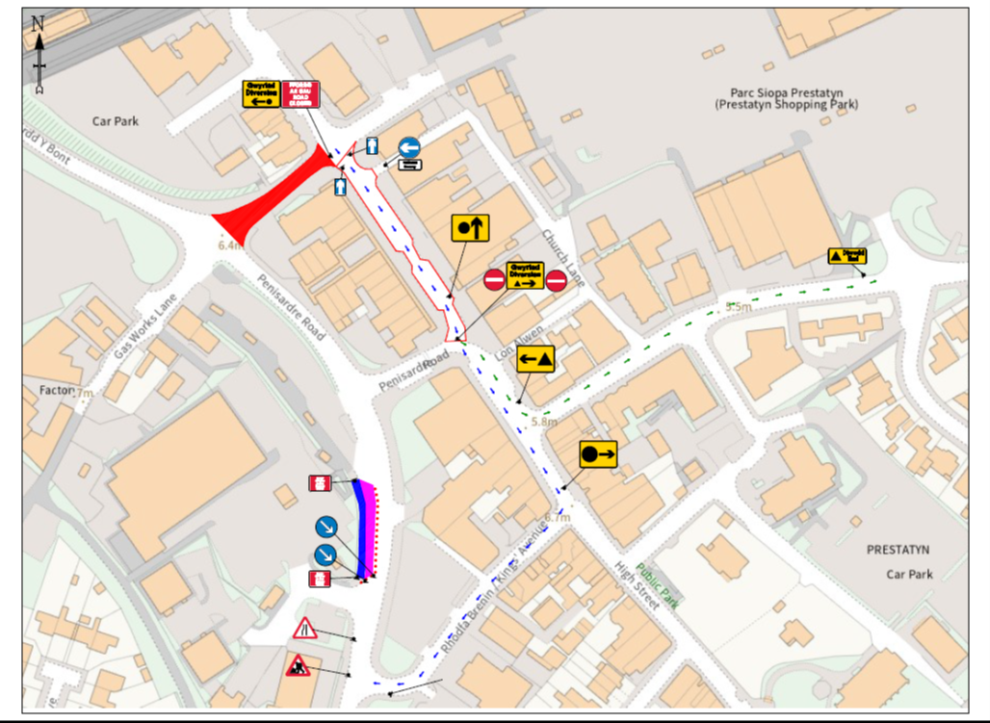
From 13 April, Denbighshire County Council will begin a trial to make Bridge Road in Prestatyn two ways to see if it helps to alleviate congestion in the area.
The trial was requested following feedback the council received in recent consultations with the public, as part of the public realm improvement project on Prestatyn High Street.
Ahead of the trial, preparation works will take place on Saturday and Sunday (11 & 12 April). This will include:
- Bagging lights and signs that are not needed during the trial.
- Changing road markings, amending the signals remotely and erecting directional signs for the trial.
- Bridge Road will be closed from 8am on 11 April and will re-open once works are complete, this may be as late as 11pm on Sunday 12 April.
- A diversion will be in place for the weekend whilst the preparatory works takes place.
- The out-bound traffic from the bottom of the High Street exiting by the mini-roundabout will be directed up lower High Street on to Penisardre Road.
- On Sunday 12 April, there will be a lane closure on Ffordd Pendyffryn to Bridge Road (approximately 4pm – 9pm) to blank out the signs with a cherry picker. During this time there will be a one-way diversion in place.
For more information on the traffic trial click here.
Registering Visitor Accommodation in Wales
New Registration Law for Visitor Accommodation in Wales: Webinars Announced to Help Providers Prepare
 Anyone taking bookings for overnight stays in Wales — from casual hosts to large hotel operators — will be required to register their accommodation with the Welsh Revenue Authority (WRA) when the register launches this autumn.
The forthcoming Welsh Government legislation means that all providers offering visitor accommodation, whether a single spare room, a holiday cottage, a B&B, or a full‑service hotel, will need to complete a formal registration process. The requirement applies regardless of whether guests stay for one night or several weeks.
The new visitor accommodation registration scheme will launch in autumn 2026. Ahead of this, the WRA is encouraging hosts and businesses to sign up for updates so they can receive reminders, guidance, and the latest information as the registration date approaches. The registration process is completely free of charge and all providers must register, even if the Visitor Levy is not ultimately introduced in the county. Any who fail to register may face penalties.
Webinars to Support Hosts and Booking Platforms
To help prepare the sector, the Welsh Revenue Authority is offering a series of free webinars aimed at visitor accommodation providers and booking platforms and tourism bodies. These sessions will provide the latest updates on the new registration requirements as well as clear, practical guidance on how accommodation providers can comply. There will also be a question and answer session with WRA experts.
Webinar Dates
English-language sessions:
- Tuesday 24 March 2026, 11am–12pm
- Tuesday 24 March 2026, 6pm–7pm
Welsh-language session:
- Thursday 26 March 2026, 11am–12pm
How to Register for a Webinar
You can register for a webinar on the following link - https://www.gov.wales/welsh-revenue-authority/training-events
For further information and to sign up for notifications about the new registration scheme, visit https://registervisitoraccommodation.service.gov.wales/email-signup
Fancy becoming a Tourism Ambassador?
The Denbighshire Tourism Ambassador scheme is a free, online training course to enhance your knowledge and deepen your understanding of the Denbighshire tourism offer.
There are 14 modules to choose from on a variety of themes including walking, cycling, food, arts, coast, history and sustainable tourism.
Watch our short film highlighting the course.
Visit www.ambassador.wales and get started today!
Discovering Denbighshire
Looking to discover more of Denbighshire?
Looking to discover more of Denbighshire?
Why not take inspiration from our walking and cycling maps for new ideas of places to visit.
For more inspiration on activities in and around Denbighshire visit - https://www.northeastwales.wales/
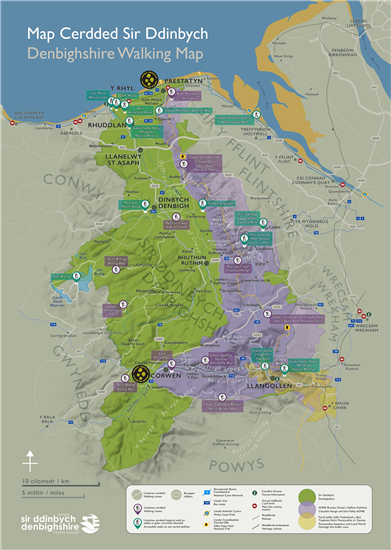
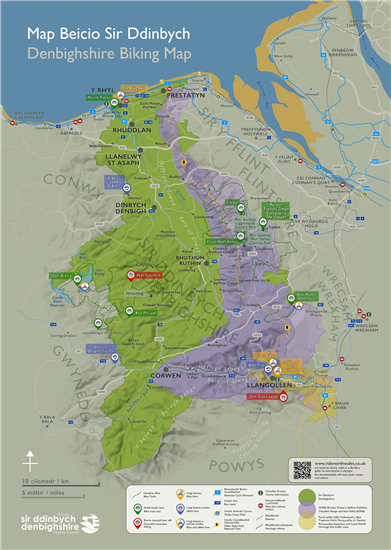
Help with energy costs from Citizens Advice Denbighshire
Are you struggling with energy costs? Citizens Advice Denbighshire can help.
Their Fuel-Sense project continues to support people in Rhyl and Prestatyn, and they still have Fuel-Sense warmth packs available for anyone who needs them.
The packs include practical energy-saving items like LED bulbs, draught excluders, shower timers and more – completely free.
If you or someone you support could benefit, please get in touch on 01745 346785 or visit the Denbighshire Citizens Advice website for more information.
Ruthin St Peter’s Square Public Realm Improvements
In 2023, the UK Government confirmed their intention to provide £10.95 million of grant funding for ten capital projects aimed at protecting Ruthin’s unique heritage, wellbeing, and rural communities. This funding has been awarded exclusively for successful projects included in Clwyd West and cannot be directed to other projects.
Undertaken by OBR Construction, the proposed works to St Peter’s Square will look to widen the scope for hosting events, revitalise historical buildings and landmarks to support local identity, and promote pride of place by boosting the image of the town.
The Contractor will begin by setting up their site compound from 9th February 2026. The works will then commence with minor works and surveys from 23rd February, and preparations will be made for the works area ahead of the material deliveries in March. To help the Contractor set up smoothly and avoid any delays or potential damage to vehicles, we kindly ask that the area of the public car park at Park Road (highlighted on the image below as the Contractor's Compound) is kept clear of vehicles before 9th February 2026.
Pedestrian access across all public rights of way will be maintained at all times, and half of the car park closest to Texaco petrol station will remain open for residents and public parking.
We understand that works in the town centre can be inconvenient, and the Contractor will ensure disruption is kept to a minimum at all times. The works will be carried out in phases so that only small areas are affected at any one time. Details of each phase will be confirmed as soon as possible, and notice will be provided to all residents and businesses in the affected areas a week prior to the works commencing. Works will be carried out between 8:00am and 6:00pm Monday to Friday. If work is needed outside of these hours, we will again provide advance notice.
Throughout the project, pedestrian access will be managed, temporary ramps will be provided for accessibility, clear signage and secure barriers will be in place. Access to properties and businesses will be managed, with assistance available if required.
A dedicated Business/Public Liaison Officer will be available throughout the works to help with queries and access arrangements, and they can be contacted via e-mail: RuthinEnquiries@OBRConstruction.com.
Thank you very much in advance for your patience and understanding while these improvements are carried out. We look forward to delivering a completed scheme that will benefit residents, businesses and visitors to Ruthin. If you have any questions or concerns, please do not hesitate to contact us: RuthinEnquiries@OBRConstruction.com or corporateprogrammeoffice@denbighshire.gov.uk
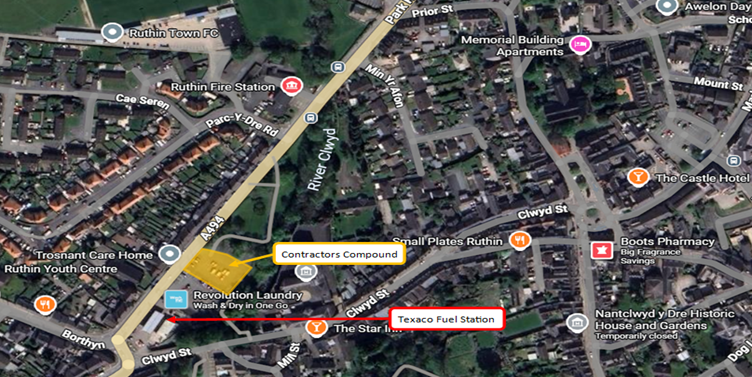
Financial help towards school uniform and free school meals
There is financial help available towards the cost of a school uniform and free school meals.
Further information on whether you are eligible can be found on the poster below.
To apply visit www.denbighshire.gov.uk/benefits or scan the QR code.