FEATURES
A degree, a career and a place to call home: Alfie’s apprenticeship story
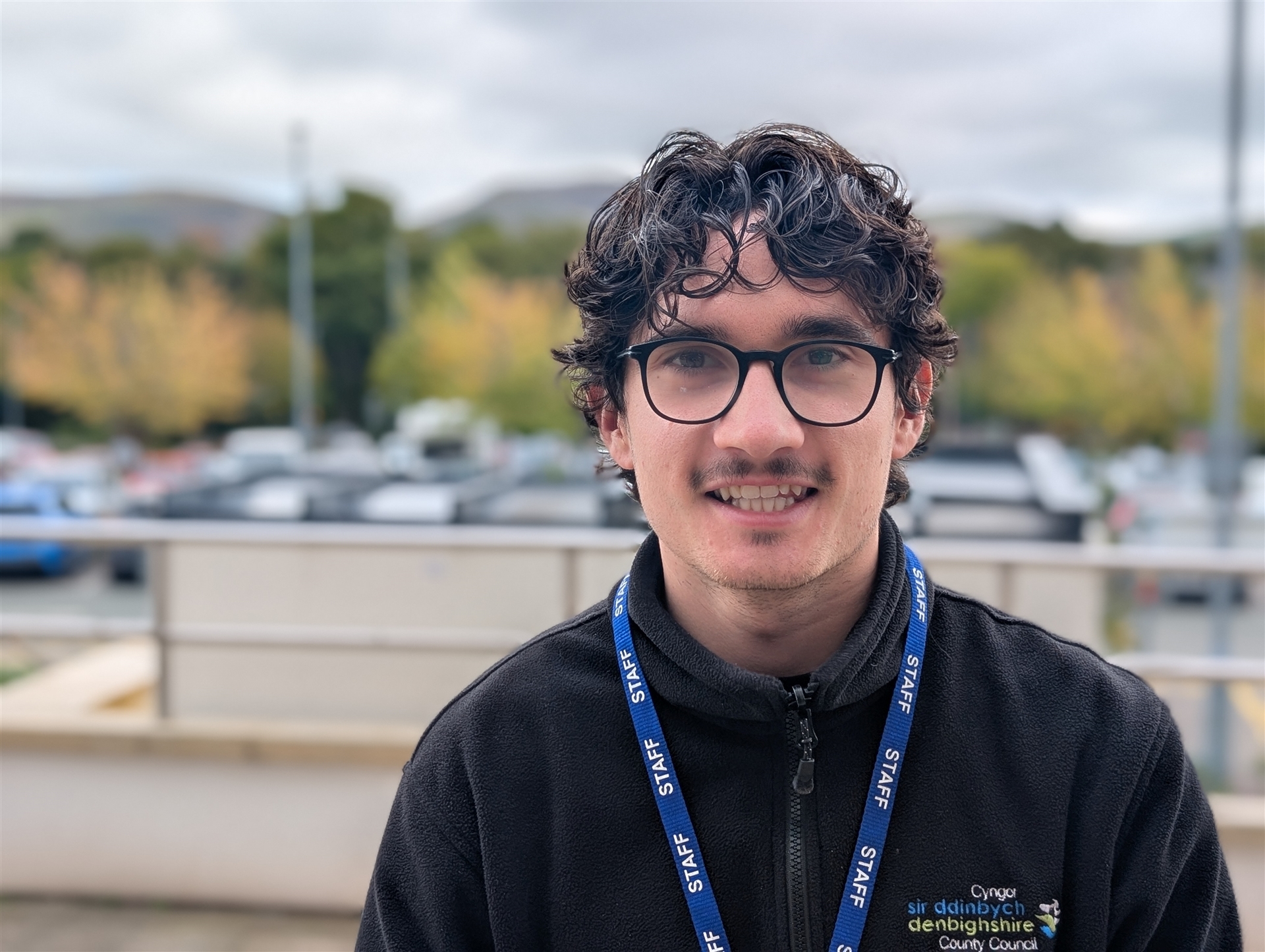
Two days after finishing his dissertation, Alfie Jones moved into his own home. It was a personal milestone made possible, he says, by a decision he took after his A-levels: to work towards a degree while earning through an apprenticeship in a growing new field.
County Voice sits down with Alfie to learn about his career path helped by his role in Denbighshire County Council’s Energy team.
Having grown up in Cefn Mawr, Alfie attended school in Ruabon before studying for his A-levels at Coleg Cambria. He knew he wanted a degree, but the traditional university route did not feel right for him. With some of his friends already taking apprenticeships, he began looking for an opportunity of his own.
That opportunity came at Flintshire County Council, where a housing development apprenticeship introduced him to a profession, he had previously known little about.
Alongside the job, he attended Wrexham University one day a week, studying renewable energy in new housing developments and measures to improve energy efficiency.
Eighteen months into the apprenticeship, an Energy Officer role at Denbighshire County Council offered a chance to bring his studies and day-to-day work closer together. It proved to be a turning point.
The role was much more closely aligned with his university work, Alfie explained. “Things really started to click and my grades went up loads.”
The benefits reached beyond his coursework. Earning while studying helped him take the step into home ownership, giving his choice of career route a significance beyond the qualification itself.
“Ultimately the degree apprenticeship is what enabled me to buy my own house as if I had gone the traditional route, I wouldn’t have earned anything.”
Within Denbighshire’s Energy Team, his studies became part of the working week rather than something separate from it. His manager was in contact with lecturers and course leads, while another officer was studying the same course a year below him and is now in his third year.
As each module began, the team looked at the assignment brief and sought opportunities for Alfie to gain relevant experience on site. The connection helped him put theory into practice and improve his marks.
“Every time a module would come up, we would ask to see the assignment brief or what the assessment is, and he would try and send me out on site to do stuff that would help enable me to get better marks which ultimately I did.”
For assignments involving consultation reports, that meant examining a building’s energy use and considering the difference that measures such as solar panels, new windows or LED lighting could make. Access to council sites, energy data and colleagues’ knowledge gave those reports a practical foundation.
“The thing that enabled me to get better grades at Uni was that I had access to the data and the sites here,” he said.
That learning continues in his role as Energy Officer. His day-to-day responsibilities include producing the council’s display energy certificates, dealing with new meter installations and keeping track of paper bills. Alongside those tasks, smaller projects have given him opportunities to build experience.
One project in particular stands out: work at Ysgol Bro Dyfrdwy after its building management system failed. Alfie visited the school, investigated the problem and contacted the contractor, helping to arrange a replacement system.
Working with a Denbigh plumber, he also gained experience improving the school’s heating system, including its four heating zones, to help manage energy use more effectively. An extension boost provided extra heat when needed in the area used by the community.
Asked about his highlight so far, Alfie returned to that early opportunity to take on a project and see it through.
“It’s probably Ysgol Bro Dyfrdwy. I really enjoyed that,” he said. “Within the first 10 months I definitely did quite a few projects.”
Other work has taken him to Rhyl, where he has gained experience improving the town library’s heating provision. He is also working with the team on a proposal to separate the measurement of gas use at Rhyl Leisure Centre and Rhyl High, which currently share a meter.
“We are looking at putting a sub meter in so we can measure what each site is using so the billing can be done more accurately,” he explained.
The team’s wider work includes solar PV projects across council-owned buildings to reduce reliance on electricity from the grid and lower long-term costs. Through the solar car canopy projects at County Hall and Russell House, Alfie has been able to learn from a colleague and contribute his own views.
That gradual introduction to project work has given him room to develop without taking everything on at once. “It’s great that I’m able to be drip fed projects,” he said, describing the benefits of a managed workload.
With his degree now completed, Alfie is looking ahead. He would like to progress to a Carbon Reduction Officer role, although the next opportunity may depend on whether the team expands. For him, knowing there is a route forward matters.
“The thing that I like about here is the obvious career path. The career grades are structured on experience and qualification. There’s a clear structure.”
Looking back to the end of his A-levels, he remembers how little he knew about the industry he would eventually join. Finding the apprenticeship at Flintshire happened by chance, he said, but he believes such opportunities are becoming more prominent.
His advice to others considering their next step is to look out for degree apprenticeships and recognise that a degree does not have to mean choosing between studying and earning.
For Alfie, that choice has led to a qualification, a career he wants to develop and a home of his own.
“You are learning whilst you are earning and it’s a no brainer.”
Mary’s Story
Mary lives in North Denbighshire, near Rhuallt and lives with an aggressive form of Parkinsons named Corticobasal Degeneration, meaning she needs to use a range of equipment in her home to live as comfortable as possible.
She lives with her husband Allan, who is her primary carer, members of her family, and her dog Blaze.
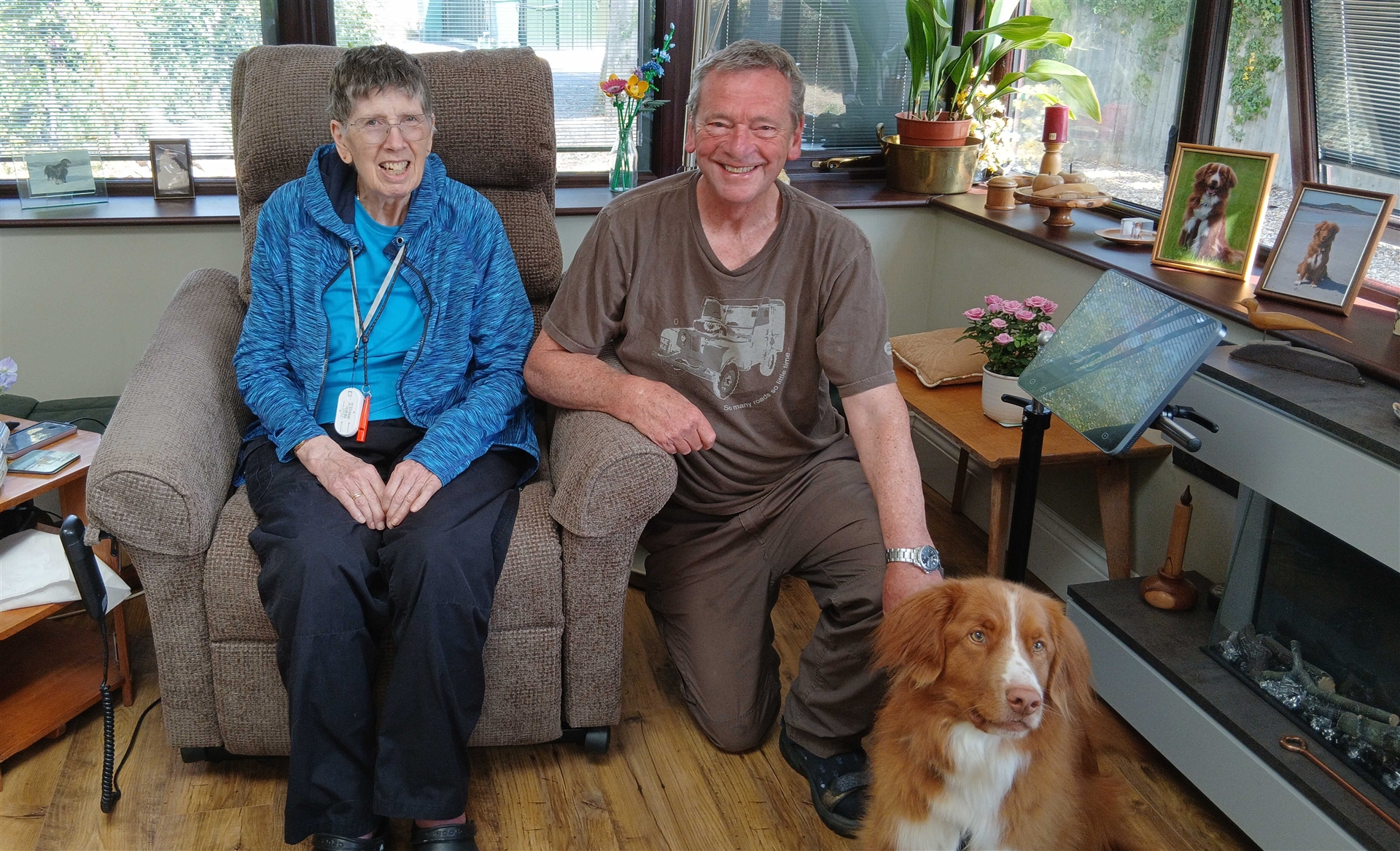 Mary, Allan and Blaze the dog.
Despite her diagnosis, Mary is full of energy and has a brilliant sense of humour. She has stuck to a number of her hobbies from before her diagnosis, including making arts and crafts. Mary was a very successful dog trainer in the past and still has her rosettes hanging up on the wall.
Before retiring, Mary worked as a physiotherapist in the local area.
Mary has been living with this condition for six years and started receiving the help of an Occupational Therapist, and representatives from the Community Equipment Team (CESI) within the last few years once her diagnosis became clearer and her condition progressed.
CESI is a partnership between Denbighshire County Council and Betsi Cadwaladr University Health Board (BCUHB), which provides equipment for people of all ages to help them live their lives to the fullest and to maintain their health and independence. This ranges from simple aids for daily living to more complex equipment that helps people to stay in their homes for longer.
Through using this equipment, Alan and Mary don’t need to rely on formal visiting carers every day, allowing them to live as comfortably as possible at home.
An adapted bed, known as an Independence bed, was one of the first pieces of equipment that was implemented at her home. A hoist was also added to help Mary get in and out of bed easier.
The bed also moves mechanically, allowing Mary to sit up and adjust the height when needed.
With help from an Occupational Therapist, after an assessment, special sliding sheets were introduced, which helps with transfers.
Speaking about the Independence bed, Allan said:
“The bed has been a godsend really from the outset, the fact that this one drops right the way down has made a huge difference in terms of ease of use and mobility.”
With the use of a piece of equipment called a Standaid, Mary can get in and out of chairs. The Standaid also helps with transfers into and out of her wheelchair.
Mechanised toilet raisers were also installed in the home, which further helps with transfers in and out of the wheelchair and ease of use.
Speaking on her experience with the CESI, Mary said:
“The technicians are brilliant, always really pleasant when they come and assist with the equipment. They are very accommodating.
All the services have been very very good with us, there has been very good co-ordination between the different departments.”
The equipment is there to help to keep Mary as independent as possible, helping her to do the things she can do on her better days, and is there to offset days where maybe she finds it more difficult.
Mary went on to say:
“I am still doing arts and crafts, I do a form of weaving, where you make patterns into keyrings. I have made some with the St Kentigern’s craft group. I’ve made crafts all my life, and I’m glad I still have an outlet to do it.”
Becky, an Occupational Therapist who has helped Mary said:
“We work in conjunction with the CESI stores as a team, and could not do our job without their expertise and support.
They are always so accommodating and helpful, and we are very grateful for them.”
From permaculture to conservation: a career rooted in nature
County Voice pulls up a chair with Keegan to find out how nature has always been accompanying him through his working life.
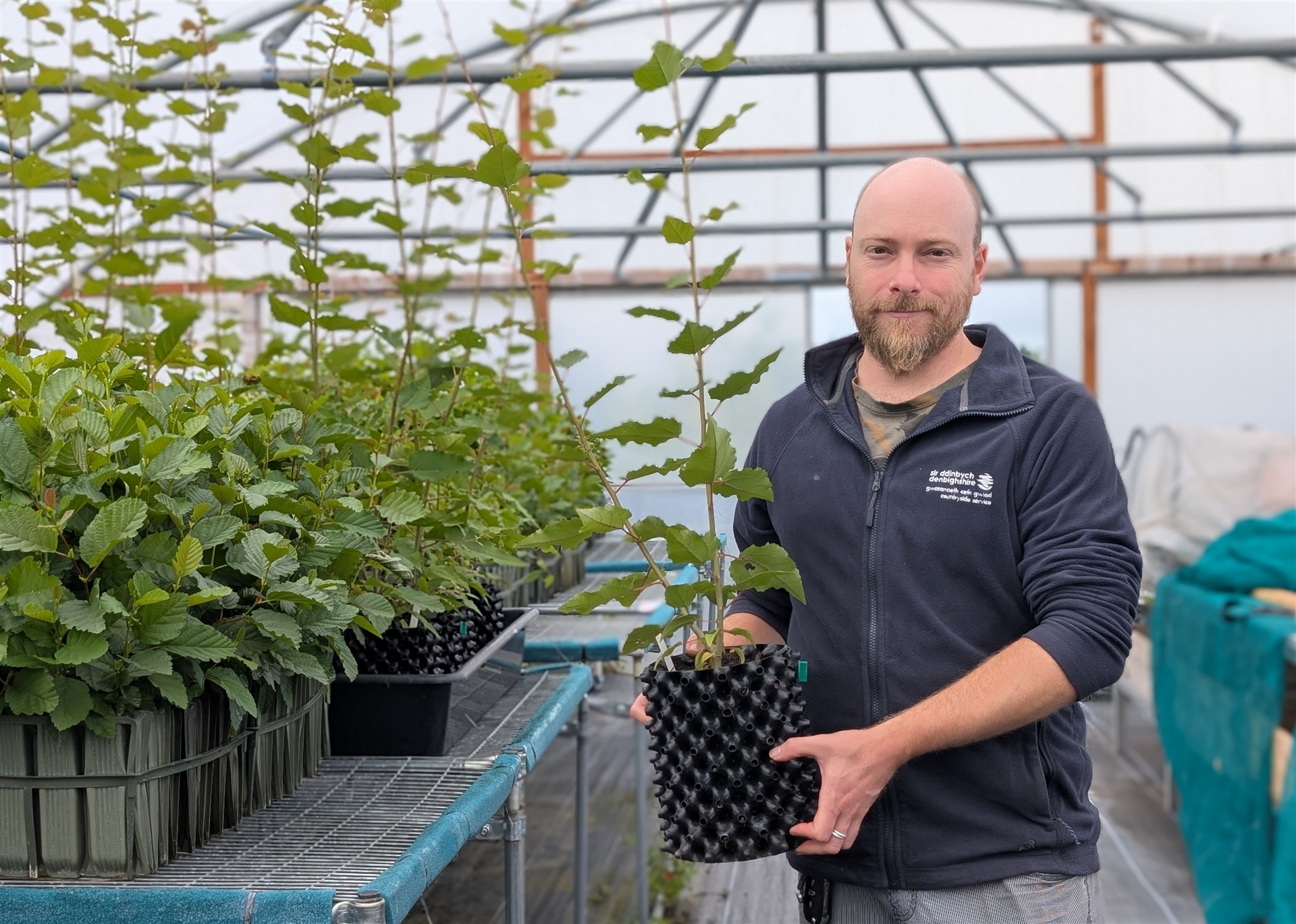
For much of his working life, the career path has not been a straight line for Keegan Blazey. His life has moved through art studios, organic farms, classrooms, games design, university laboratories and, eventually, into the practical, muddy work of conservation. But looking back for the current Tree Nursery Officer at the Council’s Tree Nursery at St Asaph, the thread running through it all is clear: a desire to understand the natural world and to do something useful within it. County Voice pulls up a chair with Keegan to find out how nature has always been accompanying him through his working life.
His interest began in his 20s, when he became involved in permaculture — a way of thinking about food, land and community that goes beyond sustainable agriculture. For Keegan, it helped him connect with wider ideas about culture, spirituality, mindfulness and self-sufficiency.
He explained: “I got really into being sustainable and self-sufficient. You learn how to grow your own food because it keeps you healthy. Buddhism, mindfulness and all those things were part of what got me into it.”
Growing up in South Africa also helped shape his outlook. As during the time, water shortages, drought and rolling blackouts were part of everyday life. Keegan explains that Permaculture offered practical answers including rainwater harvesting, sustainable water use and designing systems that depend less on mains supply.
After moving over to the UK, Keegan worked mainly as an English teacher while continuing to volunteer on land-based projects. That eventually led to a role as an organic garden manager, where he ran a market garden supplying a bed and breakfast site, managed around 6 volunteers, taught English to international volunteers coming over from Europe and helped build a more circular, wildlife-friendly growing system.
The work involved ponds, wetlands, ducks, composting and closed loop growing. It brought together several parts of his background: teaching, practical gardening, sustainability and people management.
Later, his career changed tracks again. Art, which had always sat alongside his environmental interests, became his profession. Keegan moved into digital concept art, working mainly in gaming for five or six years. During the Covid pandemic, the games industry grew rapidly and the work was there — but something no longer felt right for him.
Keegan said: “I was sitting there painting medieval armour for games while the world was suffering, it just didn’t feel right.”
That realisation pushed him to test himself through an environmental science Degree at Bangor University. He admits he looked for a role where his skills could contribute to solutions, and this route gave him the technical grounding to move into research. Environmental science helped provide him a broader outlook as it not only at protecting nature, but at how people and the environment can work together.
A placement in forestry research became a major turning point for Keegan. He worked as a research technician on climate change experiments with the Birmingham Institute of Forest Research, helping gather and process field and laboratory data. He explained the work was very ‘detailed’, soil tests, water tests, tree and root measurements, data collection and analysis all kept him busy.
“At one point, I spent months washing soil from oak roots, separating them by hand, scanning them and passing the results on for analysis, he says with a smile.
But it provided a solid grounding in fieldwork, data and experimental process, which has helped with his current role as Tree Nursery Officer.
During his degree, Keegan explained he also focused on soil science and completed a dissertation on microplastics, using Denbighshire’s own local wildflower meadow sites as part of his research.
The project looked at microplastic movement in soil alongside carbon, moisture and compaction, measures used to understand soil health and land management.
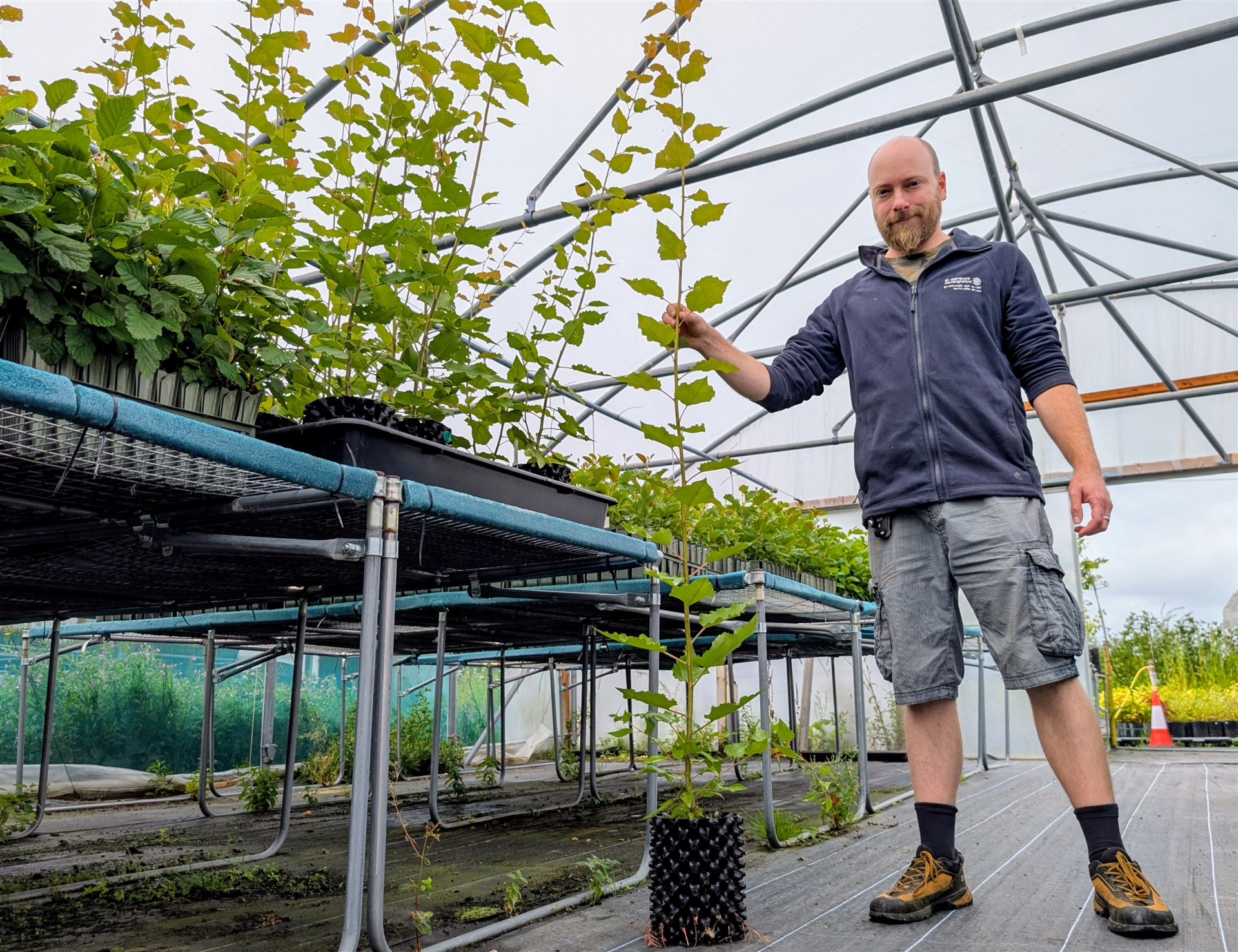
Chatting with County Voice, Keegan admits he still hopes to complete a research focused PhD one day, but for now sees practical experience as the best next step.
Sitting in one of the nursery tunnels, it’s evident that Keegan’s scientific background is helping push forward the site’s aim to protect local biodiversity with positive results of his Aspen growing experiment beside him as the talk continues, with sea holly grown in the background and new wildflower beds replenishing seed stock on the nursery’s doorstep.
“It’s been a huge learning curve,” he says. “But I’ve had experience of the skills I needed coming in. The details matter in research, but I’ve also learned what level of data we actually do need here.I’m surrounded by an amazing team guiding and supporting me along the way and I wouldn’t have been able to cope without them."
Before County Voices closes the chat, we ask how he feels about the Tree Nursery Officer role he took on in 2025, another smile emerges: “This is the best job I’ve ever had. The prospects in terms of what we’re doing and what we’re trying to achieve at the nursery are incredible. Everyone I talk to is jealous of what I do.”
Tackling the impact of climate change issues on the land locally is not without challenges, but for Keegan, that is part of the point.
He says: “Most climate change and nature enhancement work feels impossible…But it’s important that we try.”
What began with permaculture and a search for self-sufficiency has grown into a career for Keegan built around restoration, resilience and the belief that even striving to conquer difficult environmental work is worth doing, evident at the many green shoots of progress appearing at the Tree Nursery.
Property section projects support communities across Denbighshire
Over the past 12 months, Denbighshire County Council’s Property section has continued to play a vital role in supporting services, communities and residents across the county
Over the past 12 months, Denbighshire County Council’s Property section has continued to play a vital role in supporting services, communities and residents across the county.
From delivering improvement works and maintaining public buildings to supporting major projects and ensuring council assets are safe, efficient and fit for purpose, the teams within the section have been involved in a wide range of important work.
County Voice looks back at some of the key projects completed during the year, highlighting the dedication, expertise and collaboration of the different teams that help manage and improve Denbighshire’s property estate.
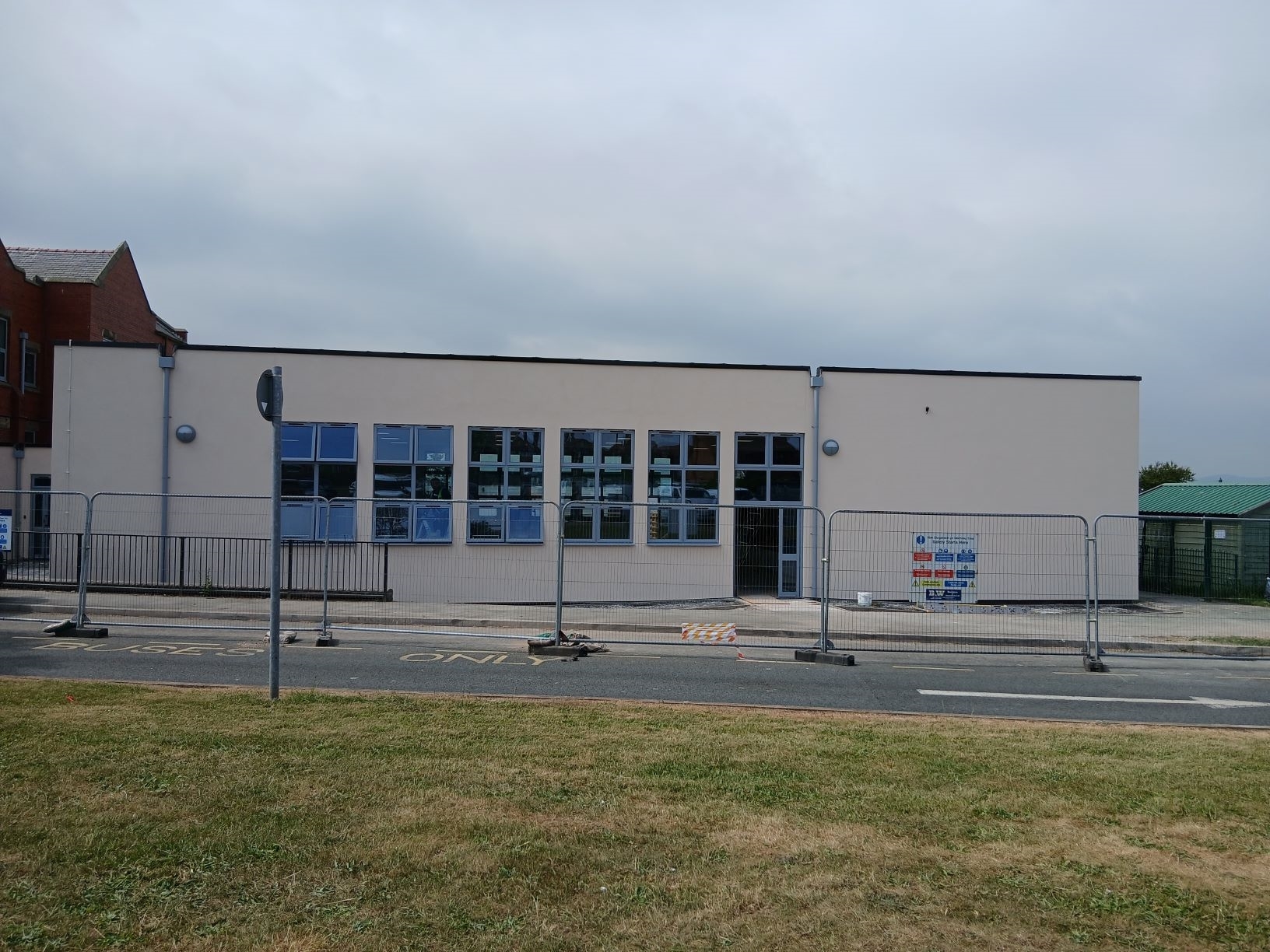
Since last year the Building Maintenance team has supported major improvement works at Ysgol Dewi Sant in Rhyl, helping to modernise and transform the school’s hall wing.
This project included roof reconstruction, improved insulation, replacement high-performance double-glazed windows, upgraded access arrangements and the modernisation of the foyer and entrance area, including the addition of a lift to improve accessibility.
The works helped improve energy efficiency, reduced the school’s carbon footprint and created a safer, more accessible and modern space for pupils, staff and the wider community.
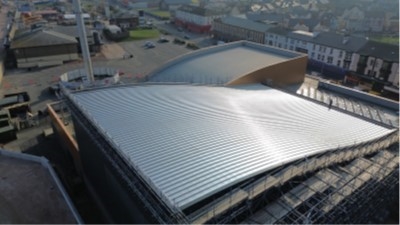
They also responded to storm damage at SC2 Waterpark making the building safe before managing the replacement of the compromised waterpark roof.
With the original supplier no longer trading, a new roof was specially designed and independently checked using site-specific wind load modelling.
The project required a bespoke scaffolding solution because nearby flood defence works prevented traditional access, while wind speeds were monitored daily to keep operatives safe.
Purpose-made curved roof sheets, some more than 24 metres long, were transported to site under abnormal load permits. Maintenance colleagues coordinated the complex project with the tenant, insurers, consultants, engineers, surveyors, loss adjusters and Council teams managing the sea defence works.
The project was managed by maintenance, liaising with our Tenant, specialist consultants, engineers, insurers, forensic surveyors and loss adjusters, as well as Council colleagues including those managing the sea defence works.
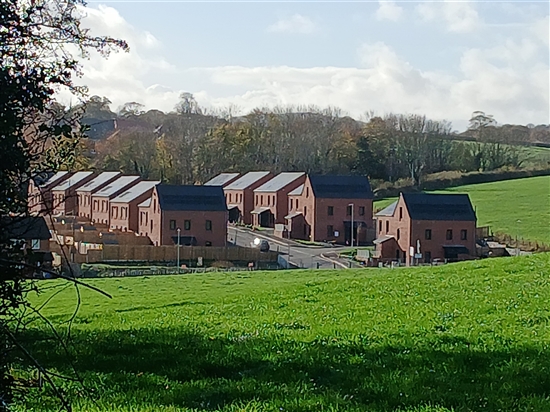
Over the last 12 months the Design and Construction team has delivered and supported a wide range of high-profile projects across the county, helping to improve housing, education provision, accessibility and regeneration.
Key achievements include the completion of 22 new energy-efficient council homes at Llwyn Eirin in Denbigh, built to Passivhaus standard and fitted with solar panels and ground-source heat pumps to help reduce household energy costs and carbon emissions.
The team also designed and progressed the first hydrotherapy pool of its kind in Denbighshire at Ysgol Tir Morfa in Rhyl, supporting pupils’ physical development and wellbeing through a specialist new facility within the school grounds.
Alongside this, the team has supported the next phase of works at the Former North Wales Hospital site in Denbigh, with remediation and demolition works helping to unlock future regeneration of the 53-acre site for housing, commercial space and green community areas.
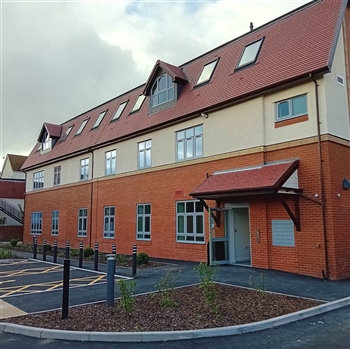
The section’s work has also been recognised through award-winning housing schemes, including Llys Elizabeth in Rhyl, which won Best Small Social Housing Development at the LABC Awards for Wales for its high-quality, energy-efficient homes for residents aged 55 and over.
Since last summer the Energy Team has continued to lead projects that improve energy efficiency, reduce running costs and lower carbon emissions across Council buildings and services.
At Cysgod y Gaer care home in Corwen, the team installed a 40kWh battery energy storage system alongside a 21.36kWp solar array, building on previous work to add PV panels, LED lighting and heating system improvements.
This combined work has helped reduce gas and electric consumption significantly, cut carbon emissions and supports the charging of two electric vehicles operating from the site to provide health and social care services in the local community.
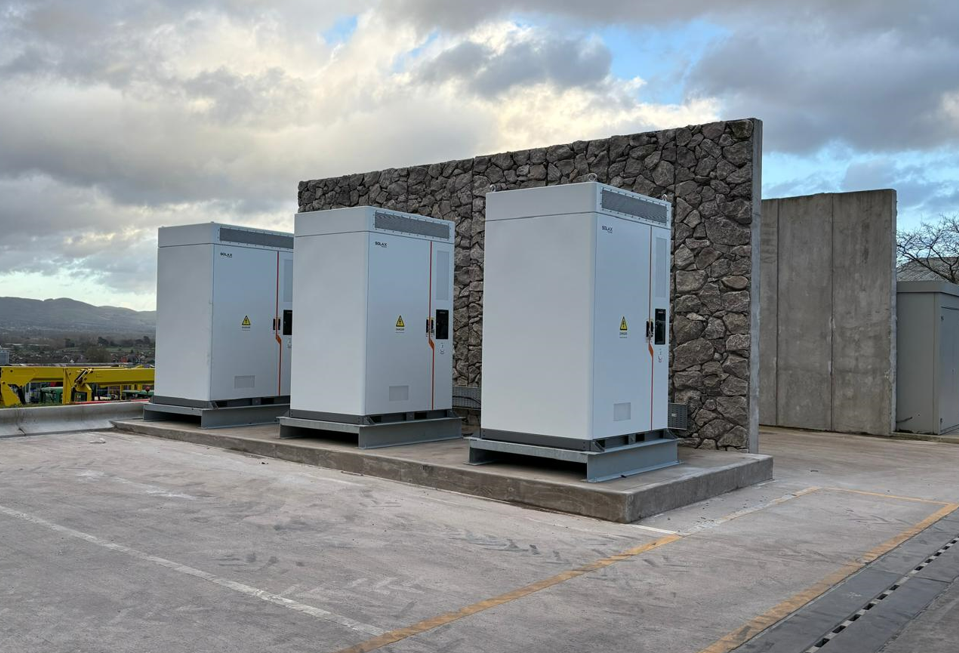
The team has also delivered an innovative battery storage project at the Denbigh Waste and Recycling station, installing 600kWh of battery capacity to make better use of solar energy generated on site and support electric waste and recycling vehicles.
Early results show grid energy use at the site has fallen by more than half, with the system expected to save more than 76,000kWh a year, reduce costs by around £16,000 and cut carbon emissions by approximately 22 tonnes annually.
A further example of this collaborative approach can be seen at St Brigid’s School, where teams worked together during the second half of 2025 to improve the efficiency and performance of the site’s main building.
The project brought together support from the Climate and Nature programme, Building Maintenance and the Energy Team to deliver a package of heating, controls, lighting and insulation improvements.
Works included the removal of old inefficient oil-fired boilers and their replacement with modern LPG-fired boilers across the two main plant rooms, with five boilers replaced in total and the old oil tank removed.
Modern building management controls were also installed, creating five separate zones for the main building and helping the site operate more efficiently.
In addition, more than 140 LED light fittings were installed, which are expected to save around 24,260kWh of electricity and approximately £5,579 each year.
Around 240 square metres of 300mm insulation was also added, further supporting the Council’s wider work to reduce energy use, cut emissions and improve the long-term sustainability of its buildings.
Councillor Julie Matthews, Deputy Leader and Lead Member for Corporate Strategy, Policy, Equalities and Strategic Assets, said: “The work carried out by our Property teams over the last 12 months shows the important role they play in supporting residents, communities and Council services across Denbighshire. From improving schools and care settings to delivering energy-efficient homes, reducing carbon emissions and supporting major regeneration projects, their work has a direct and lasting impact on people’s everyday lives.
“I would like to thank all the teams involved for their dedication, expertise and commitment. Their efforts help make our buildings safer, more accessible, more sustainable and better equipped to meet the needs of residents now and in the future.”