FEATURES
Working Denbighshire helps residents overcome barriers to employment
Working Denbighshire provides tailored support to residents across the county who are facing barriers to employment, including low confidence, anxiety, and limited work experience. Through mentoring, volunteering opportunities, and skills development, the service helps individuals build confidence and move closer to their goals.
One example of this support is Derek, who was referred to Working Denbighshire through the Job Centre a few years ago. At the time, Derek was experiencing low confidence, anxiety, and lacked the skills and experience needed to enter the workforce.

With guidance from the Working Denbighshire team and through a volunteering placement at St Kentigern’s Warehouse, Derek has made significant progress. He’s now actively working towards a career in IT support or administration.
Derek, Working Denbighshire participant said:
“At one point I was extremely shy, with bad anxiety and no confidence.
“I never thought I’d get to where I am now, but with support from Working Denbighshire and through volunteering, I’ve overcome so many barriers.
“I know the younger me would be proud of how far I’ve come.”
Councillor Jason McLellan, Leader of Denbighshire County Council and Lead Member for Economic Growth and Tackling Deprivation, said:
“Derek’s journey is a brilliant example of the positive impact Working Denbighshire can have on people’s lives.
“It’s about more than just finding a job, it’s about helping people unlock their potential, overcome personal barriers, and feel confident in their future.
“We’re proud to support residents like Derek on their journey towards employment.”
Derek continues to build his skills and experience through volunteering and is determined to secure a full-time role in the near future.
His journey forms part of the Working Denbighshire Complex Disabilities and Mental Health Team’s wider “Work Works” campaign, which highlights the positive impact that working, or taking steps towards work can have on people’s lives. Whether it’s improving wellbeing, gaining confidence, meeting new people, or learning new skills, the campaign shares real stories from across Denbighshire to inspire others.
Working Denbighshire is a free service that helps residents access training, find employment, and build confidence in their job search. Anyone looking for support can get in touch by visiting our website.
Working Denbighshire is part funded through the Welsh Government Communities for Work Plus Programme which supports those most disadvantaged in the labour market to overcome the barriers preventing them from gaining employment.
Working Denbighshire is part funded by UK Government.
Lost habitats are back to breathe life into nature
Nature’s been given a helping hand in Denbighshire
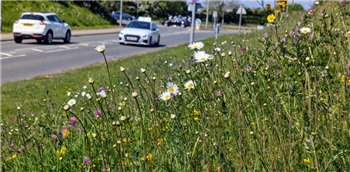
Nature’s been given a helping hand in Denbighshire for the last six years thanks to a project working to restore lost habitats.
Our Wildflower Meadows Project which started in 2019, aims to restore and increase this habitat in the county as since the 1930s. The UK has lost 97% of its meadow land, with Wales in particular having less than 1% left. This loss has impacted heavily on nature and communities.
The project is also part of our wider Bee Friendly campaign aimed at supporting the recovery of bees and other pollinators across the county
Our meadows are usually left uncut between March and August, except a small border mown around each site, allowing the flowers to set seed, and ensures that the meadow provides the greatest benefit to wildlife.
Cut and collect is carried out at the sites to help to lower the richness of the soil, and create the low-nutrient ground that our native wildflowers and grasses need to thrive.
Grass and wildflower seeds collected from areas around the county have been used to enhance our meadows. Some of the seeds have also been grown on at our tree nursery to produce plug plants. Only using local seeds ensure the plants which then grow are genetically suited to Denbighshire and will be the most beneficial to biodiversity in the area.
Here County Voice takes a look back at some of the project highlights that have benefitted both plant and wildlife across Denbighshire.
During 2021 the Biodiversity team recorded a nationally declining species on the Prestatyn Beach Road West site.
Hound’s tongue (Cynoglossum officinale) and was previously only recorded in Denbighshire 18 times within the last 116 years.
Seeds were taken from the site to the Council’s tree nursery and thanks to the effort of the staff, new plants germinated for planting on other coastal meadow sites to help expand its range in Denbighshire.
In 2021 Bithynian Vetch, a species of flowering plant in the bean family Fabaceae grew on a single project site managed by the Biodiversity team. Since 2019, this was the only place in Wales it was recorded growing in the wild.
During June staff collected a small number of seeds from the Bithynian Vetch. These were taken back to the Council’s tree nursery at St Asaph to be grown on site to help boost the plants dwindling numbers.
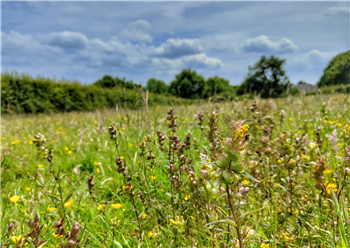
An innovative organic method was carried out as well in 2021 to help control the length of grass in a Denbigh meadow.
The site was treated with locally sourced Yellow Rattle seeds. Yellow rattle is a parasitic plant, tapping in to the roots of grasses and other neighbouring plants and stealing their nutrients. This reduces the dominance of grasses within a meadow, allowing more native wildflowers to take hold.
During the 2022 season the Biodiversity team inspected the site and found a reduction in grass length and an increase in wildflowers. The successful trial meant more food for pollinating insects and their predators
‘Bee Friendly’ really came into its own in 2023 after the Biodiversity team found a new resident at a Ruthin meadow.
A female Tawny mining bee was found resting in a nest on the site. The spring flying bee with dense orange and red hair feed from a variety of flowers which make wildflower meadows the perfect area to locate to.
Tawny mining bees are usually seen from March to June and are common throughout south and central Britain. This showed how designated sites are providing support for local nature to flourish as well by providing plants for pollinators and grass for insect food.
The team also discovered during this season pyramidal orchids at two coastal sites at Prestatyn which was recorded as a first.
And last year a pyramidal orchid was discovered inland at a meadow in Ruthin indicating the network of meadows were really starting to help nature fightback.
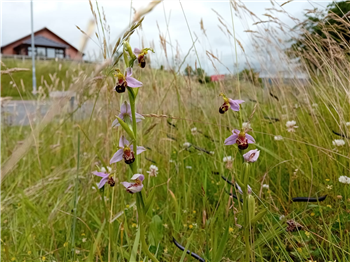
This year extra bee orchids were discovered at a meadow in Denbigh which shows the meadows are working as a combined highway for plants, insects and animals to move across the county, increasing biodiversity as they go.
Orchid produce seeds which are incredibly small (also known as dust seeds). These seeds must come in contact with a special type of mycorrhizal fungi that will help the orchid seed germinate and aid it in its early growth. Each orchid tends to have a particular mycorrhizal fungi that it partners with, so unless the soil conditions are right for the fungi, orchids won’t grow. The resurgence of orchid shows the project in 2025 is heading in the right direction, and the meadows are continuing their journey to recovery.
The school that does Sports Day differently
Nestled up on a hill, sitting just beneath a Medieval castle in Llangollen, Ysgol Dinas Brân’s Sports Day, which this year falls on the last day of term, is a little different than what is traditionally offered.
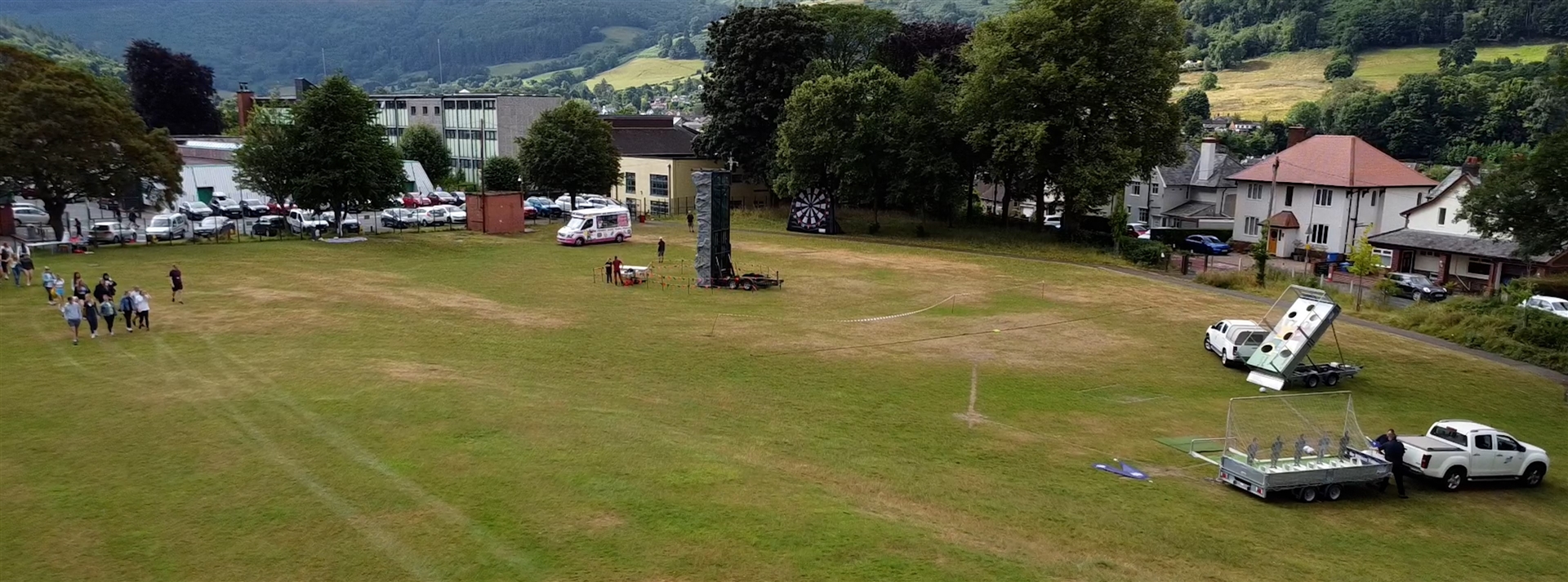 Arial view of part of the field on Sports Day
An assembly kicks off the day, with a presentation of the year’s achievements displayed on the Sports Hall wall, supported by a soundtrack provided by a pupil-formed band, who impressively cover a number of Oasis’ greatest hits. The presentation also included teacher’s stories of their sporting pasts, signifying the importance of sport throughout school.
Once the presentation is over, the Sports Day (which has also formerly been referred to as ‘The Dinas Brân Olympics’) commences.
 Pupil-formed band playing at presentation
Setting up the day is a big task, and starts early in the day, with the Head of Department for P.E., Neil Garvey, and other staff arriving at 6am to prepare.
By 9am, set up in the middle of the school field are a number a 5-a side pitches, a mini golf course with multiple holes, and an inflatable obstacle course. Further along the field sits a massive inflatable dart board for ‘foot darts’ (played with footballs in place of the more traditional darts), a tall climbing wall, and both football and rugby target practice, respectively. Also on offer is a Tug of War contest, canoeing at the nearby canal, Just Dance sessions, and more traditional events such as running races (100m, 400m) and shotput.
 Climbing Wall
An Ice Cream Van and a snack stall are the menu of the day with teachers getting to choose the soundtrack to the events. Although an element of competitiveness will always be the case with some events, this day is ultimately set up to have fun and try new experiences.
Once on the field, some pupils rush to get all geared-up to scale the climbing wall, others grasp tightly onto their putters as they traverse the mini-golf section of the field. The variety on offer means that a whole host of hobbies and activities are represented on this Sports Day.
There are no leaderboards, charts or placements for a vast majority of the activities on offer today, as participation is the aim for this sports day, with the idea being that the wide array of activities will help with pupil participation and engagement.
Year groups all take their turn throughout the day taking part in the numerous activities spread across two school fields (and part of Llangollen’s famous Canal) as they run, climb, kick, putt, paddle and jump in the name of a tweaked and different Sports Day, which feels more of a celebration than a competition.
In the afternoon, staff take their turn, with staff sack races set up, where teachers hop head-to-head to reach the finish line first, with pupils cheering them on.
Neil Garvey, Head of Department for P.E. explained:
“Our Sports Day is a little different than your traditional Sports Day. We changed our approach to Sports Day around 12 years ago to try and increase the number of pupils participating in the events.
The previous Head of Department, Helen Davies, set this up, we sat down as a team to come up with ideas to help change the whole idea of a ‘Sports Day’ to get more pupils involved. This was her idea, and is something that we have built on year on year. Each year we have added new events, and partnered up with local businesses in the area to get things such as a big inflatable obstacle course and the climbing wall.
Since we made the tweaks, the number of pupils participating have gone through the roof. You can see on their faces, the pupils really enjoy this approach to Sports Day.”
Jimi, pupil at Ysgol Dinas Brân said:
“I think Dinas Brân’s sports day is actually the best sports day you could ever have! You have all sorts of events like rock climbing and football, anything you’d want to do really.
This year I’ve most enjoyed the climbing wall, as I’d never really done it before and some of the athletics.”
 Pupil tries Foot Darts
Maggie, another pupil at Ysgol Dinas Brân said:
“Ysgol Dinas Brân does an excellent Sports Day as it gives a chance to pupils who don’t usually do sports a chance to try new activities.
I’ve really enjoyed the inflatable obstacle course with my friends and the races.”
Mark Hatch, Head Teacher at Ysgol Dinas Brân said:
“The whole purpose of this format is for health and wellbeing, and getting out there. It’s an inclusive day which has everyone trying something new, being active and enjoying themselves.
It’s all about getting the pupils out there, enjoying something different and giving them a whole new set of experiences, and to create a really fun day too.”
Nurture of nature experience brings all-round help for biodiversity
Across Denbighshire’s land and waters, work is ongoing to help nature recovery
Across Denbighshire’s land and waters, work is ongoing to help nature recovery in the face of the ever-increasing pressures from man-made and climate change impacts.
County Voice sits down with Biodiversity Officer Evie Challinor to find out what has fuelled the steps to the post she holds today to support the nature we have across our county.
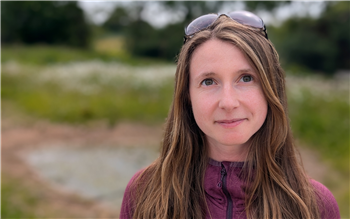
Evie spent the first part of her life exploring what Mid Wales outdoors had to offer for a young adventurous spirit.
She said: “Mid Wales is very agricultural; it was a bit different from up here in that way. There are conservation sites there, but not many that were local to me. However, I spent many hours of my early life adventuring, wading in ponds, climbing trees, and following rivers; wherever I could find to explore.”
Pondering her A-Levels, the prospect of taking on an outdoor career inspired by early outdoor adventuring began to form in Evie’s mind.
“I’d always loved Biology and the natural world, especially studying ecosystems and the connectivity of the natural world. I had always been academically minded up until then and the natural progression from here was to pursue Biology in some form, as a career.
“After a bit of research, I found Zoology and decided that was the course for me. I went to Bangor University where I spent 3 years studying Zoology. It was fantastic having Eryri and Anglesey right on the doorstep for both learning and recreation… it was a brilliant Uni.”
People who love animals often tend to take on Zoology to keep their passion for conservation alight.
Evie explained: “I think it’s quite common when you get there to realise that can’t study animals in isolation. You also need to know your plants and that’s very true of what I am doing now in this role I am in. Plants underpin everything.”
“During my undergraduate, I was fascinated by comparative zoology, the study of animal’s unique adaptions, and with animal behaviour. These led me quite far down the anthropology and evolution route, including looking at how animals and plants are adapted to their surroundings. Slowly that came round to conservation, ending with my decision to stay on and do a Masters in Conservation and Land Management.”
Building up her experience while at Bangor, Evie also spent some time volunteering with the North Wales Wildlife Trust and the Snowdonia Society.
“The Snowdonia Society were quite active in the area and were a really good organisation for a student to get involved with. They provided transport which was a massive help to a student without a car. I went and did a lot of practical habitat management with them as a result.
“I also had friends who were quite heavily involved in the Amphibian Reptile Conservation Trust across that way, so I did some habitat management for them on Anglesey. The other organisation I spent time with was North Wales Wildlife Trust, who I was fortunate to do some water vole survey training with. I really started leaning into the volunteering more towards the end of my Masters.”
Just before graduating with her Masters, Evie secured an all-Wales role with the National Trust.
“It was based on a strategic level; they were trying to bring together the management plans they had for all their different portfolios and begin to make the practical conservation a reality by starting to match up projects up with funding.”
“I was brought into that team to help with the co-ordination. It was a fantastic role to have, especially straight out of university - some really valuable experience.”
Unfortunately for Evie, like many thousands of people, the Covid Pandemic put an end to this part of her career after she took voluntary redundancy due to the huge impact of the time across many organisations in the UK.
However, she soon picked herself back up and joined Cheshire Wildlife Trust, working in the membership department, simultaneously picking up a role as a forest ranger with another company at the time.
Evie’s first steps into Denbighshire came shortly after when she moved into the Clwydian Range & Dee Valley Area of Outstanding Natural Beauty as a ranger down in the Dee Valley.
After a summer in the Dee Valley team, she spent the next nine months at Loggerheads, before moving on to working for the Canal and River Trust.
She explained: “I loved the ranger role in many ways but felt it didn’t give me enough time to dedicate to developing some of the skills that I felt I was missing. The role change to ecological advisor for the Canal and River Trust allowed me to gain some of this experience whilst supporting the restoration of the Montgomery Canal.”
Evie admits after a year with the Canal and River Trust, her ‘dream role’ appeared in the form of the job she holds now.
She said: “I had the practical habitat management experience and plenty of advisory experience, but one of the things I really wanted to get to grips with was the species and habitat surveys, which are a really rewarding part of the sector.
“I feel like my surveying expertise has come on leaps and bounds by just spending that time out and about. You just feel so good; you come back at the end of the day and you are happy. I feel with the projects we are doing that I’m actually making a difference. I think job satisfaction wise you can’t really get much better than that.”
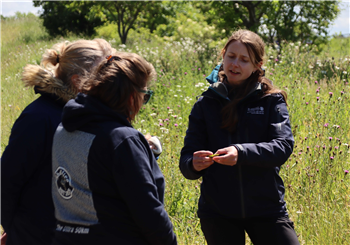
Highlights working as a Biodiversity officer so far for Evie include finding her first great crested newt on one of the sites she works on, and her first dormouse encounter.
“I’m also loving doing the dormouse surveys. We’ve been doing box checks, bringing all the sites up to scratch… you are just lifting the lids and peaking in, waiting to see if there’s anything there! It’s just a really nice thing to do. Especially when you get the tell-tale signs of occupation by seeing a little nose poke out”.
For the many nature supporters out there, Evie’s advice about following in her footsteps is to start ‘getting out there and volunteering’.
She explained: “That foot in the door also shows that you’ve got a passion. Building those connections with the right people will teach you a lot.”
And her ambitions whilst taking on this role?
“I’m currently working hard to get my first license in the form of a great crested newt licence. Getting my first licence under my belt will be a very big milestone for me, with hopefully more to follow in the future.
“I’m also looking to do a ponds project; I’ve got many aspirations for this one. Creating new ponds and a network of people to share knowledge with across Denbighshire and creating a propagation wing for it.
She added: “So I’m currently out doing lots of surveys, and a little digging around sites, trying to find plants to be able to bring back to the tree nursery to propagate to give us a local seed source. It’s great fun!”
Nature nurtures determination for countryside career
A long-standing love of nature...
A long-standing love of nature has helped drive one man forward into protecting and nurturing Denbighshire’s local trees and plants.
County Voice sits down with our Tree Nursery Assistant Sam Brown to learn how since an early age, protecting nature has fashioned his outdoor career.
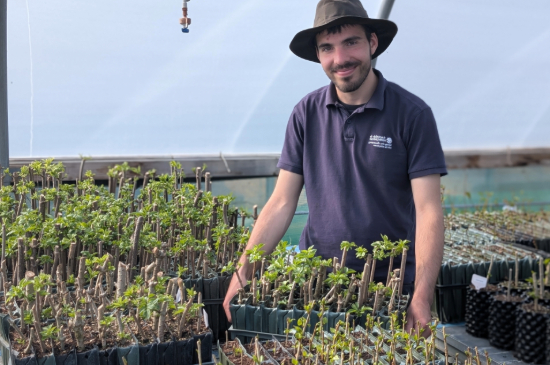
Born at Wrexham Maleor hospital, Sam grew up in Acrefair, a little village halfway between Llangollen and Wrexham.
Early memories include a helping hand from his parents for learning about the importance of the outdoors.
He said: “Mum and Dad brought me up to love nature, we used to go to National Trust properties, RSPB reserves, we have Erddig on the doorstep, Chirk Castle, Ty Mawr Country Park. Basically, they brought me up stomping and walking around in wellies most weekends and outside of school…loving nature was instilled in me at an early age.
“I was a junior ranger at Ty Mawr Country Park with Wrexham Council, they basically ran it as a club, I was eight when I started and around 15 when I finished. They ran it after school, so you would get changed from your school uniform, you would get down there in your wellies for four o’clock and they would run activities for you for an hour.”
Sam honed his countryside skills as a junior ranger by tackling mucking out the animals, to pond dipping to surveying butterflies at the park.
“I really got stuck into it, they instilled quite professional values into us, like how to look after the animals, being friendly chatting to people and training as well, such as a river safety course.”
At school Sam coped with a diagnosis of Dyspraxia while studying but his love for nature helped him through.
He explained: “I liked school, but I didn’t get on with the academics, I was always looking out of the window watching the sparrows and the whitetails and the pigeons outside. I was far more interested in that than the lessons.
“But a few teachers, one of them Miss Mills, my science teacher tapped into that once. When everybody else was doing another science practical she sent me and my friends out to do a bird survey on the school fields. She also ran an after-school gardening club where I got to do all sorts of things.”
Options weighed on Sam’s mind following school after he pondered the choice of a career in Mechanics or Marine Biology which had always been on his mind since a youngster, but the love of nature and the countryside always remained a driving force in the background.
“I was also a bit of a petrol head, really into engineering and cars but I couldn’t do maths very well and that took me off the engineering track because I knew I found it difficult.”
However, nature remained by his side and Sam admits the steps into the career he enjoys today happened quickly.
He explained: “We were just flicking through courses at Coleg Cambria and found a course at Llysfasi College which was Countryside Management and Conservation and Forestry was another option for me as well.”
Sam took part in an open day at the college doing some work and found he loved the activity involved. Joining the Level 2 stage of the course he spent three years at the college working through to achieve Level 3.
“I met some really good people that I'm still in touch with now. Even now sometimes I work with some of them as well. And yes I really, really enjoyed my time at the college. My tutors were really inspiring, really helpful.
One of his tutors was a botanist and helped Sam develop his knowledge of plants and another gave him the skills to work practically out in the countryside.
“When I finished College, I was in two minds as to whether to go to university, I felt I was too young even though most people went at my age… I didn’t feel very ready to move away from home.”
Sam admits he tussled with the idea of going to Aberystwyth University or Liverpool John Moores to study Marine Biology but the continuing call of the nature of the countryside gave him an opportunity that he has never looked back from.
“I ended up going to a job interview for a countryside ranger in the Dee Valley team, I didn’t get that job, but they put me on the relief ranger list. I’d do a day with them here and there, the busy seasons, tree planting, things like that, so I got a good bit of experience with them.
“I know my love was the land, the people on the land and the things on the land. I discovered I loved trees; with my Dyspraxia you do sometimes get fixated with things. I was able to memorise all the native tree species straight away and I got really good at wildflowers as well. From a young age it’s always been there in the back of my head what I really wanted to do.”
Faith is also important to Sam who is a Christian and to him, nature together with his beliefs is a big driver for his commitment and work.
“I’m really passionate about nature…I’m a Christian, I believe God created nature and it deserve respect, the animals…the plants. It’s an amazing resource for our spiritual health, our actual health, we need to recognise that and that the Earth is a precious resource, and I want to look after it.”
Becoming a passionate gardener since leaving college growing plants at home, Sam admits his happy place is in his garden.
Sam also experienced time caring for an under-threat bird at the Little Terns colony at Gronant Dunes as a warden.
“I enjoyed my time with the Little Terns. I loved looking after them, they were lovely animals.”
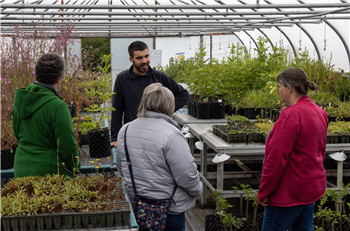
Following his warden duties, Sam got his current Tree Nursery Assistant role in September 2023 and has been using his skills to boost the county’s local plant and tree population ever since.
“I've been absolutely loving it. Having the opportunity to put all my skills to use here and enjoy making a positive difference to something so close to my heart is so worth it.”
And his tips for anyone wishing to follow in his footsteps?
Sam added: “What you need to do is you just need to volunteer wherever you can. No matter where you are in the country, you're going to have a local Wildlife Trust, you'll have a National Trust property nearby and you'll have a local council countryside service which may do volunteering.
“Also, when you volunteer…its showing a willingness to volunteer. I learnt a lot from volunteering. I'd say more so than any other part of my education. So volunteering is important and of course… just having that determination to keep going.”
Teachers take on Africa charity trip
Three teachers from Denbighshire recently swapped South Denbighshire for Southern Africa as they embarked on a journey to support children with additional needs in a remote mountain village.
Rachel Costeloe, Tina Hughes, and Kathryn Packer are qualified teachers who work for Denbighshire County Council’s inclusion team and took the 8,000-mile trip from Denbighshire to Lesotho, a landlocked country in Southern Africa earlier this year.

Rachel Costeloe, Tina Hughes, and Kathryn Packer
The three teachers took the trip in their spare time for the ‘One Day’ charity.
As part of a volunteer delegation for charity, the three teachers helped children who are orphaned, some of whom have additional learning needs and require a level of care that is difficult to provide locally without support. During their two weeks, Rachel, Tina, and Kathryn delivered training to a local school and two special schools. They also held an outreach programme for the community, delivering support to those who are vulnerable and those with additional learning needs.
Whilst visiting one of the special schools, they teamed up with the Lesotho Sport and Recreation Commission and provided play and sports activities including some sensory play.
As Lesotho is twinned with Wales, the team held a cultural day, where the trio held a mini-Eisteddfod which included Dawnsio Gwerin and dancing to Welsh music by the band The Candelas.
Rachel Costeloe, Additional Learning Needs Advisory Teacher said:
“I truly feel privileged to have been part of this team. I delivered Trauma Training to the teachers in the schools that we visited and to the house parents of the orphans.
I can’t thank my friends and family enough for all the support they have given me.
The whole experience has been life changing and I’m already planning my next trip to Lesotho, and this time I will be taking my daughter with me.”
Tina Hughes, Additional Learning Needs Advisory Teacher said:
“We were fortunate to visit two special schools during our visit, one in Buthe Butha and the other in Leribe.
We worked alongside the Lesotho Sports Academy and some of the international rugby players to promote disability sports sessions.
We also worked alongside teaching staff, delivering training, and sharing techniques on how to develop communication with the use of core boards.”
Kathryn Packer, Behaviour Support Outreach Teacher said:
“I took my knowledge and resources to Lesotho to deliver the 6 Bricks training to the teachers, children, and the house parents.
The games and activities work on memory, motor skills, problem solving, creativity and cognitive flexibility.
It was an amazing experience, a privilege and joy.”
Since returning home, the three colleagues have continued to support the cause from afar, but all three have plans to return to Lesotho in the future, to continue to support the work that is going on there.
Nursery nurtures strong future for local nature
Since 2021, roots have been put in the ground for the Council’s local provenance tree nursery
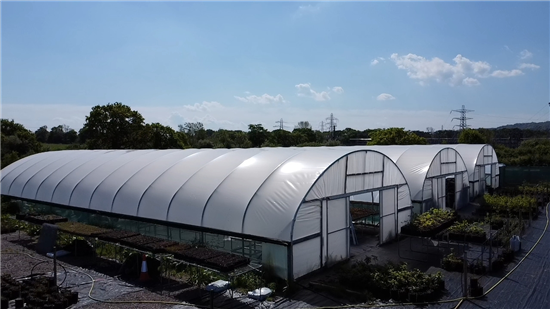
A tree with a history of an old pub tipple of yesteryear and a plant so rare in Wales are elements of Denbighshire’s own nature finding new life thanks to a blossoming site.
Since 2021, roots have been put in the ground for the Council’s local provenance tree nursery at Green Gates Farm, St Asaph.
Dedicated members of the Council’s Biodiversity team alongside committed volunteers have helped produce a number of highlights at the nursery which is producing thousands of tree and wildflowers from locally sourced seeds to go back out to protect and boost county nature.
Here’s some of the successful projects the hands-on team at the site have grown to fruition.
In 2022 Hound’s tongue, a nationally declining species was found on the Prestatyn Beach Road West meadow. It was previously only recorded in Denbighshire 18 times within the last 116 years.
Seeds were taken from the site to the nursery and thanks to the effort of the onsite team, new plants germinated to go out to other coastal meadow sites to expand its range in Denbighshire.
During 2023 work was carried out to protect and support the future of a wise old tree in Denbighshire.
Over 15,000 acorns were gathered by the team and volunteers and planted at the tree nursery.
Oaks have an important impact on biodiversity by giving support to more life forms than any other native trees. Hundreds of insects can be hosted by the tree providing birds a rich source of food. Across autumn, squirrels, badgers and deer will also feed on acorns.
In 2024 the tree nursery turned its attention to a rare shrub in Denbighshire.
Juniper is rare in Denbighshire, known only at a location on Prestatyn hillside. The shrub is also a priority species for protection in the UK after a dramatic decline due to over grazing and loss of suitable grazing areas.
Efforts were made to protect a solitary juniper in Denbighshire in 2008 when the Council worked with Chester Zoo to put in young plants at Prestatyn hillside to encourage the existing juniper to grow.
Members of the Biodiversity Team visited the site and harvested seeds to be taken back to the tree nursery for growing the shrub as Juniper provides valuable habitat and food for a diverse range of species, including insects, birds, and mammals.
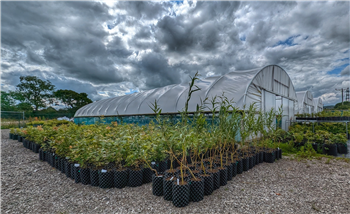
During this year the tree nursery also raised a toast to support a rare historic tree in Denbighshire
The team at the tree nursery provided a boost for the Wild Service Tree. Over 300 out of 500 seeds collected by the team the previous year germinated at the nursery.
The wild service tree is rare across the county and historically known as the chequers tree due to the fruits that are said to taste similar to dates and given to children in the past as sweets.
Fruit from the tree was also traditionally made into a fermented beer like alcoholic drink and it is believed that this beverage influenced the naming of many ‘Chequers’ pubs and inns across the UK.
Projects this year at the nursery included producing over 1,000 elder trees from an actual elder growing on the site through cuttings. Historically, Elder which provided a source for coloured dyes, was also made to make the patterned Harris Tweed.
And a new generation of an under-threat tree is getting ready to help support a rare butterfly.
The nursery nurtured a large crop of wych elms to help the species which is under threat from Dutch elms disease. Many of the mature trees cut down due to its impact, reducing the growth and spread of younger trees.
Over 1,800 wych elm trees have been grown from seeds collected at Loggerheads Country Park last year to help the tree resurge in Denbighshire. They will be eventually planted out at the Green Gates Nature Reserve development next to the tree nursery.
Wych elms are an important larval food-plant of the rare White-Letter Hairstreak Butterfly, which was recorded at Loggerheads some years back but has since remained scarce across Denbighshire.
A tree written into Shakespeare’s musing on love is also enjoying a new chapter in Denbighshire.
Nearly 2,500 crab apple trees are telling a new story in 2025 thanks to the support of the tree nursery.
Crab apples have long had a link with love and marriage throughout history. The apple pips were thrown into fires while saying the name of your true love, if they exploded that love was true. Celts burned the tree wood during festivals and fertility rites.
And William Shakespeare continued the crab apple’s theme of love by mentioning the tree in both A Midsummers Night Dream and Love Labours Lost.
Growing up to 10metres and lasting around 100 years the crab apple leaves provide a source of food for moths including pal tussock, gen pug and the eyed hawk moth.
The tree is a massive source of food love for nature, birds love the fruits and mice, voles and badgers are also known to enjoy feasting on the apples.
A new mural on its way to Rhyl
The new mural was developed with artists from across Denbighshire along with local community groups and will be displayed along Rhyl's new sea defences.
Artists are putting the final touches to a striking new mural along Rhyl’s coastal defences – a powerful visual tribute to the town’s ongoing regeneration.
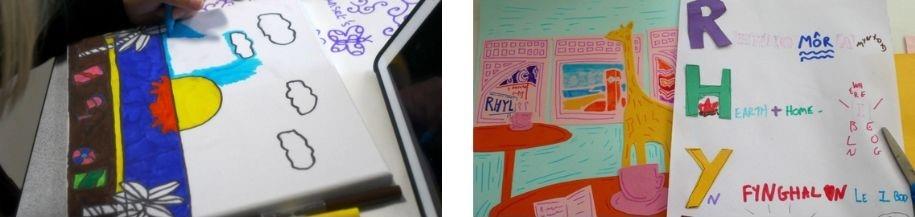
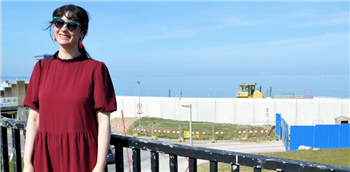 Led by artist and facilitator Ffion Pritchard, the project invited creatives from across Denbighshire to contribute to the Ein Rhyl/Our Rhyl campaign.
Supported by Rhyl Neighbourhood Board – an independent collective made up of residents, business owners, politicians, council officers and grassroots organisations - and Balfour Beatty, the mural aims to showcase the heart and heritage of the beloved seaside resort, leaving a lasting legacy for future generations.
“The response has been incredible,” said Ffion, from Bangor.
“We’ve worked with a wide range of amazing community groups and seen just how much creativity and pride exists here.
“From young people to older residents, everyone has had something valuable to share. This project has brought people together in a powerful way, allowing them to express their vision of Rhyl - what it means to them, where it’s been, and where it’s going. It’s been a joy to help guide that process.”
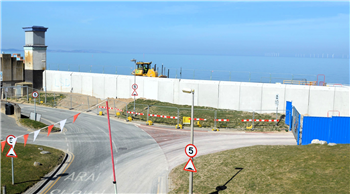 The mural will span up to 60 pre-cast units and be printed on durable materials such as aluminium.
Alongside the main installation, workshops with local schools, youth groups and families have helped shape a vibrant mural trail reflecting Rhyl’s past, present and future.
Craig Sparrow, Chair of Rhyl Neighbourhood Board, added: “We’re incredibly grateful for the dedication and creativity that’s gone into this project. It’s been fantastic to see the community come together, from third sector groups to individual artists, everyone has played a part.
“Projects like this show just how much talent there is in Rhyl, and how art can help tell our story in such a meaningful and lasting way. I’m really looking forward to seeing the completed mural.
“It’s going to be something we can all be proud of and will showcase the very best of Rhyl, both for residents and visitors.”
Participants have included Ysgol Tir Morfa, West Rhyl Young People’s Project, Viva LGBT Youth Cymru, Brighter Futures, Willow Collective, Ysgol Bryn Hedydd, and families through workshops at the town library. The project is on course to be completed in August.
Working on behalf of Denbighshire County Council, Balfour Beatty’s redevelopment of the East Parade included removing the old promenade and sea walls, widening and raising the new promenade for improved pedestrian and cyclist access, and constructing a concrete-stepped revetment to reduce flooding risk — protecting over 600 properties in Central Rhyl.