FEATURES
Give your recycling a career at the top of the world
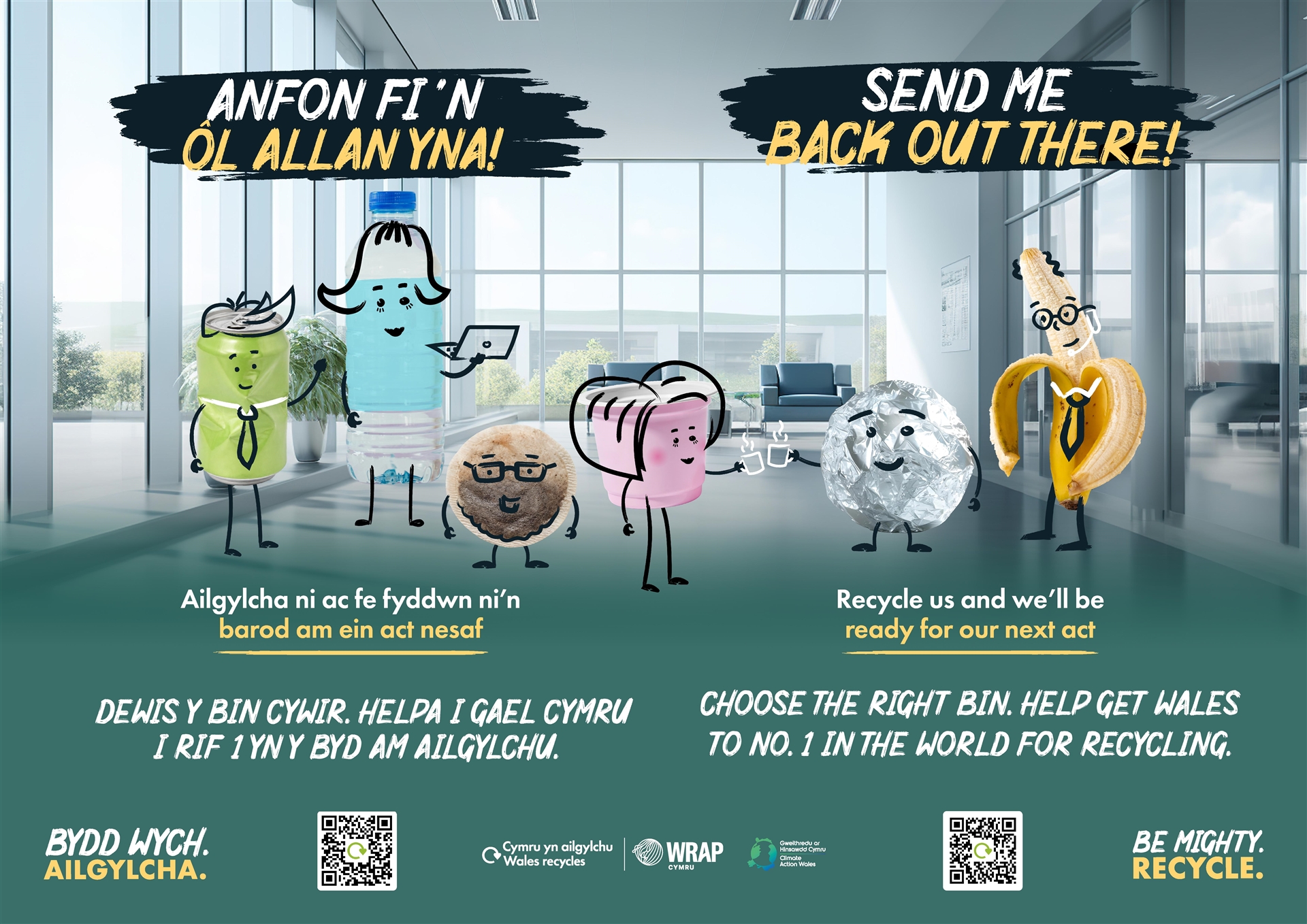
Wales is already one of the world's best recycling nations. We're proudly sitting at No.2. But when you're this close to the top, there's only one place left to go.
This Recycle Week (14–20 September), Denbighshire County Council is backing Wales Recycles' Mighty Mission to help take Wales to the top spot, while giving some of the everyday things we use at work a chance to climb the career ladder too.
Because when you put something in the right bin, you're helping give it another job. And some of these recyclables have surprisingly impressive prospects.
- That can’s got places to go
That empty drinks can or scrunched-up piece of sandwich foil might look like it's finished for the day, but it’s got plenty more work ahead.
Metal can be recycled again and again without losing its quality. And recycling just one can saves enough energy to power a TV for around four hours.
So put it in the right bin and send it onto its next big role.
- The tea bag powering the next round
Back to work after the summer holidays, the office kettle has entered its busiest season. Luckily, your tea bag has more to offer than getting you through back-to-back meetings.
Recycle six tea bags and enough renewable energy can be generated to boil a kettle for another cuppa. Now that's what we call pulling your weight.
And tea bags aren't the only food waste with a bright future. Fruit peelings and other inedible food waste can also be transformed into renewable energy and nutrient-rich fertiliser.
So while you're taking a well-earned lunch break, your food waste could be getting ready for their next big project.
- The plastic bottle with a whole new career ahead
Finished your drink? The bottle's working day might be over, but its career could just be getting started.
Recycling one plastic bottle saves enough energy to charge a laptop almost four times. That's this week's Teams calls sorted.
Plastic bottles, yogurt pots, meal deal tubs and plastic trays… give them a little rinse and put them in the right bin so they can be processed and transformed into new products and packaging.
From desk-side re-fuelling to their next big role.
From a workplace in Wales to the top of the world
The recycling you put in the right bin starts its next commute. Which actually isn’t that far away way from home. More than 90% of the recycling collected in Wales is processed in the UK, with more than half staying right here in Wales.
Once collected, materials are sorted and processed before being transformed into something new. Food waste takes a different route, helping generate renewable energy to power Wales and… your working day.
Wherever you work, recycle wherever you are
Whether you're in the office, working from home, commuting, grabbing lunch or heading out and about, recycling doesn't need to be another thing on your to-do list. Build it into your day. Find the right bin and give your recycling its next role.
Because every item recycled correctly helps keep valuable materials in circulation, generate renewable energy and take Wales one step closer to the top spot.
We're already No.2 in the world. Let's give Wales the promotion it deserves. Let's get to No.1.
Find out more about your recycling journey at Wales Recycles
Mary’s Story
Mary lives in North Denbighshire, near Rhuallt and lives with an aggressive form of Parkinsons named Corticobasal Degeneration, meaning she needs to use a range of equipment in her home to live as comfortable as possible.
She lives with her husband Allan, who is her primary carer, members of her family, and her dog Blaze.
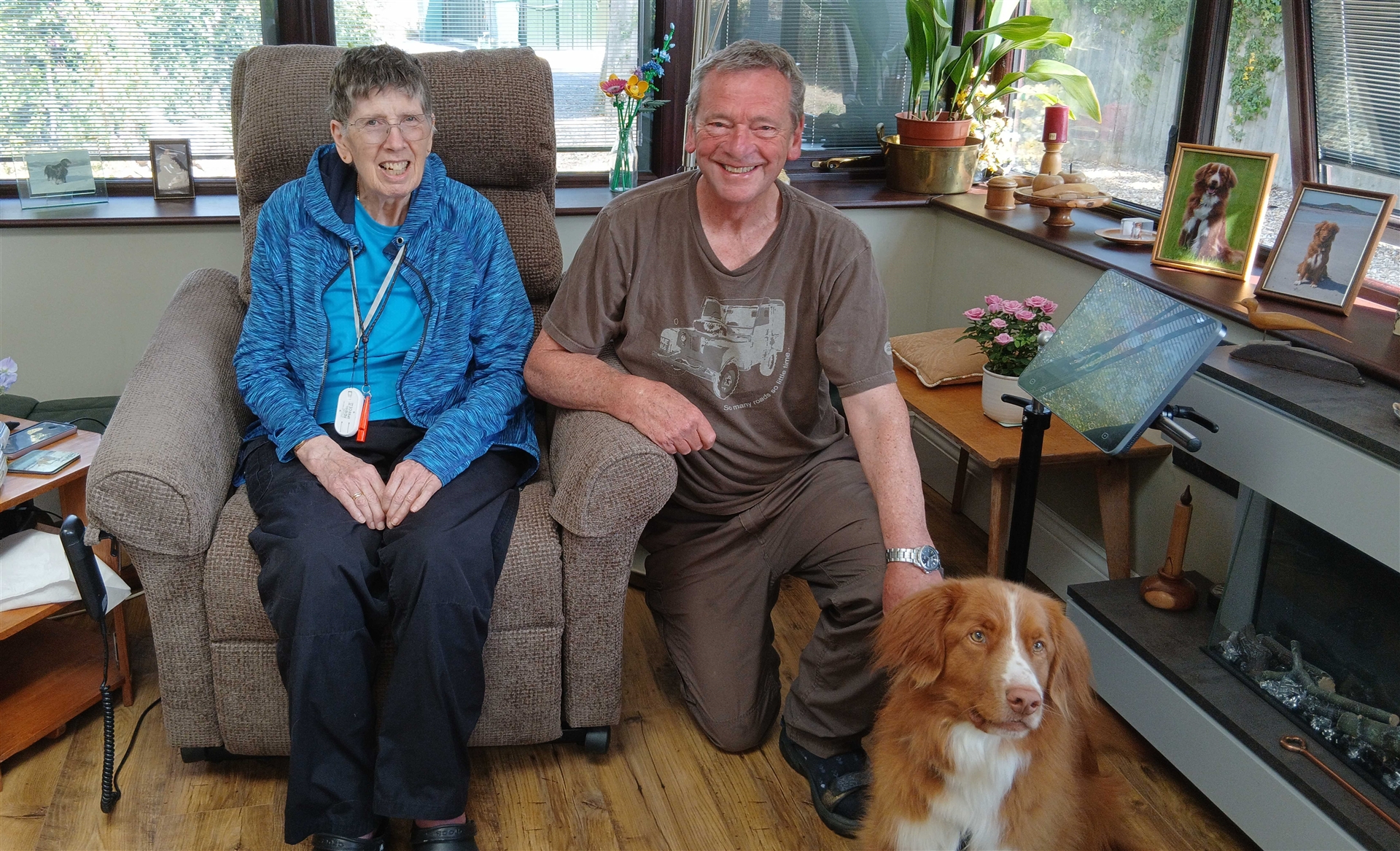 Mary, Allan and Blaze the dog.
Despite her diagnosis, Mary is full of energy and has a brilliant sense of humour. She has stuck to a number of her hobbies from before her diagnosis, including making arts and crafts. Mary was a very successful dog trainer in the past and still has her rosettes hanging up on the wall.
Before retiring, Mary worked as a physiotherapist in the local area.
Mary has been living with this condition for six years and started receiving the help of an Occupational Therapist, and representatives from the Community Equipment Team (CESI) within the last few years once her diagnosis became clearer and her condition progressed.
CESI is a partnership between Denbighshire County Council and Betsi Cadwaladr University Health Board (BCUHB), which provides equipment for people of all ages to help them live their lives to the fullest and to maintain their health and independence. This ranges from simple aids for daily living to more complex equipment that helps people to stay in their homes for longer.
Through using this equipment, Alan and Mary don’t need to rely on formal visiting carers every day, allowing them to live as comfortably as possible at home.
An adapted bed, known as an Independence bed, was one of the first pieces of equipment that was implemented at her home. A hoist was also added to help Mary get in and out of bed easier.
The bed also moves mechanically, allowing Mary to sit up and adjust the height when needed.
With help from an Occupational Therapist, after an assessment, special sliding sheets were introduced, which helps with transfers.
Speaking about the Independence bed, Allan said:
“The bed has been a godsend really from the outset, the fact that this one drops right the way down has made a huge difference in terms of ease of use and mobility.”
With the use of a piece of equipment called a Standaid, Mary can get in and out of chairs. The Standaid also helps with transfers into and out of her wheelchair.
Mechanised toilet raisers were also installed in the home, which further helps with transfers in and out of the wheelchair and ease of use.
Speaking on her experience with the CESI, Mary said:
“The technicians are brilliant, always really pleasant when they come and assist with the equipment. They are very accommodating.
All the services have been very very good with us, there has been very good co-ordination between the different departments.”
The equipment is there to help to keep Mary as independent as possible, helping her to do the things she can do on her better days, and is there to offset days where maybe she finds it more difficult.
Mary went on to say:
“I am still doing arts and crafts, I do a form of weaving, where you make patterns into keyrings. I have made some with the St Kentigern’s craft group. I’ve made crafts all my life, and I’m glad I still have an outlet to do it.”
Becky, an Occupational Therapist who has helped Mary said:
“We work in conjunction with the CESI stores as a team, and could not do our job without their expertise and support.
They are always so accommodating and helpful, and we are very grateful for them.”
From permaculture to conservation: a career rooted in nature
County Voice pulls up a chair with Keegan to find out how nature has always been accompanying him through his working life.
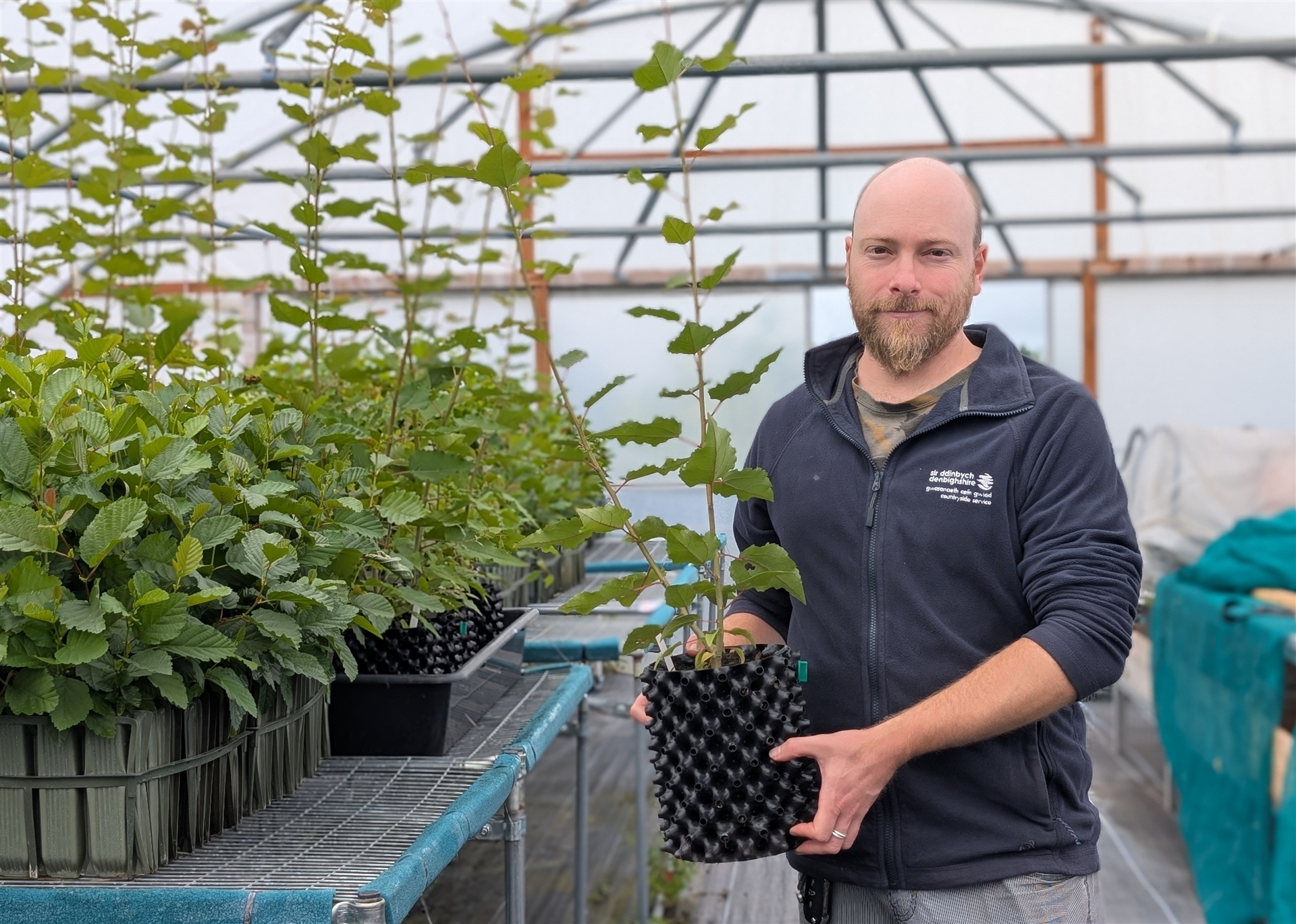
For much of his working life, the career path has not been a straight line for Keegan Blazey. His life has moved through art studios, organic farms, classrooms, games design, university laboratories and, eventually, into the practical, muddy work of conservation. But looking back for the current Tree Nursery Officer at the Council’s Tree Nursery at St Asaph, the thread running through it all is clear: a desire to understand the natural world and to do something useful within it. County Voice pulls up a chair with Keegan to find out how nature has always been accompanying him through his working life.
His interest began in his 20s, when he became involved in permaculture — a way of thinking about food, land and community that goes beyond sustainable agriculture. For Keegan, it helped him connect with wider ideas about culture, spirituality, mindfulness and self-sufficiency.
He explained: “I got really into being sustainable and self-sufficient. You learn how to grow your own food because it keeps you healthy. Buddhism, mindfulness and all those things were part of what got me into it.”
Growing up in South Africa also helped shape his outlook. As during the time, water shortages, drought and rolling blackouts were part of everyday life. Keegan explains that Permaculture offered practical answers including rainwater harvesting, sustainable water use and designing systems that depend less on mains supply.
After moving over to the UK, Keegan worked mainly as an English teacher while continuing to volunteer on land-based projects. That eventually led to a role as an organic garden manager, where he ran a market garden supplying a bed and breakfast site, managed around 6 volunteers, taught English to international volunteers coming over from Europe and helped build a more circular, wildlife-friendly growing system.
The work involved ponds, wetlands, ducks, composting and closed loop growing. It brought together several parts of his background: teaching, practical gardening, sustainability and people management.
Later, his career changed tracks again. Art, which had always sat alongside his environmental interests, became his profession. Keegan moved into digital concept art, working mainly in gaming for five or six years. During the Covid pandemic, the games industry grew rapidly and the work was there — but something no longer felt right for him.
Keegan said: “I was sitting there painting medieval armour for games while the world was suffering, it just didn’t feel right.”
That realisation pushed him to test himself through an environmental science Degree at Bangor University. He admits he looked for a role where his skills could contribute to solutions, and this route gave him the technical grounding to move into research. Environmental science helped provide him a broader outlook as it not only at protecting nature, but at how people and the environment can work together.
A placement in forestry research became a major turning point for Keegan. He worked as a research technician on climate change experiments with the Birmingham Institute of Forest Research, helping gather and process field and laboratory data. He explained the work was very ‘detailed’, soil tests, water tests, tree and root measurements, data collection and analysis all kept him busy.
“At one point, I spent months washing soil from oak roots, separating them by hand, scanning them and passing the results on for analysis, he says with a smile.
But it provided a solid grounding in fieldwork, data and experimental process, which has helped with his current role as Tree Nursery Officer.
During his degree, Keegan explained he also focused on soil science and completed a dissertation on microplastics, using Denbighshire’s own local wildflower meadow sites as part of his research.
The project looked at microplastic movement in soil alongside carbon, moisture and compaction, measures used to understand soil health and land management.
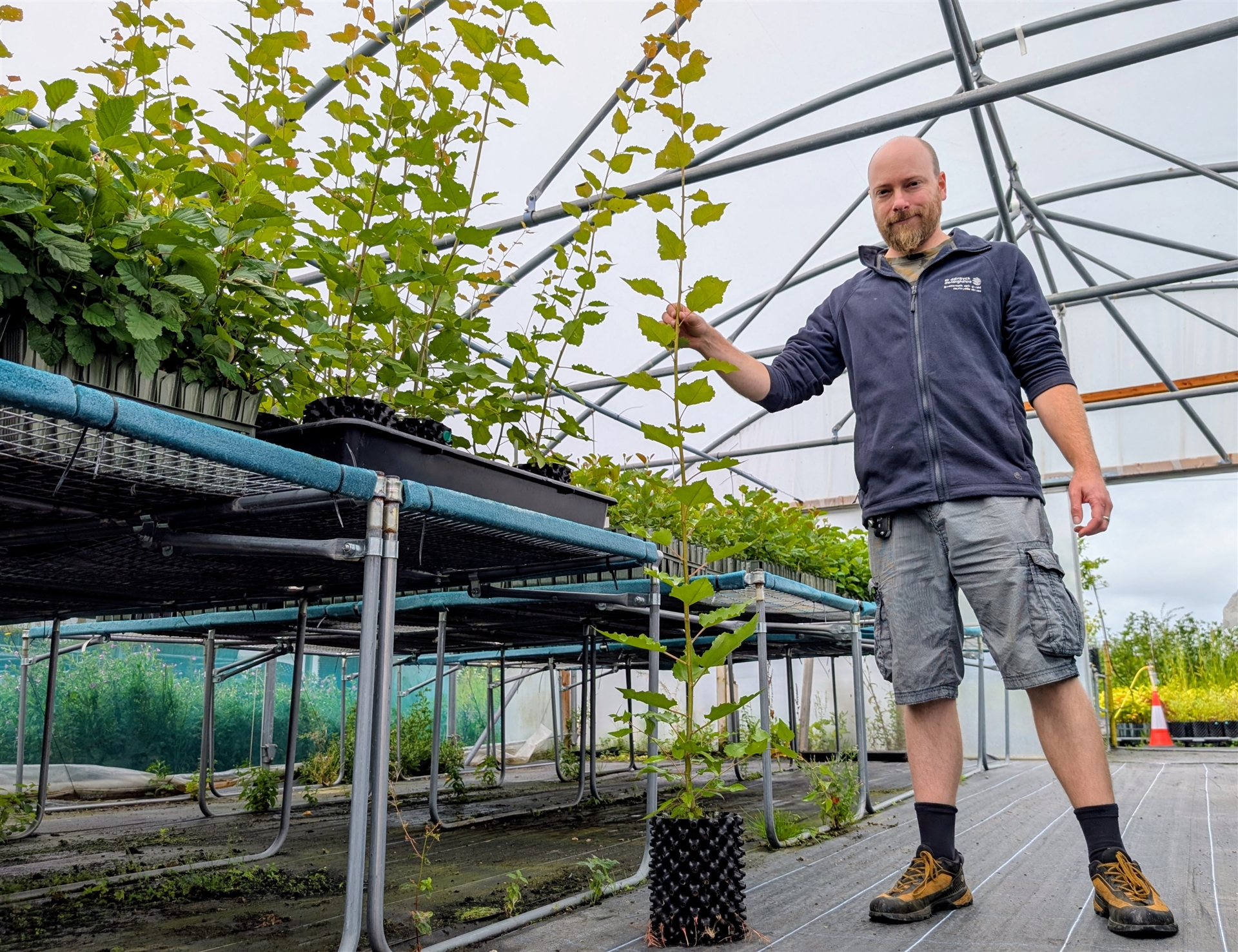
Chatting with County Voice, Keegan admits he still hopes to complete a research focused PhD one day, but for now sees practical experience as the best next step.
Sitting in one of the nursery tunnels, it’s evident that Keegan’s scientific background is helping push forward the site’s aim to protect local biodiversity with positive results of his Aspen growing experiment beside him as the talk continues, with sea holly grown in the background and new wildflower beds replenishing seed stock on the nursery’s doorstep.
“It’s been a huge learning curve,” he says. “But I’ve had experience of the skills I needed coming in. The details matter in research, but I’ve also learned what level of data we actually do need here.I’m surrounded by an amazing team guiding and supporting me along the way and I wouldn’t have been able to cope without them."
Before County Voices closes the chat, we ask how he feels about the Tree Nursery Officer role he took on in 2025, another smile emerges: “This is the best job I’ve ever had. The prospects in terms of what we’re doing and what we’re trying to achieve at the nursery are incredible. Everyone I talk to is jealous of what I do.”
Tackling the impact of climate change issues on the land locally is not without challenges, but for Keegan, that is part of the point.
He says: “Most climate change and nature enhancement work feels impossible…But it’s important that we try.”
What began with permaculture and a search for self-sufficiency has grown into a career for Keegan built around restoration, resilience and the belief that even striving to conquer difficult environmental work is worth doing, evident at the many green shoots of progress appearing at the Tree Nursery.
Property section projects support communities across Denbighshire
Over the past 12 months, Denbighshire County Council’s Property section has continued to play a vital role in supporting services, communities and residents across the county
Over the past 12 months, Denbighshire County Council’s Property section has continued to play a vital role in supporting services, communities and residents across the county.
From delivering improvement works and maintaining public buildings to supporting major projects and ensuring council assets are safe, efficient and fit for purpose, the teams within the section have been involved in a wide range of important work.
County Voice looks back at some of the key projects completed during the year, highlighting the dedication, expertise and collaboration of the different teams that help manage and improve Denbighshire’s property estate.
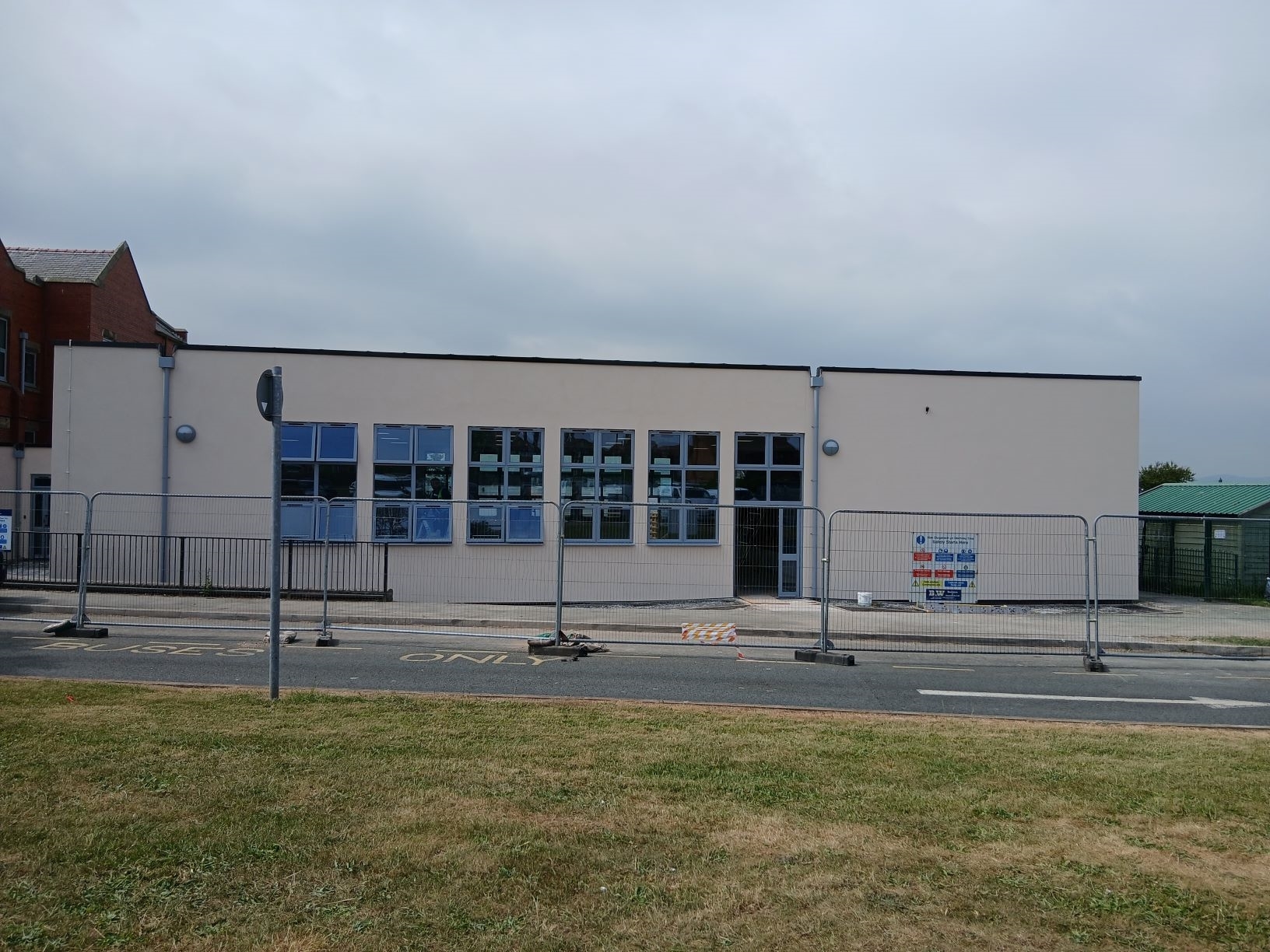
Since last year the Building Maintenance team has supported major improvement works at Ysgol Dewi Sant in Rhyl, helping to modernise and transform the school’s hall wing.
This project included roof reconstruction, improved insulation, replacement high-performance double-glazed windows, upgraded access arrangements and the modernisation of the foyer and entrance area, including the addition of a lift to improve accessibility.
The works helped improve energy efficiency, reduced the school’s carbon footprint and created a safer, more accessible and modern space for pupils, staff and the wider community.
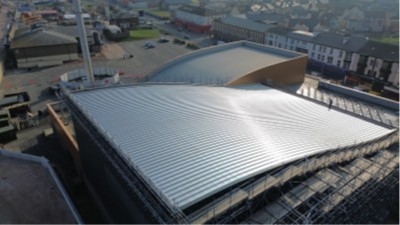
They also responded to storm damage at SC2 Waterpark making the building safe before managing the replacement of the compromised waterpark roof.
With the original supplier no longer trading, a new roof was specially designed and independently checked using site-specific wind load modelling.
The project required a bespoke scaffolding solution because nearby flood defence works prevented traditional access, while wind speeds were monitored daily to keep operatives safe.
Purpose-made curved roof sheets, some more than 24 metres long, were transported to site under abnormal load permits. Maintenance colleagues coordinated the complex project with the tenant, insurers, consultants, engineers, surveyors, loss adjusters and Council teams managing the sea defence works.
The project was managed by maintenance, liaising with our Tenant, specialist consultants, engineers, insurers, forensic surveyors and loss adjusters, as well as Council colleagues including those managing the sea defence works.
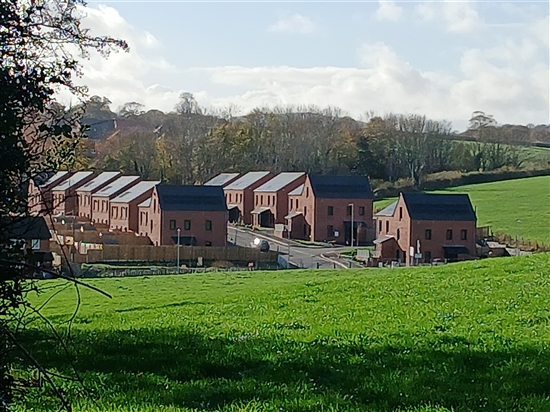
Over the last 12 months the Design and Construction team has delivered and supported a wide range of high-profile projects across the county, helping to improve housing, education provision, accessibility and regeneration.
Key achievements include the completion of 22 new energy-efficient council homes at Llwyn Eirin in Denbigh, built to Passivhaus standard and fitted with solar panels and ground-source heat pumps to help reduce household energy costs and carbon emissions.
The team also designed and progressed the first hydrotherapy pool of its kind in Denbighshire at Ysgol Tir Morfa in Rhyl, supporting pupils’ physical development and wellbeing through a specialist new facility within the school grounds.
Alongside this, the team has supported the next phase of works at the Former North Wales Hospital site in Denbigh, with remediation and demolition works helping to unlock future regeneration of the 53-acre site for housing, commercial space and green community areas.
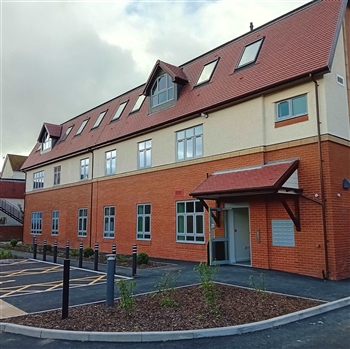
The section’s work has also been recognised through award-winning housing schemes, including Llys Elizabeth in Rhyl, which won Best Small Social Housing Development at the LABC Awards for Wales for its high-quality, energy-efficient homes for residents aged 55 and over.
Since last summer the Energy Team has continued to lead projects that improve energy efficiency, reduce running costs and lower carbon emissions across Council buildings and services.
At Cysgod y Gaer care home in Corwen, the team installed a 40kWh battery energy storage system alongside a 21.36kWp solar array, building on previous work to add PV panels, LED lighting and heating system improvements.
This combined work has helped reduce gas and electric consumption significantly, cut carbon emissions and supports the charging of two electric vehicles operating from the site to provide health and social care services in the local community.

The team has also delivered an innovative battery storage project at the Denbigh Waste and Recycling station, installing 600kWh of battery capacity to make better use of solar energy generated on site and support electric waste and recycling vehicles.
Early results show grid energy use at the site has fallen by more than half, with the system expected to save more than 76,000kWh a year, reduce costs by around £16,000 and cut carbon emissions by approximately 22 tonnes annually.
A further example of this collaborative approach can be seen at St Brigid’s School, where teams worked together during the second half of 2025 to improve the efficiency and performance of the site’s main building.
The project brought together support from the Climate and Nature programme, Building Maintenance and the Energy Team to deliver a package of heating, controls, lighting and insulation improvements.
Works included the removal of old inefficient oil-fired boilers and their replacement with modern LPG-fired boilers across the two main plant rooms, with five boilers replaced in total and the old oil tank removed.
Modern building management controls were also installed, creating five separate zones for the main building and helping the site operate more efficiently.
In addition, more than 140 LED light fittings were installed, which are expected to save around 24,260kWh of electricity and approximately £5,579 each year.
Around 240 square metres of 300mm insulation was also added, further supporting the Council’s wider work to reduce energy use, cut emissions and improve the long-term sustainability of its buildings.
Councillor Julie Matthews, Deputy Leader and Lead Member for Corporate Strategy, Policy, Equalities and Strategic Assets, said: “The work carried out by our Property teams over the last 12 months shows the important role they play in supporting residents, communities and Council services across Denbighshire. From improving schools and care settings to delivering energy-efficient homes, reducing carbon emissions and supporting major regeneration projects, their work has a direct and lasting impact on people’s everyday lives.
“I would like to thank all the teams involved for their dedication, expertise and commitment. Their efforts help make our buildings safer, more accessible, more sustainable and better equipped to meet the needs of residents now and in the future.”
Charge Up and Discover Denbighshire by EV this summer
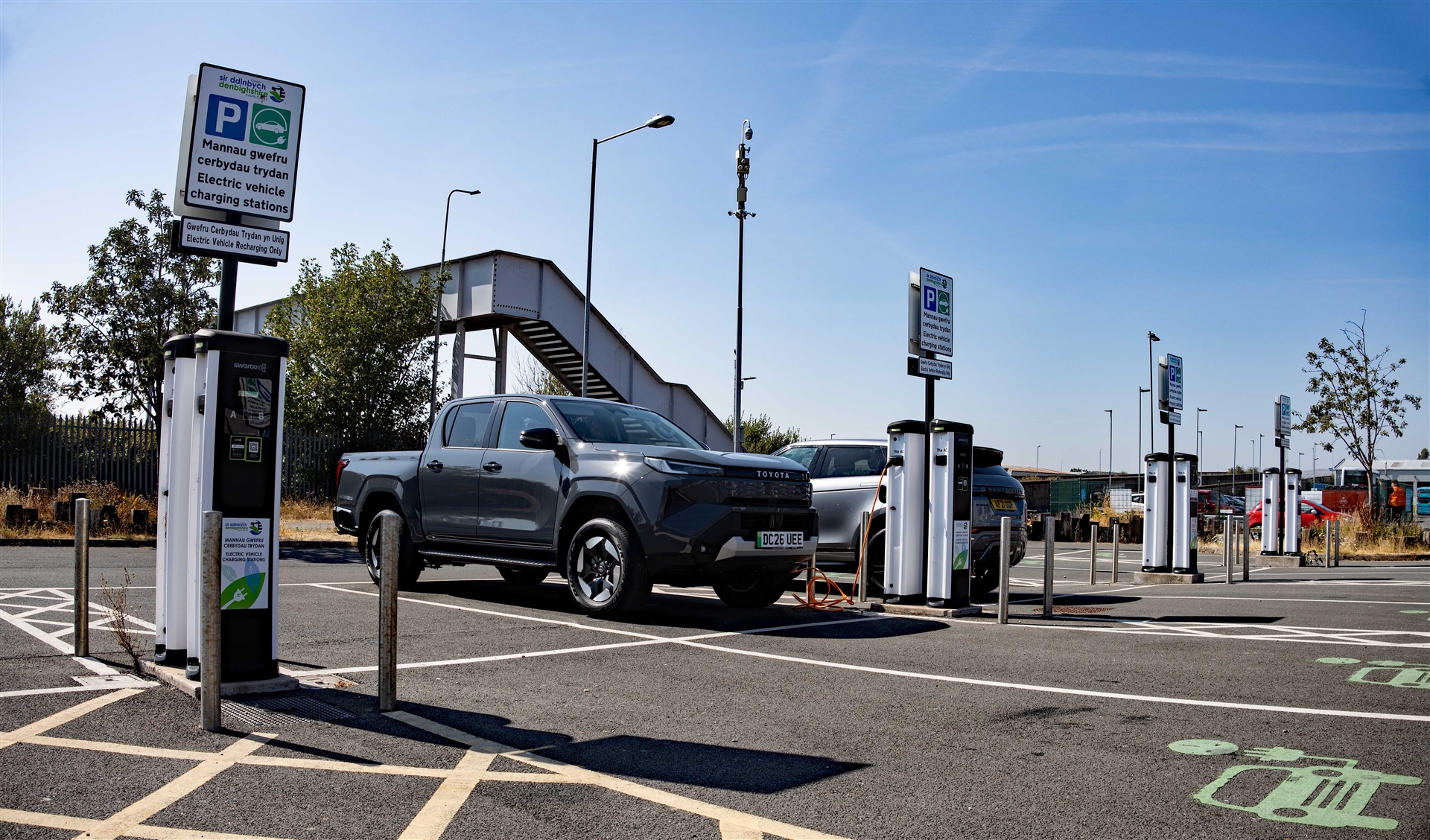
Summer days are upon us, providing the perfect opportunity through more daylight to explore the best that Denbighshire has to offer.
Travelling by vehicle in modern times has seen the addition of hybrid engines and electric powered motors to help get you to locations with less impact on our climate by providing greener miles at a lower cost.
Since the first Council Electric Vehicles (EV) chargers went live in summer 2022 over 4.5million miles of travelling have been provided through more than 63,000 charging sessions.
For the Denbighshire EV owners and those living outside of the county, County Voice takes you on a whistle stop driving tour to locate the Council’s own public charging EV stations to help you plan your trip to check out the sights of Denbighshire.
Our public EV charging network provides a great opportunity to travel around Denbighshire to visit the many tourism attractions the county has to offer while charging your vehicle at one of the sites.
Is Llangollen Railway on your top list of Denbighshire attractions to visit? You can start your experience at Corwen’s Green Lane car park next to the town’s station which has five operational EV chargers which you can plug your own EV vehicle into. Step back into yesteryear by enjoying travelling down the railway line while your modern mode of transport is topped up with energy.
If you are starting at the Llangollen side of the railway, chargers are available at Market Street car park and also the Pavilion car park. These great locations will also give you time around the town to check out attractions such as the Llangollen Wharf, hiking up to Dinas Bran or just to enjoy the sites of the River Dee running by Llangollen.
Stepping into the driver’s seat of your EV and moving up to Ruthin, you can find EV chargers at Cae Ddol car park which puts you in a fantastic location to learn all about the Ruthin Gaol. And the history theme continues as a five-minute walk can take you to another past location in the form of Nant Clwyd y Dre.

Interested in arts and crafts? Public charging facilities are also available at Ruthin Craft Centre to allow you time to browse the delights and skills on offer at the site while topping up your vehicle for your next Denbighshire trip.
Heading onwards to Denbigh, the town’s Post Office Lane provides chargers, providing the perfect chance to climb up to the top of the town to view the remains of Denbigh Castle and the town walls.
A quick trip further brings you in your EV to St Asaph and the Bowling Green car park at the city which has charging facilities and which is the perfect starting point to enjoy a scenic walk along the River Elwy or check out the stunning architecture of St Asaph Cathedral.
Travelling onwards to the coast, Rhyl has the perfect place to top up and charge. West Kinmel car park has a number of chargers including rapid facilities for a quick boost. Plugging in here, you can use the time to take a walk through the centre of town to the prom to enjoy Rhyl’s golden sands and promenade, check out the harbour area, or jump on transport from the past in the form of Rhyl Miniature Railway at Marine Lake. Charging facilities are also available at Morley Road car park.
The last trip to neighbouring seaside town Prestatyn will provide chargers (including rapids) at Fern Avenue and Kings Avenue car parks, allowing you time to enjoy Prestatyn’s town centre or if feeling brave take a walk down to the seafront to enjoy the attractions awaiting you.
The EV public network is a part the Council’s overall action to tackle climate change following the declaration of a Climate and Ecological Emergency in 2019 by reducing the county’s carbon footprint.
To check out more information on these locations visit our website.
"This finally feels like my home" - Steve’s Story
Steve Purse, who lives in Rhyl is an avid campaigner, and has been to Parliament campaigning on multiple occasions for recognition of the impact of nuclear testing on families of personnel.
Living with short stature and type two respiratory failure, his previous residence did not allow him to live independently, and he was unable to use his powered wheelchair within the home.
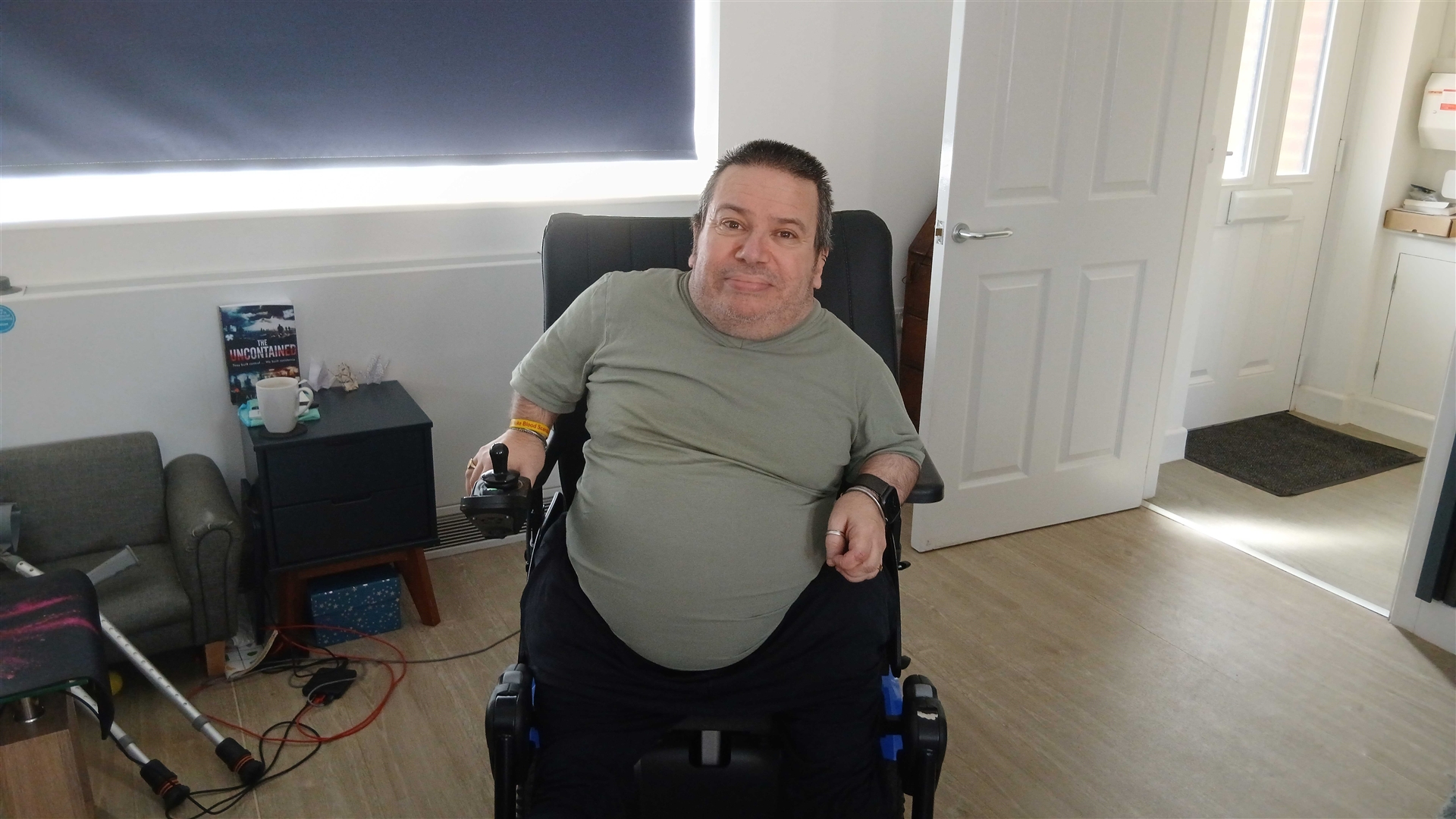 Steve
Steve
Steve and his family joined the Specialist Housing Register in January 2021. By working closely with the Council’s Specialist Housing Register Manager and Occupational Therapists, Steve and his family were able to move to a more suitable property with adaptations, which took extensive research to ensure that they were suitable to meet the needs of Steve, but also, be usable by the whole family.
These adaptations have enabled Steve to live more independently, and improve the quality of life for both his family, and himself.
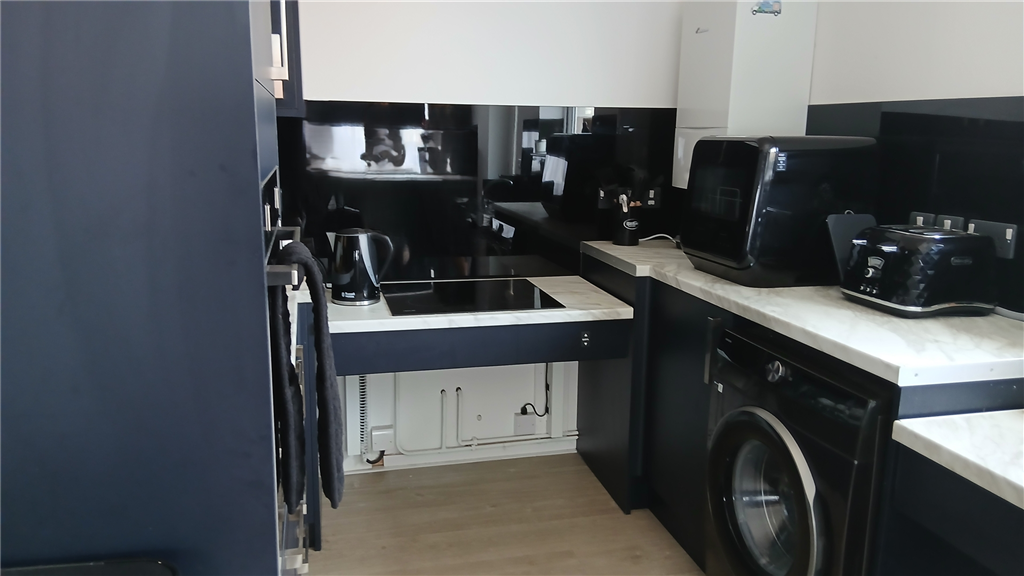 Rise and Fall Hob adaption
In house resources were utilised to complete an assessment for Steve in order to understand his requirements within a kitchen environment.
The reablement suite at Hafan Deg Day Centre in Rhyl was utilised by Steve and his family to test out and measure the bespoke range elements needed in their new home.
The suite at Hafan Deg aims to replicate a home and includes an ergonomic adjustable countertop and easy access oven, allowing easy interaction and measurements where needed. It was identified that adaptations that had not been completed before would need to be considered to accommodate Steve’s reduced reach.
Through the specialist housing register, properties like Steve’s are acquired through Registered Social Landlords, adaptations can be completed in these properties to suit the individual, enabling residents to live fulfilling and independent lives.
Speaking on his experience, Steve said:
“Where we lived prior to this was really unsuitable, to the point where I couldn’t even get my wheelchair in the house. There were narrow doorways and nothing was really in reach for me, it wasn’t a family home really.
We got a phone call to say that this property had become available, and when we saw it, we thought, wow this looks really nice. I can get my wheelchair straight into the house now from the drive. I suppose some people might take that for granted, but for me that was new and was a big thing.”
Working collaboratively with a local specialist supplier, a bathroom was designed featuring a bespoke rise and fall toilet and sink to enable Steve to complete his own personal care, safe transfers and help with his independence. Due to restrictions of the design of the items, a solution was found to embed the toilet and sink into the concrete floor of the bathroom, allowing for the lowest height to be achieved to suit Steve’s requirements.
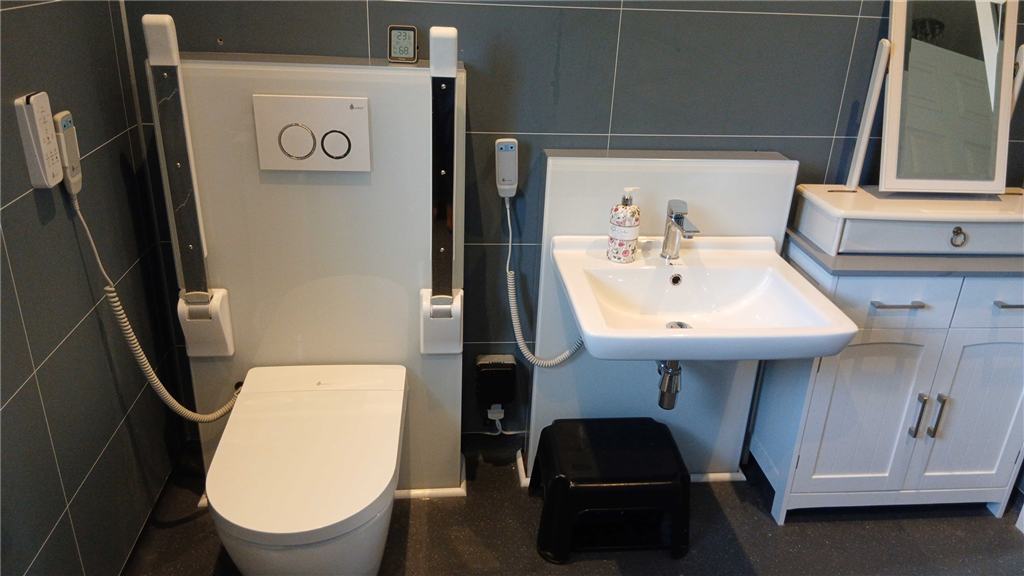 Adapted toilet unit
Speaking on the adaptions at his home, Steve said:
“The rise and fall toilet is a real gamechanger for me. As a technological piece of equipment, it really is quite sophisticated. That to me is the biggest part of my independence, is the toilet.”
As well as a rise and fall toilet, the bathroom features bespoke armrests and a bespoke shower that can be used by the whole family.
The kitchen at Steve’s home has also been re-developed, and features a rise and fall hob, sink and bespoke oven and placement of taps for the sink enabling Steve to pour himself a drink and access hand and dish washing facilities, a task Steve was previously unable to undertake.
Steve said:
“The sink is a rise and fall, and the taps have been adjusted so that I can operate them and do the washing up.
The hob also rises and falls, with the controls within easy reach, so I can cook, and the oven door is a slide and hide, meaning I can operate it properly and safely. The table is also wheelchair accessible.”
The property has not only helped Steve, but has brought the whole family together and reduced Steve’s reliance on others for everyday tasks.
“The toilet is amazing, it rises and falls and can be a bespoke height for the whole family to use.
Now that the interior of the property has been adapted, everything is in reach.
This finally feels like my home now.”
Restoring the Past, Building the Future: Nantclwyd y Dre
The site boasts nearly 600 years of local history and is one of the oldest timber-framed townhouses in Wales.
Ruthin is a town is steeped in history. Razed to the ground by Owain Glyndwr in the year 1400, the historic feel of the town as we know it today comes in large part from the timber-framed vernacular style of architecture which was used during the town’s reconstruction.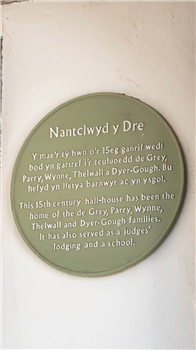
Among the charming streets and historic frontages sits an important piece of Ruthin’s built heritage. Originally built in 1435 as a weaver’s hall house, Nantclwyd y Dre boasts nearly 600 years of local history and is one of the oldest timber-framed townhouses in Wales open to the public.
Now managed by the Denbighshire Heritage Service, visitors to Nantclwyd y Dre historic house and gardens can relive the house’s fascinating past through immersive soundscapes, interiors and exhibits that give a captivating insight into what life was like for the families that lived there.
In 2023, funding was granted to restore parts of the site as the UK Government confirmed their intention to provide £10.95 million of grant funding for 10 capital projects aimed at protecting Ruthin’s unique heritage, wellbeing, and rural communities.
This funding, known as the Local Regeneration Fund (LRF), was awarded exclusively for successful projects included in Clwyd West and cannot be directed to other projects.
As one of the successful projects, £667,000 was allocated to redevelop some currently unused parts of the house in need of some repair to preserve this important piece of local heritage for generations to come, create new opportunities for the attraction to improve its future sustainability and make some exciting additions to the visitor experience.
Construction works began in October, focussing on bringing the largely unused west wing of the property back to life. This section of the house will become a small holiday let, designed and furnished in keeping with the historic nature of the building, and see improved facilities on the first floor with a dedicated space for the weekly volunteers who are a critical and valued part of the day-to-day workings at Nantclwyd.
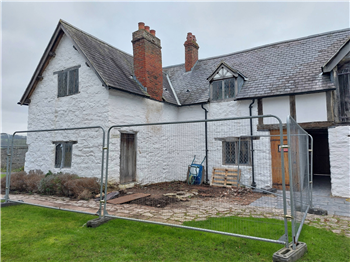
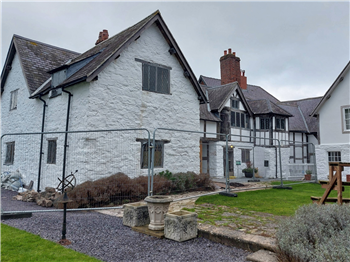
However, before the works could begin, one set of longstanding residents needed to be taking into consideration. Denbighshire County Council consulted with ecologists to ensure that the planned developments would not disturb the resident protected bat maternity roost, which houses a significant number of the Pipistrelle and Lesser-Horseshoe population in Wales. Contractors were given specialist training, and a large bat shelter was installed in the garden, giving the winged residents an additional space to thrive.
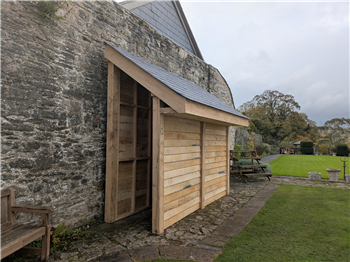 The planned improvements will also make the kitchen area more suitable for event catering, and the summerhouse will be restored to its former glory for visitors to enjoy during the summer months, also serving as an additional space for the ceremonies taking place at the historic house such as weddings and civil partnership ceremonies.
Undertaken by B&W builders & decorators alongside TACP Architects, the project is expected to be completed by April 2026. A more sustainable approach to the improvement works has also been implemented through using wool to insulate the building rather than the more widely used oil-based insulation which emits higher carbon emissions and isn’t renewable.
Councillor Jason McLellan, Leader and Lead Member for Economic Growth & Tackling Deprivation said:
“The beginning of these improvement works to Nantclwyd y Dre serves as a major milestone in securing the future of such a prominent historical site that sits at the heart of Ruthin.
“Nantclwyd is as a great visitor attraction and community hub for our dedicated volunteers, and we are looking forward to seeing the newly developed spaces being enjoyed and used by visitors.
“The wellbeing of the bat population will remain as a priority whilst the works are being carried out, and we will be in continuous communications with the ecologists throughout the completion of the works”.
Josh’s Journey
Due to a relationship break down, Josh, who is 34, found himself seeking the Council’s homelessness team’s help at the start of last year. In February of 2025 Josh was placed in temporary accommodation and was assigned a homeless support practitioner.
 Josh
Josh
“I was homeless at the start of last year. I had been in homeless before and was placed in temporary accommodation previously, but I wasn’t in the right mindset previously to try and sort out my wider situation.
I was only in there briefly this time. I was asking everyone, trying to find a flat of my own. I eventually found one and moved out of temporary accommodation quite quickly.”
A month later, Josh had found himself privately rented accommodation to live in and was looking to write the chapter in his story.
“Whilst I was in temporary accommodation, my homeless support practitioner mentioned the intuitive thinking skills courses to me.
I was a little sceptical about doing the courses at first, but I didn’t realise until I sat them, that really, I had nothing to lose, and everything to gain from giving them a go.
I started the courses in April and March. I did the skills to life course first, which I really enjoyed and learned a lot from.
It teaches you how to deal with your own mindset, and how you think about problems. I used to really struggle with my confidence and doubt myself all the time.
They asked me at the start of the course what I would like to improve on, and so I put down work on my confidence.”
Josh then went on to take the Information, advice and guidance course, and dove deeper into his learning.
“I went on to do the Information, advice and guidance course, which taught me some more technical aspects. I would be put in other people's shoes, and I learned how to help those who may be more vulnerable.
I learned how to help others who may be in circumstances such as homelessness or maybe struggle with substance misuse.”
In early summer, Josh was offered an ambassador placement with the Intuitive Thinking team, with the hopes of that scheme then leading to a permanent job within the team itself.
“I was really buzzing as that was the placement I wanted the most out of the ones that were offered to me. I learned to give speeches and administer training by shadowing members of the team. That helped my confidence so much, standing up and speaking in front of people. I was terrified at first, but it got easier and easier over time.
I was about two months into my placement with the team when I got offered a job in the energy sector which I felt I just couldn't turn down.
The skills I learned during the courses I took, and my placement have given me so much confidence in my new role. This job is so different from what I’ve done previously, and these new skills have given me the confidence to go and try something new. That’s the main take away for me.
I was very much set in my ways of staying in my comfort zone before I did these courses. I would just do what I’d always done, but ultimately, I kept getting the same results. I feel like I spent years at a standstill really.
Since I’ve sat these courses, I’ve never felt better in my life. It sounds crazy to say that a course can change that, but I learned why I am thinking things and how to deal with those thoughts.”
Josh has chosen more positive ways to ways to pass the time.
“I have chosen more healthy options in life now, I struggled with boredom when I got sober about four years ago, I needed different outlets.
I started playing golf and going to the gym. I am now a member at Rhyl Golf Club.”
Josh has now graduated from the Intuitive thinking courses, with a number of certificates under his belt, and is enjoying his new role in the energy sector.
“I think these courses would benefit everyone; you don’t have to be in a bad position to take it. You can’t lose anything from learning from this course, as long as you are invested in it, you’re going to benefit from it.
People have said that they can see a change in my confidence. From where I was in February, to where I am now, it feels like two different people. I felt lost and had no hope really. It taught me to think differently and rationally think about situations. It has helped me to gain the focus and drive to get what I want.
It was like a snowball effect, as soon as I decided to start helping myself, things got gradually better.”
Have you met our fabulous Bookstart Team? ❤
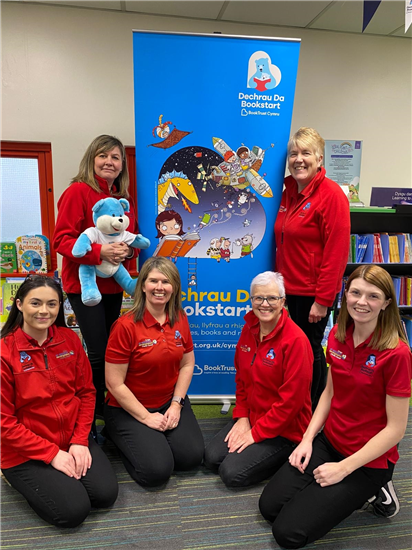
They run free, weekly, bilingual rhyme times for babies and toddlers in all our libraries. It’s never too soon to start sharing books and rhymes with your baby and you will find a great selection of books for all ages in our libraries.
Our libraries are free to join; books are free to borrow and there are no late charges!
The rhyme times are a great way to build up your confidence sharing books and rhymes with your little one, and a brilliant way to meet other new parents.
Please book your free rhyme time place here 👇🏼
https://bookwhen.com/denbighshire-bookstart